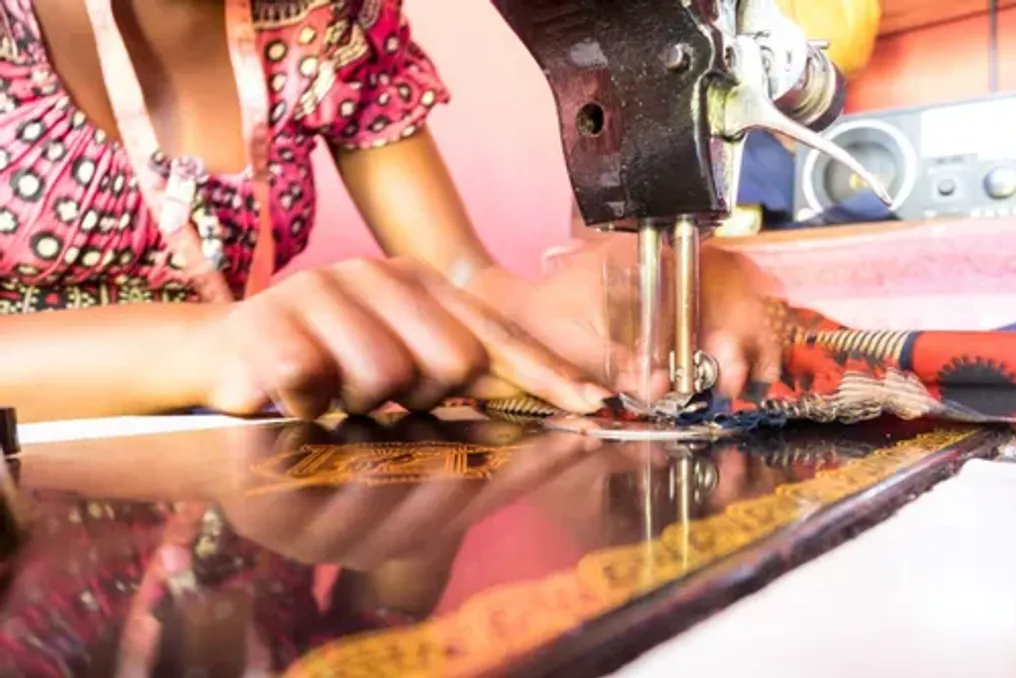
Recent studies indicate that women own approximately 60% of small, medium, and microenterprises (SMEs) in Eswatini, placing them at the center of job creation, household income generation, and economic stability. Experts emphasize that no Southern African economy can reach its full potential while effectively, even if not legally, excluding women from decision-making.
The Significance of Women's Participation in the Economy
Women's participation in labor markets, entrepreneurship, and leadership leads to faster economic diversification, better household shock absorption, and improved education and nutrition for the next generation. The Southern African Development Community (SADC) recognizes this trend, and evidence across the continent confirms it. Nevertheless, in many countries, the discussion about advancing women is viewed as a question of fairness that must be weighed against growth, rather than as one of the most obvious levers for achieving that growth.
Legal Basis and Legislation
Contrary to the common belief that legal changes have not yet occurred, Eswatini possesses a legislative framework that has already been developed, tested, and in some cases upheld by the courts. This legislative framework places the kingdom among regional leaders in terms of women's economic standing compared to other SADC countries. This argument lies at the intersection of two power systems: the Constitution and the statutes that give it force, as well as the traditional ways of life of Swazi in households and councils of elders. These two systems do not contradict each other but are complementary.
International Rankings and Constitutional Guarantees
While comparative analysis with other countries is rare, according to the World Economic Forum (WEF) indicator on economic participation and opportunity—including labor force participation, professional representation, and income parity—Eswatini ranks third globally, surpassed only by Botswana and Liberia. Eswatini's economy has reduced the gender gap in this category more than any other SADC member country, including larger economic powers. This is not coincidental but a result of a specific legal structure.
The Eswatini Constitution of 2005 is the supreme law and guarantees gender equality, recognizing women's rights and obligating the state to eliminate any historical marginalization of women. Article 14 of Chapter 3 of the Eswatini Constitution of 2005 ensures fundamental human rights for all, regardless of sex. Article 20, which is an equality clause, explicitly prohibits discrimination based on sex, granting women equal opportunities with men in political, economic, and social spheres. Furthermore, this section obligates the government to create conditions and opportunities for improving women's welfare. It should be noted that Article 28(3) states that a woman shall not be compelled to observe a custom against her 'conscience.'
Article 59(5) on economic objectives obligates the state to take all necessary measures for the full integration of women into mainstream economic development—this is an active constitutional mandate, not just inspiring words. Thanks to the advent of the Constitution, other legislation, and judicial practice, the status of women has fundamentally improved. The National Gender Policy (2023–2033) represents a comprehensive ten-year program aimed at ensuring that government ministries are gender-responsive in budget formulation and include women in leadership.
Political Representation and Land Rights
Article 86 of the Constitution stipulates that if, at the first session of the House after any general election, it is found that female members of parliament do not constitute at least 30% of the total membership, the House forms an electoral college and elects no more than four women on a regional basis. This provision aims to improve women's political participation in parliament. Currently, the proportion of women in parliament approaches 30%, and the number of female cabinet ministers has increased to 25%; the Deputy Prime Minister, the Honourable Senator Thulisiwe Dladla, is a woman.
Land in Eswatini is divided into two types: titled land and national land of Eswatini. National land belongs to the King in trust for the Emaswati and is distributed by chiefs. Historically, it was granted only to male heads of households. Now, women can legally acquire land in Eswatini's National Land independently, and many have acquired it through the kukhonta system. Women also have the right to purchase titled land in Eswatini.
The case of 'Prosecutor v Mary-Joyce Du Aphan' in 2010 led the Supreme Court to rule unconstitutional the deprivation of rights for married women in community of property to register their property in their own name. In the case of 'Sakolo v Sakolo' (2019), the High Court overturned the doctrine of spousal communal property, stating that it violates the constitutional rights and dignity of women, and that both spouses possess equal capacity to dispose of family assets. Today, Eswatini law enshrines that women have the same legal status as men when entering contracts, registering businesses, and owning and managing property.
Monarchical Leadership and Public Figures
These achievements are not the result of the ruling elite's desire. During a working visit in June 2025, His Majesty King Mswati III addressed the National House of Chiefs in Kumasi, Ghana, emphasizing the long-term developmental role of women in African communities and calling for their recognition and 'due support for our benefit always.' He highlighted Eswatini as an example where women are recognized and respected as key players in national development, asserting that traditional authority and modern governance do not conflict but complement each other in advancing this agenda.
At the Buganu Festival in 2023 at the Royal Residence of Buhleni, King Mswati raised the issue of why women are not yet elected to parliament, noting that women are fully capable of contributing to nation-building—a challenge addressed to both voters and political structures. Her Majesty Indlovukazi, the nation's principal maternal figure, also touched upon this topic. Addressing the Lutsango regiment at the Buganu Festival in 2023 at the Royal Residence of Buhleni, the Queen Mother clearly told the women of the nation in SiSwati: 'anisasibo belikhishi nemabhodo' (you do not belong in the kitchen) and strongly urged them to recognize their strength and occupy any position commensurate with their abilities, instead of bearing only the domestic burden of the family while building their own economic independence.
Evidence of Women's Leadership
These words form the basis of the entire argument. When heads of state speak about women's opportunities and status, they are not introducing a new idea into SiSwati. They are confirming what the leadership of this kingdom has practiced for decades and what is now measurably reflected in Eswatini's standing relative to the rest of the region.
Women have been leading at the highest levels for many years. The Honourable Thulisiwe Dladla, the current Deputy Prime Minister, is the second woman to hold this position in the Kingdom's history, following Constance Simelane. Her tenure has been marked by leadership that the country most needs: a stable approach to social protection, gender mainstreaming, child and disability welfare—leadership embodying the spirit of Ubuntu, whose preamble calls on us all to protect and support the most vulnerable among us.
A woman holding the second most significant position in the government's executive branch is not an exception in Eswatini's governance; it is becoming increasingly characteristic of how Eswatini is governed. Women's representation in public leadership extends beyond a single post. Current parliamentary data shows that women hold about 20.3% of seats in the Assembly and 46.7% of seats in the Senate, making Eswatini's upper house one of the most gender-balanced legislative bodies in the region. The Senate is headed by a woman, Senator Lindive Dlamini, demonstrating that women are not merely participating in public life but are occupying positions of institutional leadership. Constitutional mechanisms further protect women's representation by requiring a minimum level of female participation in both houses, unless election results themselves ensure sufficient representation.
Representation is also visible in the executive branch. Women hold about 26% of ministerial posts, including responsibility for key portfolios such as foreign affairs, internal affairs, information technology and communications, tourism and environmental issues, as well as the office of the Deputy Prime Minister. Leadership is becoming increasingly visible outside of elected offices and the Cabinet. Today, women hold senior positions in government ministries, public institutions, and national agencies, reflecting their growing role in policy development and public administration.
The influence of women is not limited to state institutions. In the private sector, women are increasingly taking on managerial and director roles in sectors such as banking, telecommunications, mining, and entrepreneurship. This leadership is reflected in the broader economy, where women own about 60% of Eswatini's small, medium, and microenterprises, making them central to business formation and employment.