The President of Uzbekistan, Shavkat Mirziyoyev, ordered officials to ensure stable supply of hydrocarbon resources to the domestic market and prevent unjustified price increases, according to the president's press service.
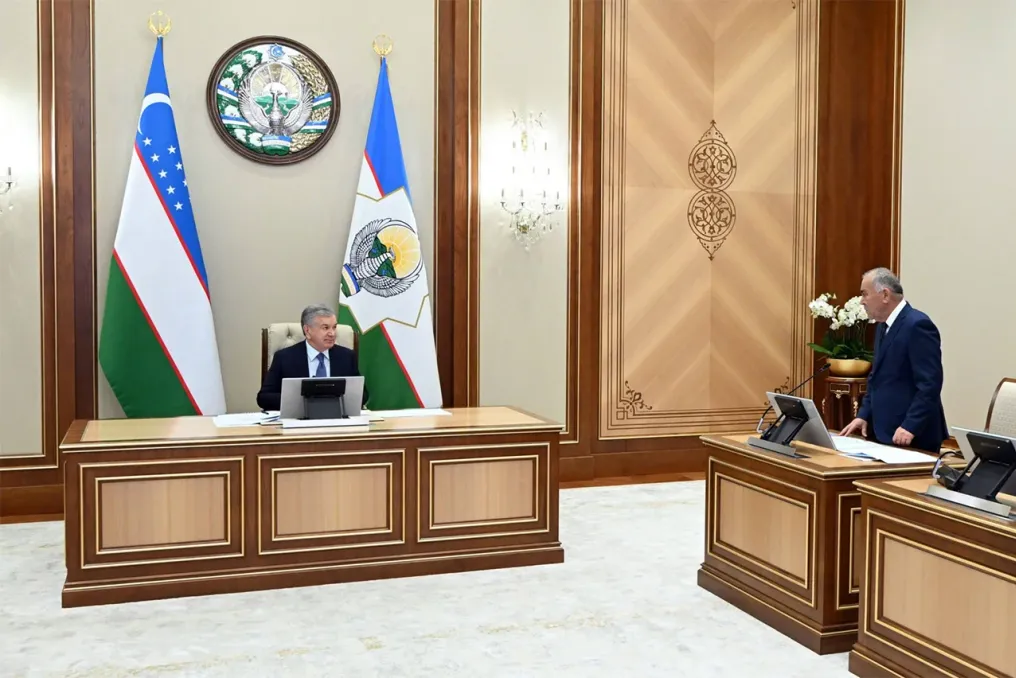
The President of Uzbekistan, Shavkat Mirziyoyev, ordered officials to ensure stable supply of hydrocarbon resources to the domestic market and prevent unjustified price increases, according to the president's press service.
During the presentation, the head of state was informed about measures aimed at stabilizing the oil and gas market, maintaining uninterrupted supplies for the population and economic sectors, as well as increasing necessary reserves.
Issues of oil and gas production, import, processing, storage, and transportation were discussed during the meeting. Officials emphasized the importance of accurately calculating regional and sectoral demand, prioritizing the satisfaction of domestic market needs, and strictly adhering to supply schedules.
Special attention was paid to JSC 'Uzbekneftegaz' regarding maintaining stable natural gas production rates, effectively utilizing existing fields, and timely commissioning of new wells.
It is planned to commission 27 wells in August. Operations at the Yangi Kultak, Niyoz, Koratau, Marvarid, and Tegirmon fields are expected to provide an additional 887,000 cubic meters of natural gas.
The President stressed the need for daily monitoring of all operations, from drilling wells to connecting them to the gas transmission system. He also ordered steps to be taken to ensure continuous energy supply and production infrastructure operation.
The presentation also covered expanding the production of goods with high domestic demand and more efficient use of existing production capacities. Responsible officials were instructed to ensure the even distribution of hydrocarbon resources across regions and the timely formation of necessary reserves.
To maintain price stability, officials were instructed to maintain sufficient market supplies, offer products on commodity exchanges based on demand, and reduce production and logistics costs.
Furthermore, instructions were given to prevent unjustified supply restrictions, artificial shortages, and actions aimed at inflating prices. Responsible parties were tasked with conducting daily analysis of domestic market needs, proactively identifying supply risks, and promptly taking corrective measures.
JSC 'Uzbekneftegaz' was instructed to achieve target levels of oil and gas production. Additionally, by the end of the year, liquefied gas production must increase to 606,000 tons compared to the previously planned 520,000 tons.
Monitoring homes and businesses has become more accessible with a selection of security cameras currently on sale at Amazon. Models suitable for both indoor and outdoor areas are available, offering features such as Wi-Fi, night vision, and other functionalities.
Among the featured products is the IP A8 Outdoor Wi-Fi Security Camera. This model is designed for outdoor use, featuring water resistance and infrared for effective monitoring even in low-light conditions. Its Wi-Fi connectivity allows for real-time tracking via smartphone in a simple manner.
Another option is the TP-Link Tapo C200. This Wi-Fi camera offers full 360-degree rotation and Full HD 1080p image quality, ensuring complete coverage of the space. It includes two-way audio, motion detection, and Alexa integration, in addition to supporting microSD cards up to 512 GB and cloud storage.
A Rotating Full HD 1080p IP WiFi Security Camera was also presented. This equipment is versatile, being water-resistant, rotatable, and equipped with infrared night vision. The two-way audio capability allows for immediate communication with those under surveillance. Furthermore, it operates on bivolt, facilitating installation in any outlet in Brazil.
Due to the rapid change in offers on Amazon, it is recommended to access the links immediately to take advantage of the best conditions. Regardless of the need—whether protecting the entrance of the house, monitoring an internal room, or increasing workplace security—there is an alternative on this list.
According to the press service of the Fergana Region Hokimiyat, a Chinese investor intends to invest about $20 million in the creation of modern industrial enterprises in the Bagdad district of the Fergana region.
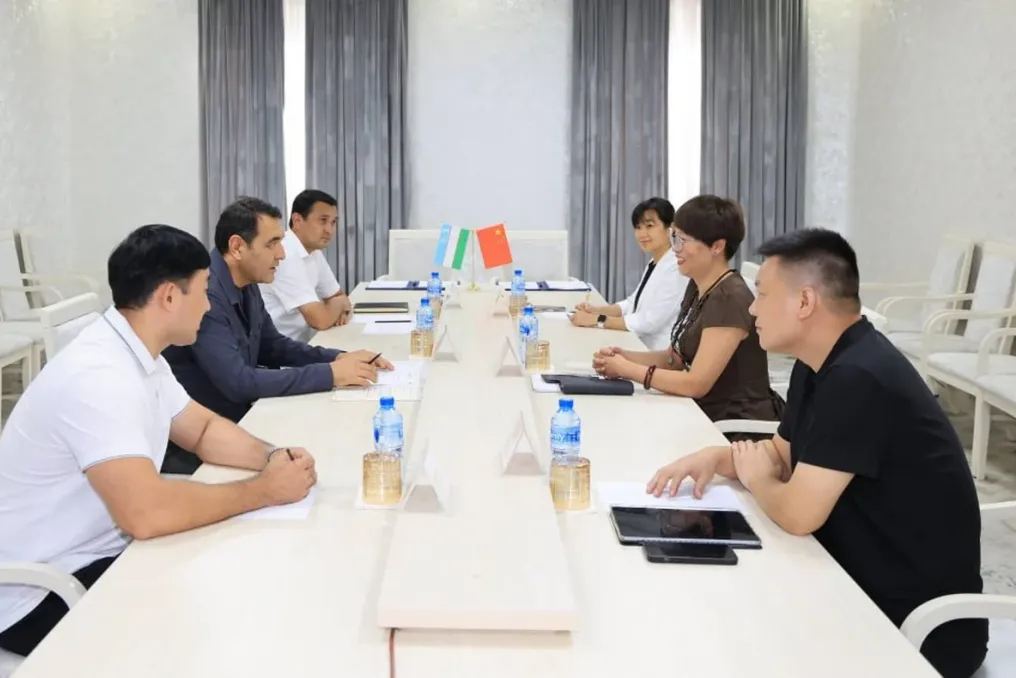
The Hokim of the Fergana region, Khayrullo Bozorov, held a meeting with the Chinese investor Yang Quichong to discuss the implementation of this industrial project and other promising areas for investment cooperation.
To carry out this project, the investor established and registered a foreign enterprise named GRANDHUNT 1688 in the Bagdad district. This enterprise plans to engage in the processing of metal structures, as well as the production of corrugated cardboard and sandwich panels.
A land plot of five hectares has been allocated for the project in the economic zone of the Bagdad district. The construction of two modern production facilities is planned on this territory in two stages.
Work on supplying necessary technological equipment and organizing the production of metal structures and sandwich panels has already begun in the first stage. The second stage involves erecting modern production workshops.
During the meeting, special attention was paid to creating conditions for the effective realization of the investment idea. Khayrullo Bozorov stated his readiness to provide the investor with full support in accordance with established procedures. At the end of the meeting, the parties signed an agreement on mutual cooperation.
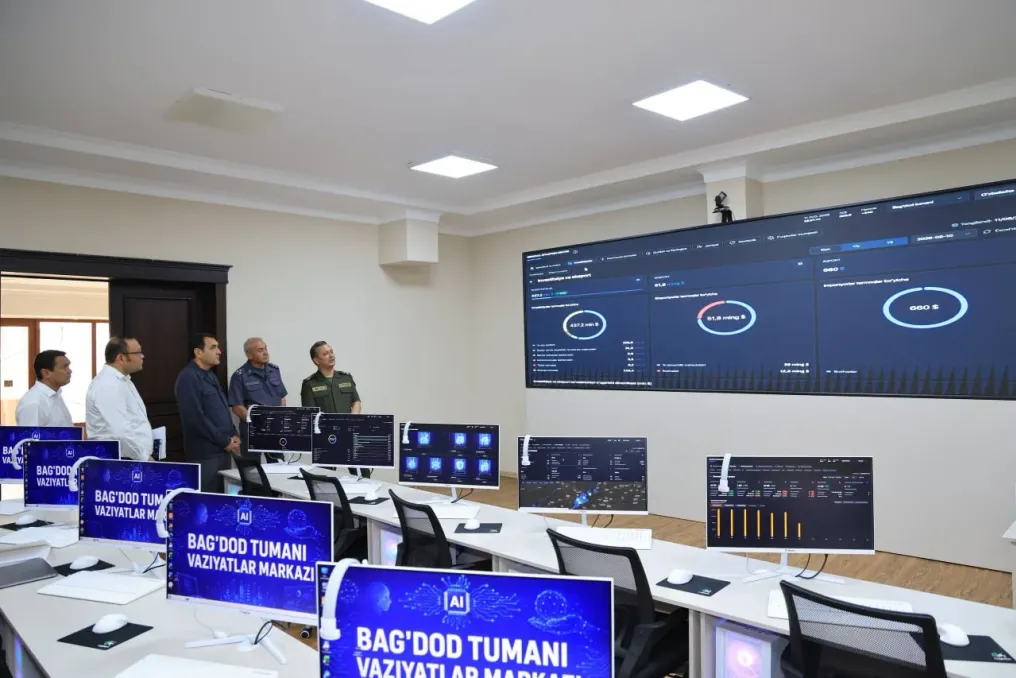
A Situational Management Center has been established in the Bagdad district of Uzbekistan's Fergana region. This center allows for real-time monitoring of socio-economic processes and analysis of indicators across various sectors, according to the press service of the Fergana Regional Government.
The Governor of the Fergana region, Khayrullo Bozorov, personally familiarized himself with the center's operations during a working trip to the Bagdad district. The center functions based on the 'Digital Khokimiyat' software complex.
Currently, about 90 information systems belonging to 50 different organizations are integrated into the network. Data is received directly from the IT systems of the respective institutions in real time and aggregated based on predefined key performance indicators.
Thanks to the center's operation, authorities can monitor and analyze online conditions in areas such as economy, investment, utilities, environmental protection, construction, social security, safety, and handling citizen appeals.
The use of a single integrated system significantly speeds up procedures that previously required sending official requests to numerous organizations and waiting several days for information. Instant access to operational data creates the prerequisites for making timely, data-driven administrative decisions.
Representatives from relevant departments also work at the center to monitor processes within their areas of responsibility. In case of problems or emergencies, this institution ensures the rapid implementation of necessary measures.
During his visit, Khayrullo Bozorov received a detailed report on the center's current activities and subsequently provided recommendations and instructions for further increasing its efficiency.