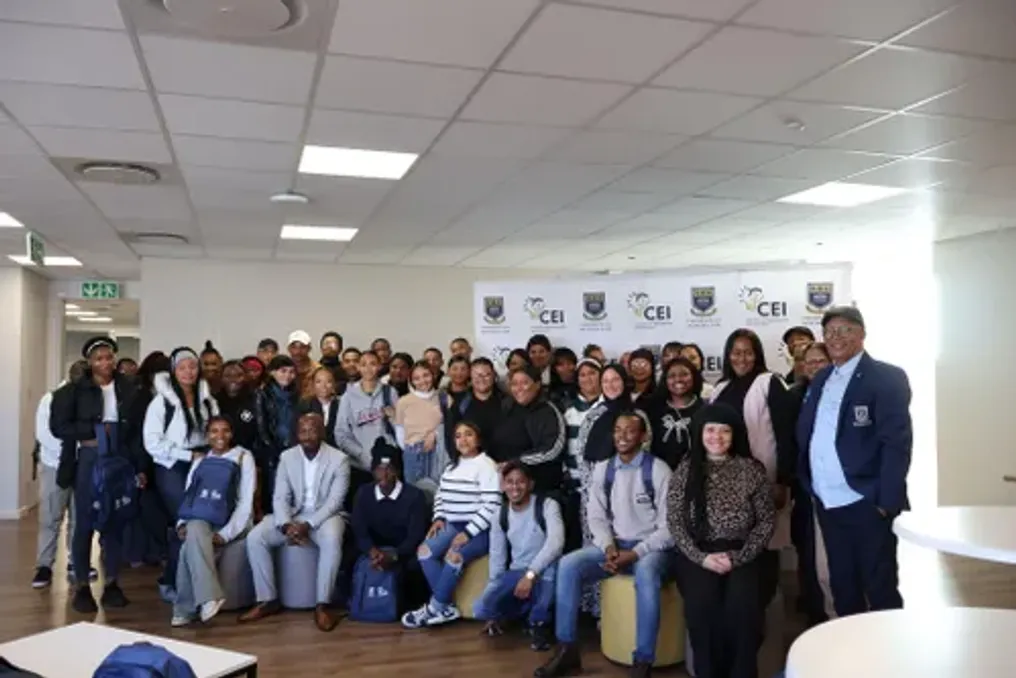
Despite the conclusion of Youth Month, the University of the Western Cape (UWC) continues its work to address the issue of youth unemployment. As part of this initiative, the UWC Centre for Entrepreneurship and Innovation (CEI) is working to create a comprehensive and supportive ecosystem.
Over the past two months, seven of the planned fourteen training sessions were held at the UWC Innovation Hub in Parow. These sessions covered 50 unemployed young people. The Director of CEI, Abe Oliver, noted that the participant pool has significantly expanded to include not only UWC graduates but also postgraduate students from Stellenbosch University, graduates from the Free State University, and BTech diploma holders from the Cape Peninsula Technological University.
These young people participate in the 'Youth Unemployment Entrepreneurship Training Program' (YUETP). Oliver emphasized that the diversity of participants reflects the need for jobs among the country's youth.
The YUETP program was developed in collaboration with the Wholesale and Retail Sector Education and Training Authority (W&RSETA) and aims to combat unemployment by combining education, business idea generation, and provision of seed capital.
Oliver pointed out that the program demonstrates that solving the unemployment problem in South Africa, where the youth unemployment rate was 45.8% in the first quarter of 2026, and 60.9% among those aged 15–24, requires not only training but also hope.
By integrating a targeted, action-oriented entrepreneurship program, YUETP offers participants three possible paths for development: further education, employment, or entrepreneurship, providing young people with real opportunities to build a sustainable future.
Thanks to networking opportunities and ecosystem support, the program also contributes to building social capital, allowing participants to develop businesses that can successfully function even after completing the training.
CEI highly values the collaboration with W&RSETA, stating that creating a more promising future for youth is only possible through partnerships across the entire ecosystem. The goal is to promote employment, education, and entrepreneurship. Participants were selected based on an interest in business, with a preference for those who already had part-time work. Within the program, these existing businesses are improved and supported.
The program, launched in 2025 in collaboration with W&RSETA, increased from 32 to 50 participants this year due to initial success. Oliver and his team surveyed the cohort in 2026. The results showed resilience and growth: many of the 32 participants took decisive steps to shape their futures, proving that with proper support, unemployed youth can turn difficulties into opportunities.
The study found that three participants actively run registered businesses, and five manage their own businesses while fully employed, confirming that the program stimulates entrepreneurship and creates multiple income streams. These young people are building livelihoods and contributing to their communities.
Oliver noted that successful former participants maintain contact with the Centre to improve the initiative, demonstrating both confidence and viability. He is proud that five participants found employment, which proves the effectiveness of the program's focus on employment. Furthermore, two participants were selected by the National Youth Development Agency (NYDA) for grant funding, which, according to Oliver, shows how the program prepares youth to obtain external resources and scale up their businesses.
Although some participants remain unemployed or face difficulties maintaining their businesses, a report compiled after the 2025 intake highlights the importance of continuous mentorship, networking, and business support. Oliver concluded that such interventions can help bridge the gap and ensure that every young person has the tools for success. An upcoming Mentorship Incubation Program for graduates is planned as an addition to YUETP.