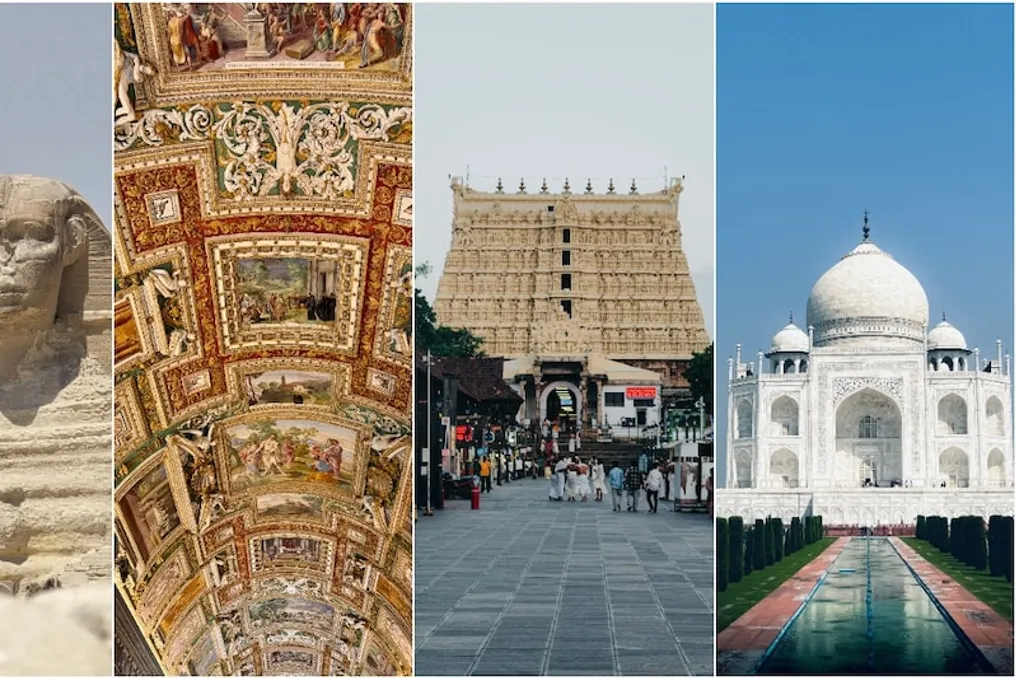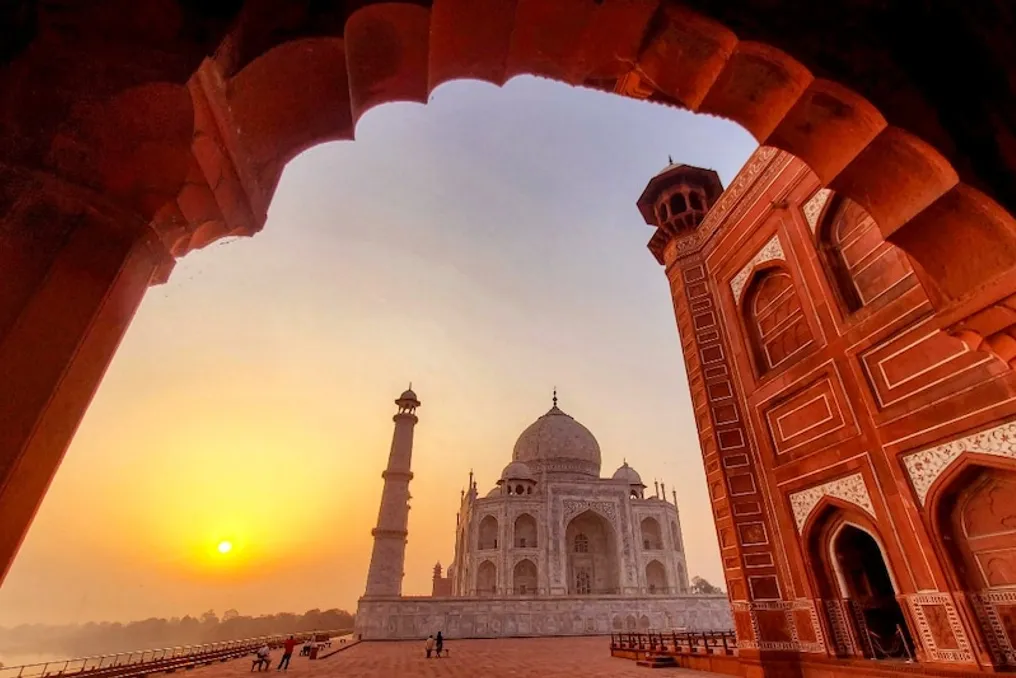
The Taj Mahal, situated on the banks of the Yamuna River, is an architectural masterpiece that has captivated people for nearly four centuries. Its beauty, created in memory of Mumtaz, is poetically described, such as in the lines of Amjad Hussain Hafiz Karnatka, which speak of its splendor in moonlight carved from white marble.
Today, the Taj Mahal is known as a symbol of love, but besides its external beauty, another aspect is often discussed—the 22 closed rooms. Various claims are made about these chambers on social media: some consider them mysterious, while others believe they hide some great secret. A natural question arises: where are these 22 rooms, and do they truly hold any secrets?
According to reports associated with the Archaeological Survey of India (ASI), there are arched sections in the basement of the Taj Mahal commonly referred to as the '22 rooms.' However, ASI staff note that calling them 22 separate rooms in the usual sense is inaccurate. According to them, it is a long arched corridor equipped with numerous doors, which led to the common name '22 rooms.'
The question arises as to why these parts, being part of the Taj Mahal, are inaccessible to ordinary tourists? These rooms are located beneath the main marble platform, on the side of the Yamuna River. They are situated under the high plinth upon which the main mausoleum stands. Therefore, when a tourist views the main part of the monument, these structures remain unnoticed.
Tourists are prohibited from visiting these areas because there is no standard tourist route or open entrance there. This is why most visitors only learn about these rooms through photographs or news reports.
ASI officials emphasize that these areas are closed not to conceal any secrets, but for safety and heritage preservation purposes. Since the Taj Mahal is a World Heritage site visited by many tourists, restricting movement in the basement is considered necessary.
This issue is central to this story. Former Regional Director of ASI (North), K.K. Muhammad, reported that during his inspection of these chambers, he found no traces of religious symbols or statues. According to him, these rooms are an integral part of the constructive structure of the Taj Mahal. They help support the high plinth on which the main mausoleum and minarets stand.
An ASI district employee in Agra also noted that the creation of arches under such a massive structure contributes to raising the platform and evenly distributing the load.
Similar underground chambers are not only found in the Taj Mahal; K.K. Muhammad mentioned that analogous basement rooms can be found in other Mughal tombs, such as Humayun's Tomb and Safdarjung's Tomb.
The main reason for the rumors is that these areas are closed to the general public. When part of a historical building remains unseen, various stories and speculations begin to emerge. There were also claims that religious statues or remains of ancient temples might be inside, but neither ASI nor any official investigation confirmed such statements. ASI staff insist that these rooms are part of the Taj Mahal's construction.
In 2022, a petition was filed in the Allahabad High Court demanding that the closed rooms of the Taj Mahal be opened and that an investigative committee be formed to study their history. However, on May 12, 2022, the court rejected this petition, ruling that such historical matters should be discussed among historians, experts, and the academic community.
Following this, ASI published photographs of these underground chambers, showing conservation and repair work. According to reports, the purpose of publishing these pictures was to dispel misconceptions surrounding these parts of the monument.
Yes, these areas are not completely abandoned. ASI staff regularly visit them to carry out cleaning, maintenance, and structural checks as needed. According to sources related to ASI, as reported in The Indian Express, these rooms are periodically cleaned, and there have been no reports of any mysterious objects on the walls.
Based on available archaeological data, these chambers are viewed not as mysterious basements, but as a structural part of the Taj Mahal. They are arched rooms located beneath the main plinth, connected to the structure and platform of the memorial. Although numerous speculations are voiced on social media, it is crucial to examine the evidence behind every claim before accepting it as a historical fact. At present, ASI and available sources confirm their structural function.