An important financial mechanism has been introduced in Turkey and submitted for parliamentary consideration. This mechanism is intended for young people who wish to start an independent life and purchase their own housing.
An important financial mechanism has been introduced in Turkey and submitted for parliamentary consideration. This mechanism is intended for young people who wish to start an independent life and purchase their own housing.
Thus, a system of direct financial assistance from the state is being introduced for citizens purchasing housing for the first time.
The dream of the residents of Peshkurgon, which lasted for many years, has finally become a reality. The construction of convenient roads implemented in Peshkurgon ahead of the greatest and most expensive holiday—Independence Day—is a testament to the strengthening of public trust in state policy.
In this location, real results of reforms are visible, as citizens' appeals have been heard, initiatives supported, and a long-standing problem has been solved in practice.
As part of the preparations for the 35th anniversary of the country's independence in Uzbekistan, the 'Improvement and Generosity' month is being held. The goal of this event is to improve the landscaping of residential buildings and quarters, enhance the sanitary condition of territories, and support families in need of social protection.
In the Samarkand region, large-scale improvement and acts of kindness are being organized in 1063 quarters as part of this month. Residents who are civil servants, members of 'ettilik', and active public figures are setting a personal example by maintaining the cleanliness of their homes and surroundings. They serve as an example to neighbors regarding the effective use of resources and informing about the needs of residents.
Leaders and responsible persons join with quarter residents to organize house-by-house improvement work. Families needing social assistance are identified, and measures to provide them with support are determined. Improvement work continues based on the criteria of 'Improved House' and 'Improved Street' in each quarter.
According to data from the Uzbek Association of Quarters, about 20 thousand homes need assistance or can be tidied up through the purchase of building materials. Aid is provided through local administrations, the economic capabilities of the quarters, and sponsorship. For instance, 4 billion sums have been allocated for the repair of walls and roofs on plots along railway and road routes in the Pakhtachinsky and Pastdargomsky districts.
Furthermore, over 1 billion sums have been directed towards the renovation of all cemeteries in the region that require major repairs, have unenclosed territories, and need auxiliary building repairs. Improvement work is underway in 1573 cemeteries, and work has been completed in 845 cemeteries so far.
Nevertheless, it is noted that the improvement and generosity activities are not being conducted at the required level everywhere. Specifically, in the Dahbed, Bozorjoy, Alisher Navoiy, Kumushkent, Gozalkent, and Pichochchi quarters in the Okdaryo district of the region, although the quarter centers and main streets have been tidied up, the internal roads and canals remain dirty. The population is not showing initiative in maintaining cleanliness around their homes and cleaning up garbage.
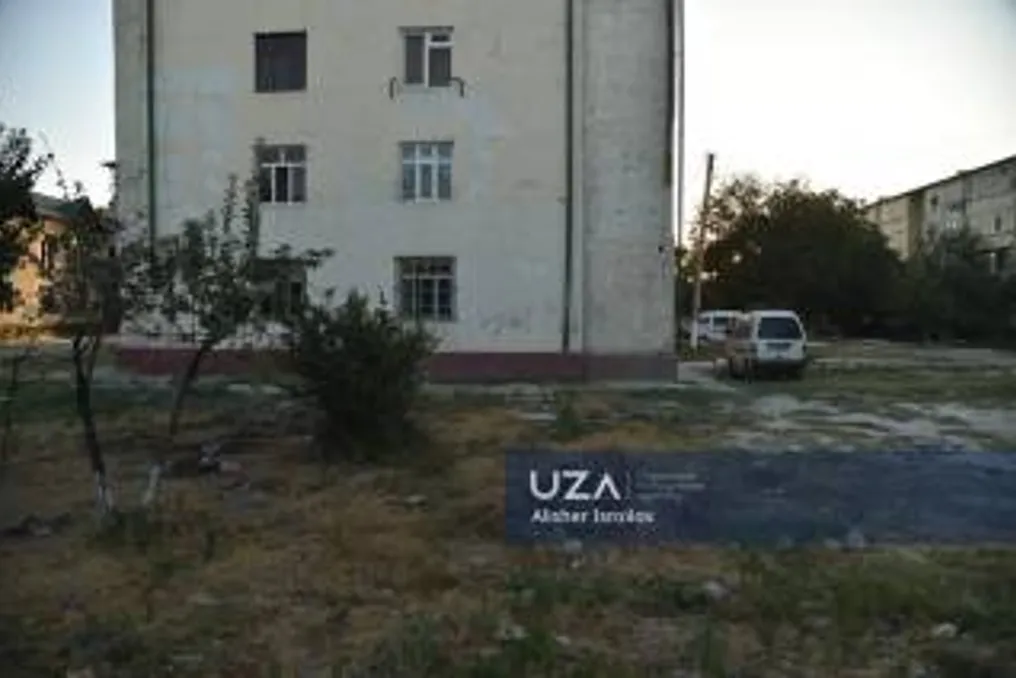
For example, in the Dahbed quarter, garbage is not removed from multi-story buildings along the main road, and garbage is piled up behind these buildings, and the canals are not cleaned.
No landscaping work has been carried out in the region at all, and seedlings planted in the spring have withered.
In the Alisher Navoiy quarter, located near the M-37 highway, garbage is collected in the canals but not removed. Similarly, in other quarters along this road, garbage dumping and damage to pedestrian paths are observed.
In the Kumushkent and Gozalkent quarters, although the main roads have been tidied up, the condition of the internal streets indicates that residents do not consider cleaning dry grass in front of their doors, clearing canals, or repairing or improving dilapidated walls.
According to available data, there are 5408 houses and 1905 non-standard objects located along major roads passing through the region, such as M-37, M-39, A-377, and A-378. Most of these houses and objects are being tidied up and improved by their owners. However, not everyone pays enough attention to this, and some believe that this should be done by the 'state authority'. After clarifying their duties and responsibilities, they begin to tidy up their homes.
Lightly constructed trade and service points built or installed in various shapes and sizes along the roads are gradually being tidied up.
The 'Improvement and Generosity' month is not for state and governmental bodies, but aims to improve people's quality of life and the landscaping of territories, focusing on the interests of the people. This task cannot be accomplished by anyone from outside; each quarter is improved by the residents living there. If every person first tidies up their home and its surroundings, the entire quarter will become beautiful. In this process, the older generation serves as an example for the children, and the youth learn neatness.
To improve multi-story buildings, joint efforts of residents and management service companies and enterprises are necessary, as residents must feel responsible for it. If this is the case, the appearance will be completely different.
The month, which started with good intentions, is not yet over, and if we join the movement to improve every house, every street, and every quarter, our country will soon become even more prosperous. We will celebrate the 35th anniversary of our homeland's independence in clean and beautiful places.
A fundamental shift is occurring in global demography. While concerns several decades ago were focused on excessive population growth, the primary threat today is the sharp decline in birth rates and population aging.
To maintain demographic stability and prevent natural population decline, an average rate of 2.1 children per woman is required. However, more than half of the world's population lives in countries where this safe rate is lower.
The most serious consequences of the crisis are visible in Asia and Europe. In South Korea, which was considered an absolute record holder for the process, the fertility rate hovers around 0.7. High real estate costs, intense competition in the labor market, and the expenses of raising children force young people to forgo starting a family and having children.
In Japan, which has become one of the oldest nations, this figure is approximately 1.2, and the country's population is shrinking by hundreds of thousands annually. China, which long pursued the 'One child, one family' policy, has also fallen into a severe demographic trap: the fertility rate reached 1, and the population began to decrease. As a result, India has taken the position of having the largest population.
The situation in Europe is also critical: the average birth rate across the continent is 1.46. For example, Italy (1.2) and Spain (1.16) are facing serious population aging. In the USA, the rate is 1.6, and the demographic balance is mainly maintained through external immigration.
The sharp drop in birth rates worldwide is linked to several interconnected factors. Firstly, urbanization and the high cost of living in cities place significant pressure on family budgets. Secondly, as women receive higher education and have more opportunities for career advancement, the age of marriage is noticeably postponed. Thirdly, family and personal values are changing: among the younger generation, the tradition of living without children or limiting themselves to one child is becoming popular.
The demographic crisis entails serious economic and social consequences. The reduction in the workforce and the increase in the number of pensioners create unprecedented strain on state budgets and pension systems. Economic growth and innovation rates are slowing down, and due to a lack of children, schools and kindergartens are closing, while the demand for nursing homes is increasing.
Despite developed countries (South Korea, Japan, and European countries) allocating huge financial resources and providing tax incentives to stimulate birth rates, these efforts have not yet yielded the expected results. In regions such as Central Asia, including Uzbekistan, and in Africa, high birth rates persist. Consequently, a sharp change in the balance of economic power in the world and the direction of global labor migration is possible in the near future.