New payment rules will come into force in all city buses operating under a gross contract starting September 1, 2026.
New payment rules will come into force in all city buses operating under a gross contract starting September 1, 2026.
The 128 GB Galaxy Tab S10 Lite Wi-Fi is being offered for R$ 2,199, allowing payment in up to 12 interest-free installments, an exclusive offer for Amazon Prime members. This Samsung tablet, designed to assist with studies, features a 90 Hz screen and comes with the S Pen stylus in the box, representing a 21% saving compared to its original price of R$ 2,799.
Although it is a more basic model within the Tab S10 line, the Lite model has specifications adequate for handling daily activities, making it particularly useful in learning environments, such as classrooms.
The 10.9-inch LCD screen of the Galaxy Tab S10 Lite operates at a 90 Hz frequency, providing ample space to run applications and view documents with great fluidity during transitions between them. The set comes with the S Pen for notes and drawings, as well as a case that also serves as a stand.
Performance is supported by the Exynos 1380 processor and 6 GB of RAM, which ensures good operation of educational applications. Additionally, the 128 GB internal storage can be expanded using microSD cards with capacities up to 2 TB.
In terms of cameras, the device features a 5 MP front camera, considered good quality for video calls among Samsung's latest tablets, and an 8 MP main rear camera, capable of capturing documents and notes with sharpness. Both cameras record in Full HD.
The 8,000 mAh battery offers up to 16 hours of video playback, as specified by Samsung, and supports 25 W fast charging via USB-C (although the charger included in the box is 15 W). This allows the device to be used during classes at school or university without worrying about running out of power.
The 128 GB Galaxy Tab S10 Lite Wi-Fi, with the promotional price of R$ 2,199 in up to 12 interest-free installments exclusively for Amazon Prime, features Wi-Fi 6 and Bluetooth 5.3 connectivity, and will receive software updates up to Android 22.
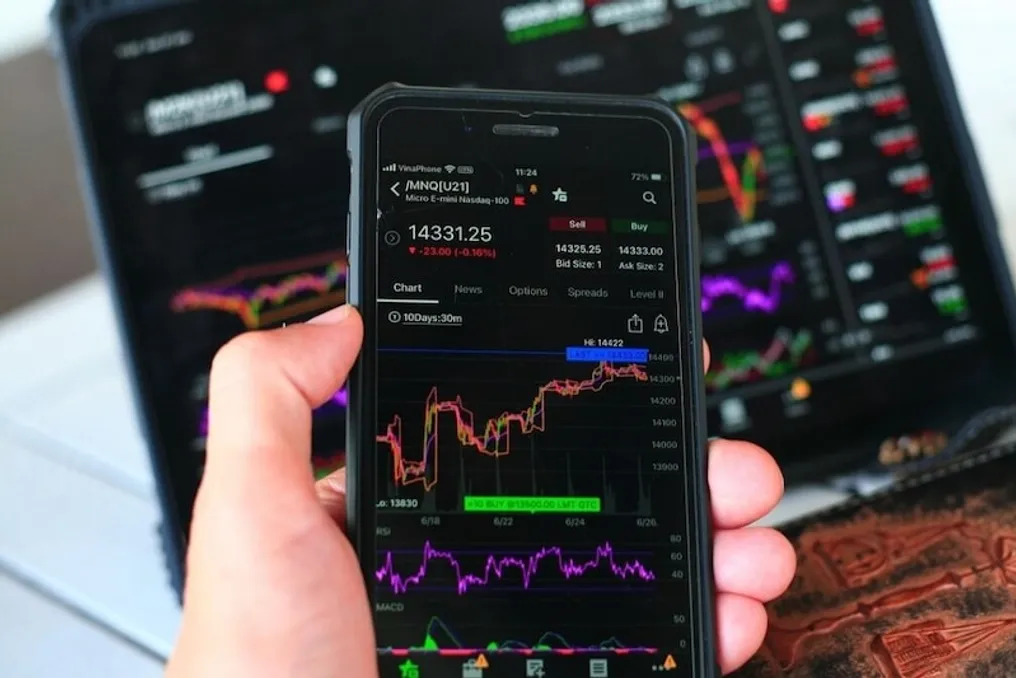
Despite the overall downward trend of the market, one stock demonstrated significant growth on Tuesday thanks to the company's impressive quarterly results. This concerns Finolex Cables Limited, whose shares rose by 15.70 percent on Tuesday and reached a five-year high of 1225 rupees. By the end of the trading day, the price fell to 1213 rupees, showing an increase of 14.64%.
The company showed outstanding results for the June quarter, noting a 53.14% increase in net profit compared to last year. For the first quarter of the 2027 fiscal year, the owners received 249.04 crore rupees, whereas in the same period last year, this amount was 162.62 crore rupees.
Revenue for this quarter increased by 44.26% year-on-year, reaching 2013.15 crore rupees, compared to 1395.52 crore rupees in the first quarter of the 2026 fiscal year.
The company attributed this growth to a 7% increase in electrical wiring volume during this quarter, driven by strong contributions from agricultural, industrial, and solar sectors. In the cable segment, the volume of fiber optic cables was significantly higher than in the previous year. Furthermore, large orders in this segment supported profitability.
However, the company reported that its copper billet plant was not operational during the quarter due to extremely limited fuel availability (LPG/PNG), caused by the conflict in the Middle East. The limited fuel availability also affected sales of a new product category. Finolex Cables also noted that copper prices remained high, and the ex-factory price was increased in May.
The company stated that its expansion plans, concerning the installation of fiber drawing equipment, are progressing according to schedule. The new plant is expected to operate at full capacity (4 million kilometers of fiber) by the third quarter of the current fiscal year. Finolex Cables is a manufacturer of electrical and telecommunication cables in India. Its products are used in many sectors, including the automotive industry, power grids, cable television, telephony, computers, agriculture, and industry. The company's product portfolio also includes electrical switches, LED lamps, fans, low-voltage MCBs, water heaters, and electric irons.
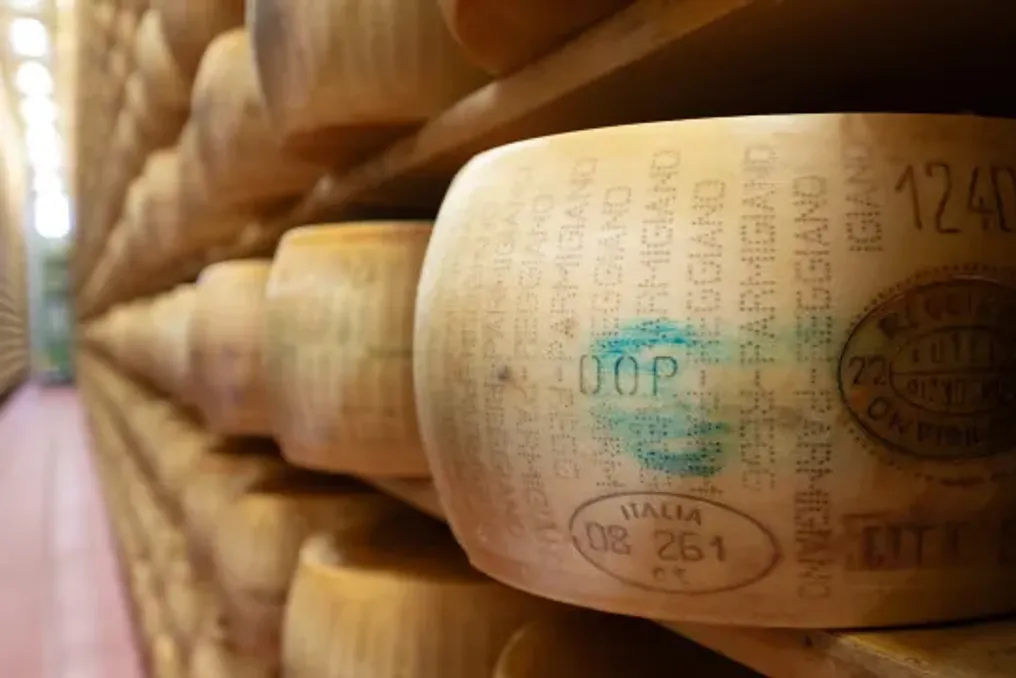
Credito Emiliano Bank (Credem), located in the Emilia-Romagna region of northern Italy, has been known for decades as the 'cheese bank' due to its acceptance of Parmigiano Reggiano cheese wheels as collateral for loans. However, the bank is currently facing difficulties caused by heatwaves.
Credem's vault holds over half a million wheels of Parmigiano Reggiano DOP, with an estimated total value exceeding 300 million euros. These stocks are used as guarantees for issuing loans to local dairy farms—a practice that has existed since 1953.
The process is quite simple: after receiving unripened wheels from local producers, Credem's subsidiary, Magazzini Generali delle Tagliate, handles their aging in two warehouses in Reggio Emilia and Modena. As explained by the American publication Fortune, producers typically receive an advance of 60% to 80% of the cost of one wheel.
Currently, producers can also store the cheese rounds as collateral themselves, which allows the bank to double its lending potential.
Overall, Italy produces about four million units of Parmigiano Reggiano annually, and 'cheese banks' hold approximately 500,000 of them, Giancarlo Ravanetti reported in an interview with CNN International. Nevertheless, maintaining this amount of cheese at ideal temperatures has become more expensive, especially against the backdrop of a roughly 30% increase in daily energy consumption due to record heatwaves in Europe.
Furthermore, climate change is negatively affecting milk supplies from producers. Since cows rest more and eat less, milk production is decreasing by 10% annually. Nicola Bertinelli, President of the Parmigiano Reggiano Consortium, explained that 'extreme heat affects the quality and quantity of milk.'
Consequently, if producers have less milk, they also have less cheese to deposit with the bank, which complicates obtaining loans.