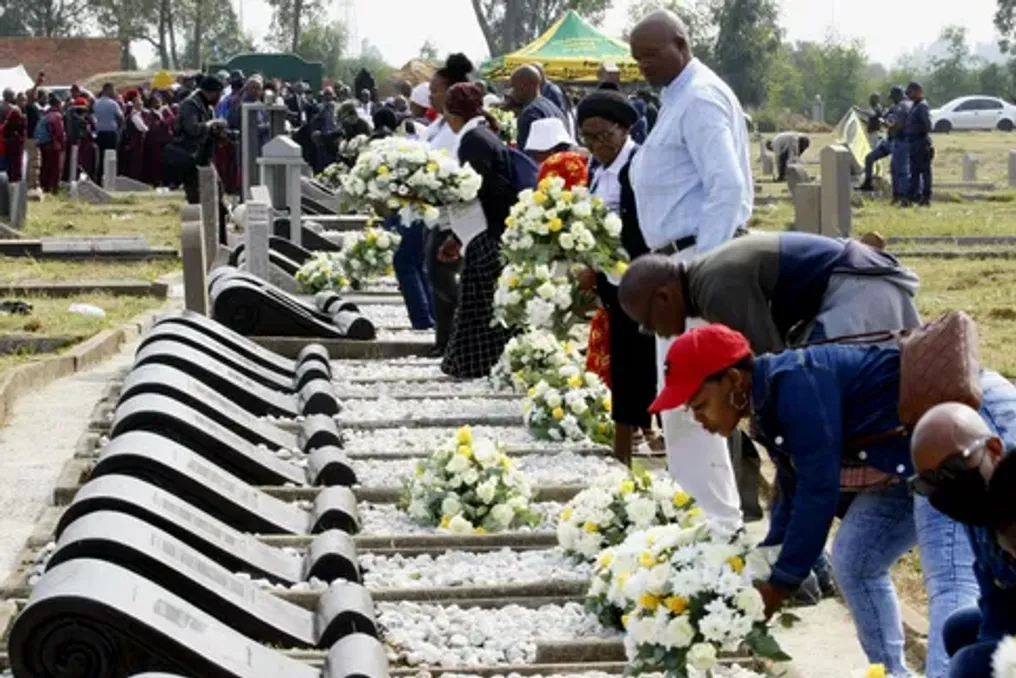
The African Transformation Movement (ATM) has formally urged the government to prioritize the respectful restoration and preservation of all burial grounds linked to the Sharpeville Massacre. This call comes sixty-six years after the event, as many victims still face persistent poverty, unkept promises, and neglected graves.
The ATM submitted a letter addressed to the Public Protector, the South African Human Rights Commission (SAHRC), and Deputy President Paul Mashatile. The organization requests that the Public Protector investigate the failure to fully execute commitments made to survivors, specifically concerning support programs, compensation, and memorialization efforts.
Furthermore, the ATM asks the SAHRC to undertake a thorough investigation into the human rights ramifications stemming from the ongoing disregard shown towards the survivors and their relatives. The party also appealed to Mashatile, recognizing him as a proponent of national reconciliation and social cohesion, to spearhead a joint governmental effort. This intervention should unite all pertinent stakeholders to meet directly with the survivors and establish a concrete, time-bound plan to resolve decades of injustices, exclusions, and unmet pledges.
The Sharpeville Massacre
The Sharpeville Massacre occurred on March 21, 1960. During this incident, police forces fired upon a peaceful gathering protesting the apartheid pass laws outside the Sharpeville Police Station, resulting in the deaths of 69 individuals and injuries to over 180 people.
The protesters approached the police station without their required passbooks—documents that regulated the movement of Black people under the apartheid regime—as a form of non-violent protest to surrender for arrest. This massacre provoked widespread international condemnation, escalated resistance against apartheid, and ultimately led to the prohibition of liberation groups, including the African National Congress (ANC) and the Pan Africanist Congress (PAC).
In the aftermath, the post-apartheid administration designated March 21 as an official public holiday known as Human Rights Day, intended to honor the deceased and remind citizens of the price paid for freedom. Concurrently, the Truth and Reconciliation Commission (TRC) pledged financial restitution, community recovery, and official acknowledgment to restore the dignity of the victims.
Despite these assurances, the slow and insufficient disbursement of funds has caused many to feel overlooked. A spokesperson for the SAHRC, Wisani Baloyi, confirmed receiving the correspondence, stating that the complaint is currently being evaluated according to the South African Human Rights Complaints Handling Procedure. Baloyi also mentioned the potential reopening of the TRC, suggesting it could provide answers to those seeking justice for their loved ones.
Oupa Segwale, a spokesperson for the Public Protector, verified the complaint's receipt, noting that it will undergo a standard assessment to determine its jurisdiction. He assured that the complainant would be informed of the result in due course. Keith Khoza, the spokesperson for Mashatile, was unavailable for immediate comment.
In the letter, ATM leader Vuyo Zungula stated that it is profoundly concerning that more than sixty years after the Sharpeville Massacre, numerous survivors and their families lack justice, proper recognition, and fulfillment of the TRC's commitments. Zungula emphasized that these issues transcend mere historical complaints; they represent continuous breaches of constitutional rights and human dignity.
He noted that survivors have repeatedly voiced worries about the incomplete execution of the TRC's recommendations. While compensation was promised, many victims received only a small portion of what was recommended, or nothing at all. Zungula argued that this uneven treatment has fostered a deep sense of exclusion and unfairness among those who sacrificed significantly for the freedoms enjoyed by all South Africans today.