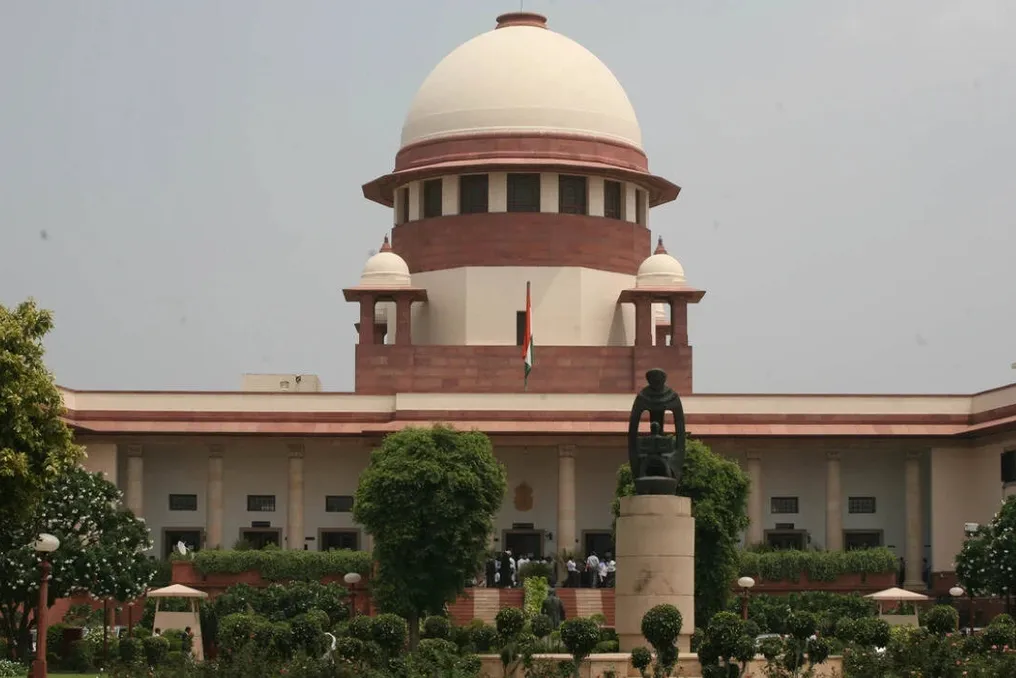
The Supreme Court (SC) commented on Punjab's unwillingness to comply with a resolution made 15 years ago concerning the payment of electricity debts owed by Himachal Pradesh. The Court noted that the state has a tendency to disregard judicial decisions, stating: 'The state has a habit of challenging rulings, and old habits are difficult to change.'
Attorney General R. Venkataramani informed the bench, including Chief Justice Surya Kant, that after reviewing materials from the Comptroller and Auditor General (CAG), he conducted extensive consultations with Punjab, Haryana, Himachal Pradesh, and the Union Ministry of Power to independently determine historical liability for capital expenditure.
The AG stated that a mutually acceptable settlement plan has been developed. It involves a cashless transaction where mutual claims and obligations will be offset through the netting of energy dues and the repayment of capital expenditure liability, thereby eliminating the need for direct financial transactions between the states.
Senior advocates Kapil Sibal (representing Himachal) and Balbir Singh (representing Haryana) agreed with the AG's proposed plan for implementing the resolution adopted by the Supreme Court in 2011 based on an original suit filed by Himachal 30 years ago demanding asset settlement during the partition of Punjab in 1966.
However, senior advocate Nidesh Gupta, representing Punjab, expressed concerns about the feasibility of the AG's proposal, noting that the state could incur significant losses. Considering this is a 15-year-old resolution stemming from a 30-year-old original suit aimed at resolving a 60-year inter-state dispute, the court reiterated its warning about the state's habit of ignoring decisions.
The Court emphasized: 'There is a ruling in favor of Himachal. When we order its execution, it will be with interest from 2011. We will not allow them to lose the fruits of this ruling. If you agree to the settlement, that is good. Otherwise, be prepared for the consequences.' The matter was scheduled for hearing on August 12.
In its judgment dated July 30, the court pointed out that while the states of Himachal and Haryana had kindly agreed in principle to the proposal, Punjab had raised objections. In the interest of justice, Punjab was given two weeks to reconsider its position and clarify it.
The AG's proposal suggested that Punjab and Haryana would provide 13,066 MU of energy dues to Himachal Pradesh at a rate of 871 MU per year over 15 low season periods (October-March), in a ratio of 58:42 (Bhakra-Nangal project) and 60:40 (Bias projects). Himachal Pradesh would pay bills determined by BBMB for the year of receiving each tranche.
Furthermore, Himachal Pradesh's liability (7.19% of total Punjab) for the capital expenditure of the Bhakra-Nangal and Bias projects—which represents the unreimbursed portion of loan servicing by Punjab and Haryana from 1966 to 1967—should be assessed at ₹420.7 crore (Punjab: ₹249.2 crore; Haryana: ₹171.5 crore). This capital expenditure liability can be accounted for when offsetting part of Himachal Pradesh's energy receivables.
At a rate of ₹3.85 per unit, the volume of units subject to offset amounts to approximately 1093 MU. Previously, on September 27, 2011, the Supreme Court (judges R. V. Ravindran and A. K. Patnaik) ruled in favor of Himachal Pradesh, establishing that the state is entitled to 7.19% of the total power from Punjab's Bhakra-Nangal project from November 1, 1966, and from the Bias project from the date of production in Blocks I and II.