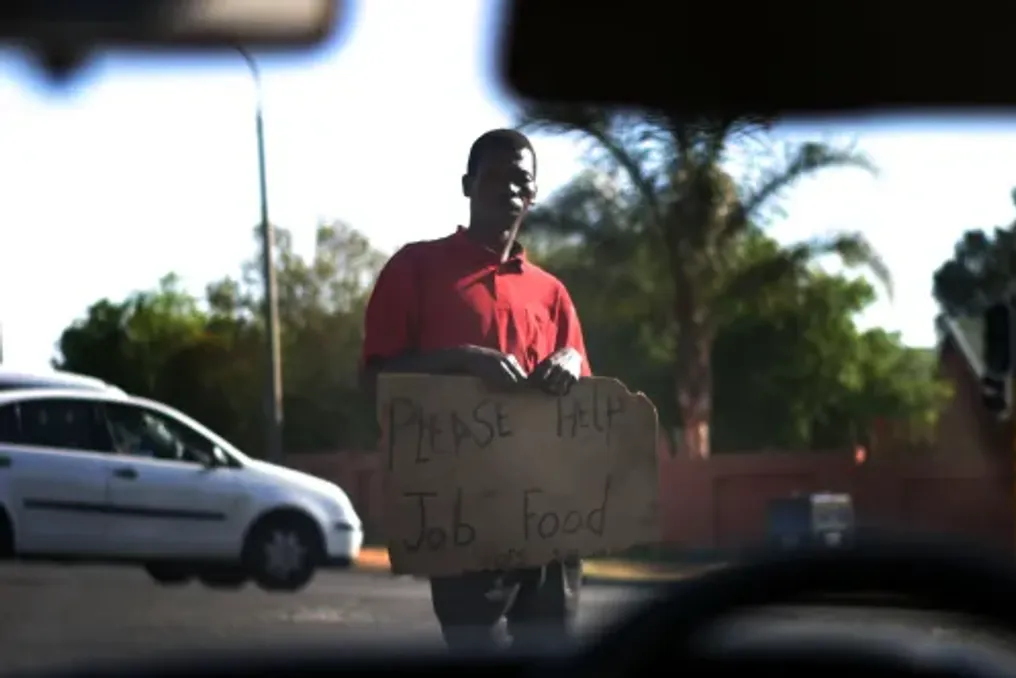
The unemployment rate in South Africa increased to 33.6% in the second quarter of 2026 as the number of unemployed rose by 345,000, and youth unemployment worsened. This rise raises concerns about the country's economic stability.
The unemployment rate in South Africa increased to 33.6% in the second quarter of 2026 as the number of unemployed rose by 345,000, and youth unemployment worsened. This rise raises concerns about the country's economic stability.
According to the latest Quarterly Labour Force Survey (QLFS) published by Statistics South Africa on Tuesday, the number of people without work reached 8.5 million between April and June. Meanwhile, the number of employed people decreased by 16,000 to 16.7 million. Over the quarter, the labour force grew by 329,000 people, as more people entered or returned to the labour market.
This growth led to an increase in the official unemployment rate by 0.9 percentage points—from 32.7% in the first quarter of the year to 33.6%. Previously, the highest officially registered unemployment rate in South Africa was 35.3%, recorded in the fourth quarter of 2021, according to data from Statistics South Africa via Trading Economics. Using a broader extended definition that includes those who have stopped looking for work, this figure exceeded 46% during the same period affected by the pandemic.
Statistics South Africa reported that the number of people outside the labour force decreased by 208,000 to 17.1 million. This was mainly because fewer people were classified as discouraged workers or as potential labour force participants.
Job losses were noted in both the formal and household sectors, while the informal sector continued to grow. The formal sector reduced 41,000 jobs, and the household sector lost 9,000. Meanwhile, the informal sector saw employment growth of 34,000 over the quarter.
By industry, the largest employment growth was recorded in trade, which added 70,000 jobs, followed by construction with 39,000 and finance with 11,000. The largest job losses were recorded in public and social services (57,000), mining (26,000), as well as in agriculture and manufacturing, where each of these sectors lost 15,000 jobs.
By province, Mpumalanga showed the largest employment growth, adding 41,000 jobs, followed by the Eastern Cape (13,000) and Free State (9,000). Job losses were recorded in the Western Cape (48,000), Gauteng (22,000), and North West Province (15,000).
Youth remained disproportionately affected by unemployment. Stats SA noted that the number of unemployed aged 15 to 34 increased by 264,000 to 5 million, while the number of employed youth decreased by 40,000 to 5.6 million. As a result, the youth unemployment rate rose by 1.5 percentage points, reaching 47.4% in the second quarter.
The broader labour market also remained under pressure. The combined rate of unemployment and temporary inactivity rose to 36.6%, and the combined rate of unemployment and potential labour force grew to 43.8%. The broadest measure of labour underutilization remained unchanged at 46.3%.
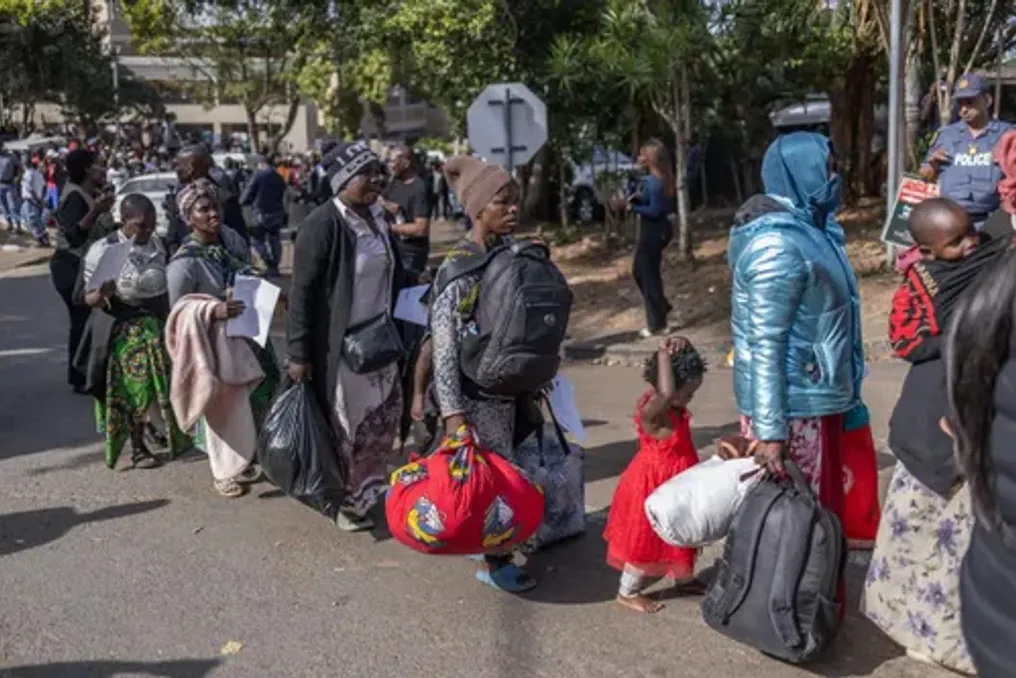
The mass exodus of migrants from South Africa is leading to labor shortages for employers. For instance, Zimbabwean farmer Aaron Majatamhe told AFP that regions with high fruit production are experiencing a shortage of workers for picking citrus fruits, as well as in vineyards where grapes need harvesting.
Similar problems are occurring across South Africa, as factories, farms, and even private households struggle for labor after thousands of foreign workers left the country over several weeks. The cause was fleeing deadly anti-migrant protests and increased immigration control measures.
Peripheral anti-foreign groups set an unofficial deadline of June 30th for illegal migrants to leave, which triggered the departure of over 160,000 people, according to AFP estimates based on African government data regarding the repatriation of their citizens. Zimbabwe, which accounted for the largest share of returnees, reported that many of them worked in the agricultural, domestic, and construction sectors in South Africa.
The first signs of the crisis appeared almost immediately in the KwaZulu-Natal sugar belt. One farmer from the northern coast reported losing up to 80% of his sugarcane harvesting workforce practically overnight. He noted that production and supplies deteriorated to such an extent that milling plants would struggle to stay open, speaking anonymously for fear of reprisal.
Another producer near Mid-Illovo, in the hill region south of Durban, stated that most of the sugarcane harvesters in his area came from Lesotho, a small kingdom surrounded by South Africa. He added that there are fields that need harvesting, but there are not enough people because locals dislike the work due to its heaviness and physical demands.
However, this argument is disputed. Trade unions and researchers argue that with unemployment rates above 33% (and even higher if those not seeking work are included), South Africa does not lack willing local workers. Instead, they point out that many employers prefer migrants because they are cheaper, more flexible, and less likely to require formal contracts, benefits, or legal protection.
Patrick Williams, a local organizer for the Commercial, Loading, Unloading, Agricultural, and Allied Union, stated that 'they profit from foreign countries.' He also noted that foreign agricultural workers regularly worked seven days a week, skipped lunch breaks to maximize piece-rate earnings, and often earned less than the national minimum wage.
For employers, the problem is not only finding workers but also replacing long-term experience. A clothing manager in the Chatsworth industrial area in Durban said that the departure of skilled machinists from Malawi and Mozambique forced factories to struggle with fulfilling orders. She stated that they barely meet targets because most had to leave, and that local workers will need time to learn the job.
The government has tried to respond to public discontent over migration by promoting a 'locals first' approach, while acknowledging that some industries depend on foreign skills and labor. Last week, the Trusted Employer Program was expanded, accelerating visas for employees of compliant companies, including those predominantly hiring South Africans, investing in skills development, and working in priority sectors.
Industry groups are strongly urging the government to create legal channels for seasonal foreign labor, arguing that sectors like agriculture have become dependent on migrants and cannot replace them overnight. Siyabonga Madlala, CEO of the South African Farmers Development Association, believes that South Africa should consider a regulated seasonal worker program similar to that in the United States.
He also suggested that special permits might be needed for seasonal workers from SADC countries where local supply is insufficient, referencing the 16-member Southern African Development Community bloc. It is estimated that over 60% of South Africa's immigrants come from SADC countries.
Nevertheless, for many who left, debates about labor policy have taken a backseat due to safety concerns after at least four foreigners were killed, according to police. Wayne Chimbadzwa Mutasa, a Zimbabwean citizen who lived in Robertson since 2014, reported leaving after foreign workers were subjected to targeted home raids. He told AFP that people who came to Zimbabwean homes claimed to be police officers reporting illegal residency. His compatriot, farmer Aaron Majatamhe, decided to stay for now, noting: 'We are afraid to stay even here, but the problem is we don't have money to go home.'
_The rate of housing price growth in South Africa is declining as increased borrowing costs put pressure on housing demand. The market continues to be supported by supply constraints, which help stabilize prices.
The slowdown in price growth reflects a more complex operating environment for households. Market activity is expected to remain subdued for the rest of the year. According to FNB senior economist Siphamandla Mkhwanazi, high borrowing costs, weakening consumer confidence, and softer economic conditions are negatively impacting housing demand and are likely to limit market activity until the end of the year.
According to the FNB Housing Price Index (HPI), housing price growth slowed in June, falling to 5.2% year-on-year (y/y) compared to 5.7% y/y in May. Mkhwanazi also noted that recent data shows the average housing price growth in Q2 2026 was 5.6% y/y, lower than the 6.0% recorded in Q1.
Although housing price inflation remains slightly above overall consumer inflation, which was 5.0% y/y in June, the gap between them has narrowed significantly compared to the beginning of the year. Latest data shows that rent increased by 4.1% y/y in June and continues to rise gradually with regional variations.
New residential construction activity remains low, and the supply of existing homes available for sale has also decreased. However, the economist emphasized that the housing market continues to benefit from supply constraints, which helps curb price increases. He added that limited stock availability prevents a more noticeable correction in housing prices and should continue to support forecasts in the near term. Therefore, while weaker macroeconomic conditions may dampen transactional activity, a broad fall in housing prices is not anticipated.
From a rental market perspective, vacancy rates continue to decline due to purchasing power constraints in the ownership market and stable household formation. Mkhwanazi predicts that housing price growth will continue to moderate down to 4% by the end of the year, as high borrowing costs, low confidence, and slowing economic growth weigh on demand.
Nevertheless, he believes that the reduction in new housing construction and the smaller number of available homes should continue to support prices. He also mentioned that the South African Reserve Bank's (SARB) decision to keep interest rates unchanged was a positive surprise for households and potential buyers. In the future, inflationary pressure is expected to peak in early 2027, giving SARB the opportunity to resume its easing cycle. Lower borrowing costs should support mortgage demand, improve affordability, and help stabilize market activity.
Rental market conditions should also remain relatively stable, according to Mkhwanazi. He added that pressure on purchasing power and tighter lending conditions should continue to support rental demand, while limited development plans restrict the growth of rental stock. Nevertheless, vacancy rates remain slightly above pre-pandemic levels, indicating that excess capacity has not been fully absorbed, limiting rent growth before purchasing power becomes the constraining factor.
Last week, Keegan Stein, founder of South Africa Forbes Global Properties, called the SARB's decision to maintain interest rates at 7% a favorable outcome. He noted that this gives buyers time to absorb the May increase without further changes to what they can afford, given that confidence this year was insufficient.
In his view, at the top end of the market, rate decisions influence sentiment more than purchasing power, as their buyers typically have no encumbrances or only small debt. Stability reduces decision-making volatility.
Forbes Global Properties also pointed out that in mortgage-financed segments, purchasing power remains the main limiting factor, and banks maintain discipline, meaning volumes require time to react. The drivers differ in the luxury segment: demand is driven by scarcity. There is a finite number of properties on the Atlantic coast with the desired location and views, for which international and local high-net-worth buyers compete, and rate changes do not increase this supply. Similar dynamics are observed in the Winelands and private Big Five reserves in KwaZulu-Natal, where only a small number of villas exist within one reserve, and new ones cannot be built. Buyers in these markets acquire scarcity, not square meters. The company also noted that South Africa continues to attract lifestyle relocations and international buyers for whom the country's pricing still appears attractive compared to equivalent global markets.