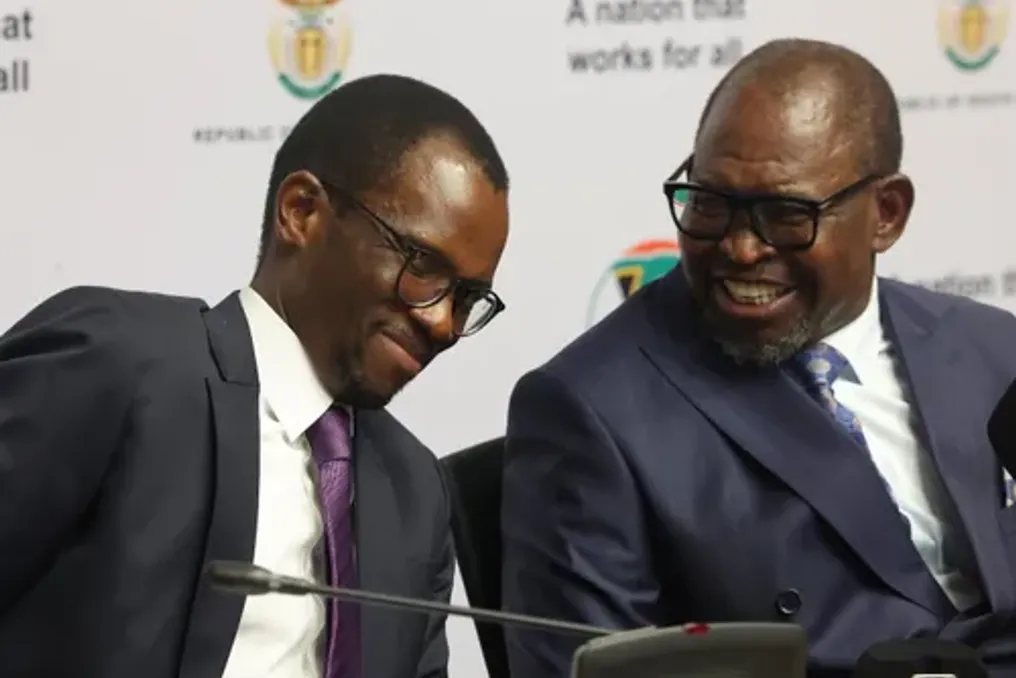
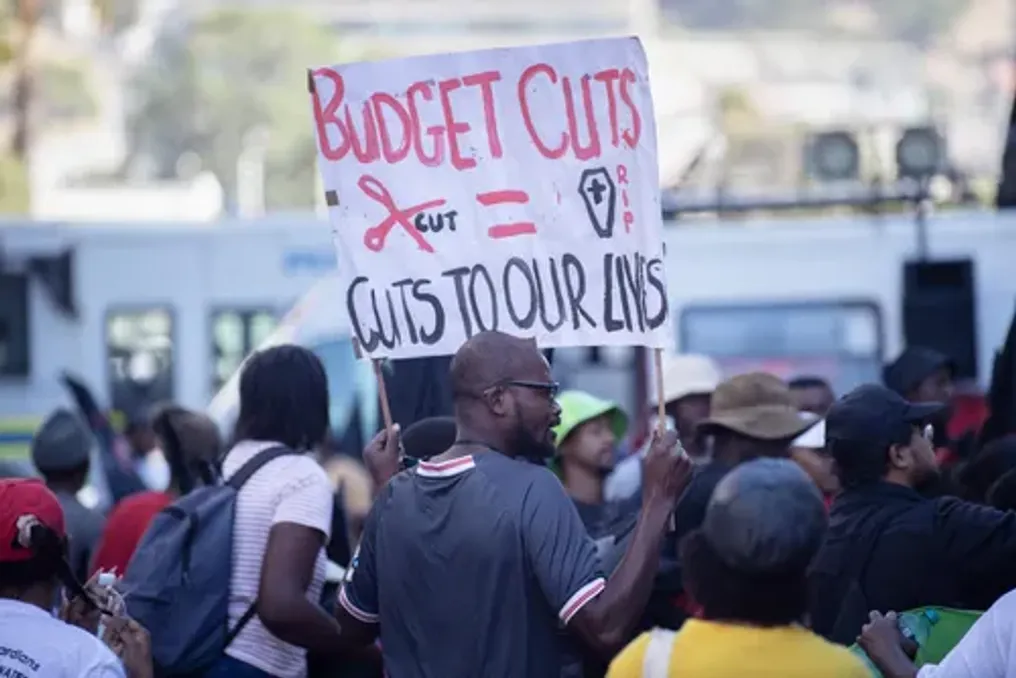
The recent decision by the South African government to secure an additional loan of 24.7 billion rand from the World Bank has once again raised the critical issue of the country's fiscal sustainability, its development priorities, and its long-term economic strategy. Activists from trade unions, farmers' associations, gender organizations, and other civil society groups protested in front of Parliament in Cape Town on March 12, 2025, against the proposed austerity measures.
This loan is intended to finance infrastructure reforms, particularly in the energy and transport sectors. The government argues that such investments will help eliminate structural constraints, stimulate economic growth, and create jobs. However, concurrently, South Africa spends approximately 1 billion rand daily just on servicing existing debt, raising the question: can the country achieve growth through borrowing if debt servicing consumes an increasing amount of public resources?
Analysis of Borrowing Viability
There is a compelling economic argument in favor of attracting funds for productive investments. Governments worldwide regularly take out loans to finance infrastructure that yields long-term economic returns. Roads, ports, railways, energy grids, and digital infrastructure increase productivity, lower business costs, and improve competitiveness.
If borrowed funds are directed towards projects that expand the economy's productive capacity, future economic growth can generate sufficient revenue to repay the loans. In this sense, borrowing is not inherently irresponsible; its success depends entirely on the efficiency of how these funds are used. Thus, the South African government's justification is based on a solid theoretical foundation.
For a long time, investments have been constrained by constant power shortages, deteriorating logistics, and faulty transport infrastructure, which weakened industrial production and reduced export competitiveness. If the World Bank loan helps accelerate reforms and attracts private investment, the benefits may outweigh the borrowing costs. According to data from the World Bank and the National Treasury, these reforms are expected to support significant job creation in the coming years.
Implementation Risks and Fiscal Burden
Nevertheless, having sound economic theory does not guarantee successful implementation. South Africa's recent history provides ample grounds for skepticism: billions of rand were previously allocated to infrastructure projects that suffered from delays, cost overruns, corruption, improper procurement practices, and weak institutional frameworks. The central weakness of the government's borrowing strategy lies not so much in the decision to take the loan, but in the state's limited ability to convert borrowed capital into productive assets.
This implementation deficit significantly increases fiscal risks. Every rand borrowed today becomes a future obligation for taxpayers. If projects do not generate economic growth, the country inherits debt without reaping the expected developmental benefits. Under such circumstances, borrowing merely postpones, rather than solves, financial problems.
The growing debt servicing burden further complicates the situation. Interest payments are expenditures that do not create new schools, hospitals, roads, or social services; they merely compensate creditors for previously taken capital. As debt accumulates, interest payments take up a larger share of public spending, reducing room for development priorities. Economists call this phenomenon the 'crowding out' effect, where debt servicing displaces productive public spending. The rising cost of debt servicing in South Africa clearly illustrates this problem.
Another issue relates to the country's persistent budget deficits. Ideally, governments should borrow primarily to finance capital investments, while routine government expenditures should be covered by tax revenues. However, South Africa continues to face structural spending pressure caused by large public sector payrolls, social grants, support for state-owned enterprises, and rising debt servicing costs. Without a substantial acceleration of economic growth, additional loans risk financing current consumption rather than expanding productive capacity.
The Difference Between 'Good' and 'Bad' Debt
The Treasury statement emphasizes an important distinction between 'good' and 'bad' debt. Good debt finances investments that generate future income exceeding the cost of borrowing. Bad debt is used to cover consumption or projects with limited economic returns. Whether this World Bank loan falls into the first or second category will depend solely on implementation, management, and measurable economic outcomes over the next decade.
Proponents of the loan rightly point out that refusing to borrow also carries high costs. South Africa cannot indefinitely postpone infrastructure investments while expecting higher economic growth. Aging energy infrastructure, congested ports, and inefficient rail systems impose significant annual costs on businesses. Underinvestment itself is a hidden form of economic debt that reduces competitiveness and deters both domestic and foreign investment. Therefore, complete fiscal austerity could worsen South Africa's long-term financial position.
Nevertheless, borrowing should not replace structural reforms. Sustainable debt management ultimately depends on economic expansion, not on continuously increasing borrowing. Faster economic growth requires political stability, effective public administration, improved educational outcomes, strengthened municipal governance, reliable energy supply, functioning logistics, and decisive action against corruption.
Without these additional reforms, new loans only treat symptoms, not the root causes of weak economic performance. Therefore, transparency and accountability are indispensable. Citizens have a right to know exactly how borrowed funds are distributed, which projects receive funding, whether procurement processes remain competitive, and whether promised economic benefits are realized. Independent oversight bodies, Parliament, and civil society must constantly monitor implementation to ensure the loan delivers measurable public value, rather than becoming another example of wasteful spending.
Ultimately, the government's decision should be assessed not just by the amount borrowed, but by the quality of the investments financed. If the 24.7 billion rand successfully modernizes infrastructure, improves logistics, strengthens energy supply, and stimulates sustainable economic growth, history may view it as a prudent investment in development. However, if implementation failures, corruption, and administrative inefficiency undermine these goals, future generations will inherit a heavier debt burden without corresponding economic benefits.
In conclusion, the World Bank loan represents both an opportunity and a significant financial gamble. South Africa's developing challenges undoubtedly require substantial investment, but worsening debt obligations underscore the importance of disciplined financial management and effective governance. Borrowing can foster development, but only with institutional competence, transparency, and structural reforms. Without these foundations, additional debt risks becoming yet another burden on taxpayers, rather than a catalyst for inclusive economic growth. South Africa's real challenge is not whether to borrow, but whether the state possesses the managerial capacity to transform borrowed capital into long-term national prosperity.