The website uses a security service to protect against cyberattacks. The action you performed triggered this protective system.
The website uses a security service to protect against cyberattacks. The action you performed triggered this protective system.
There are several actions that can lead to such a block, including entering a specific word or phrase, executing an SQL command, or submitting incorrect data.
Users are advised to contact the website owner to report the block. When contacting them, they should specify what was being done on the page when the message appeared, and also provide the Cloudflare Ray ID, which is located at the bottom of the page.
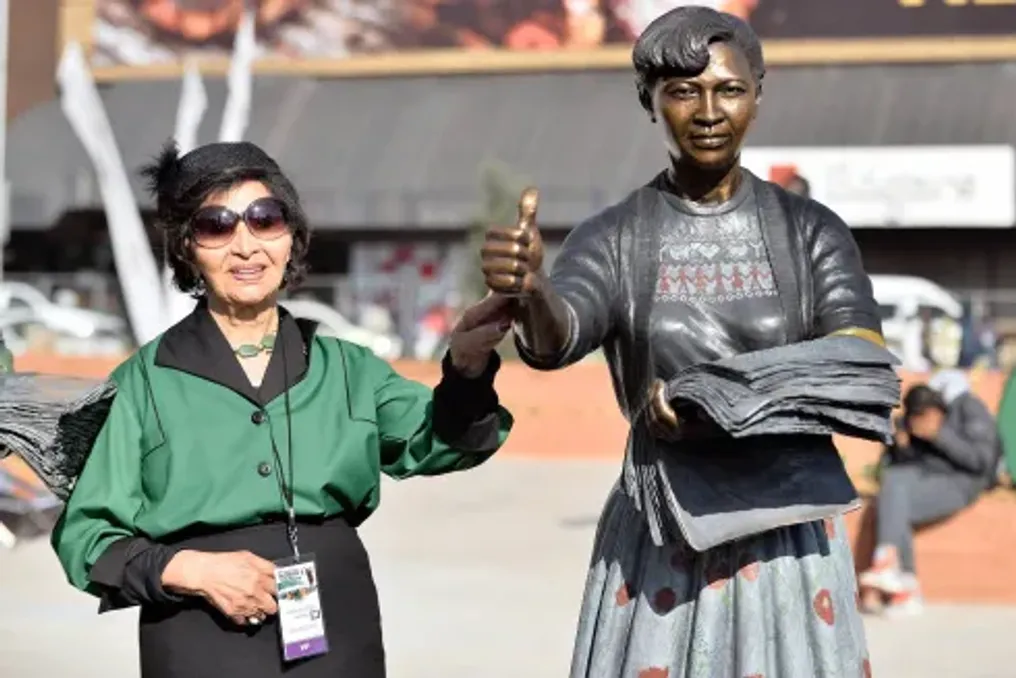
During the Women's Day celebration at the Union building, Sophie de Bruyn, a staunch fighter against the struggle, sharply criticized the issue of gender-based violence (GBV) in South Africa. She recalled the power of a unified, silent protest that took place on August 9, 1956, and expressed hope that future generations could live without the triple burden of racial, class, and gender oppression.
More than 20,000 women participated in that march, which represented the diversity of the country, submitting petitions with over 100,000 signatures to protest the pass laws associated with apartheid. De Bruyn noted that the freedom they fought for turned into a bitter paradox, as women today find themselves imprisoned in their own homes despite past victories.
She emphasized that gender-based violence continues to blight society, and she mourns daily for the girls, daughters, mothers, and grandmothers who suffer violence, rights violations, and silence. De Bruyn reminded that the fight was waged to dismantle systems of oppression against women based on race, class, and gender.
Addressing officials, politicians, and high-ranking figures, she demanded that their victims not be in vain. She called for the eradication of corruption, the protection of women, the provision for children, the presence of a moral compass, and courage in leadership, comparing this to the bravery of 1956.
To citizens, especially women, she urged them to take to the streets again, but this time not against pass laws, but against crime, insecurity, poverty, corruption, unemployment, homelessness, violence, and many other problems limiting the future, safety, freedom, and well-being.
De Bruyn added that the fire ignited in 1956 cannot be extinguished. Young women must defend their rights, use their voice, fight for their future, and resist violence and poverty just as they fought against apartheid.
The Gender Equality Commission (CGE) and the KZN Network on Violence Against Women supported De Bruyn's sentiments regarding GBV. Commission Chairperson Mfundu Nomvungu stated that society lacks the necessary anger to hold SAPS, the National Prosecuting Authority, and the criminal justice cluster accountable. He praised the justice system for recent convictions but noted that significant progress is required.
Nomvungu also noted that the statement calls on the government to take measures to combat gender-based violence, and he welcomed the appointment of the president of the National Council on Gender-Based Violence, but insisted on the full funding of this council to achieve visible results.
Executive Director of the KZN Network on Violence Against Women, Cookie Edwards, suggested that GBV is perceived as normal in many communities. Edwards explained that domestic violence is a silent war, and the domestic abuse suffered by many women in silence must be eliminated.
She urged women to overcome silence and speak up, but pointed out the lack of resources to help these women leave toxic relationships. Edwards stressed the need to train more GBV survivors, provide them with employment, and, most importantly, housing. She also highlighted shortcomings in the provision of gender-based violence services, noting that the First Pillar of the National Strategic Plan on Gender-Based Violence prioritizes accountability, requiring responsibility not only from the government and service providers but also from individuals.
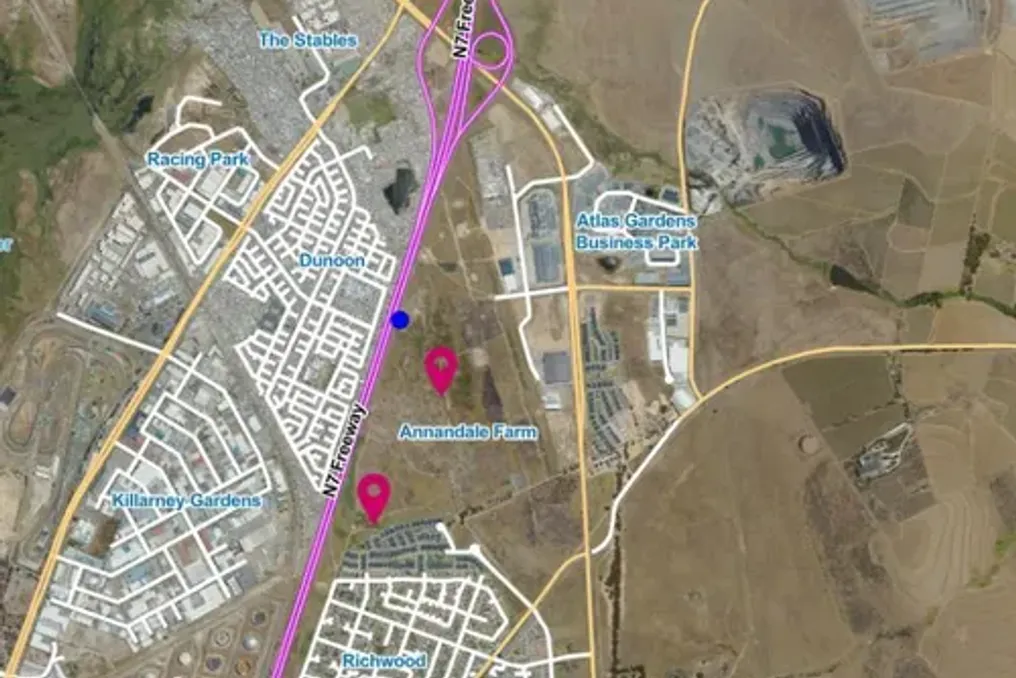
The City of Cape Town has announced the designation of a 71.8-hectare plot of land in Milnerton, valued at approximately 256 million rand, for potential affordable housing development. This initiative is part of the City's accelerated land release program aimed at ensuring the availability of municipal land in strategically important locations through collaboration with private developers.
The Annandale site, valued at around 256 million rand, is included in this program. The City has completed preliminary technical feasibility assessments for the site and invites developers to submit proposals for sustainable and integrated development that maximizes housing opportunities.
Located along the N7 corridor, the site could eventually incorporate both affordable and other types of housing, as well as commercial and retail facilities, educational institutions, public services, transport infrastructure, and public green spaces. The City asserts that such a location will enable the creation of a more connected neighbourhood, improving residents' access to jobs, public transport, and economic opportunities.
Residents commenting on the Greater Table View Action Forum Facebook page expressed concerns about how this construction might affect the existing road network. For instance, Renate Gallagher commented on the difficulty of using the N7 off-ramp towards Tableview/Durban.
Mike Hahn questioned the placement of access and exit roads for the new development, noting it could lead to 'traffic chaos'. Other residents worried about the capacity of existing infrastructure to handle additional development, while some called for greater attention to green areas; for example, Mick Webb suggested planting trees and grass.
Questions were also raised regarding housing affordability and the impact of rising municipal rates on current homeowners. Sept Fischer stated that due to significant rate increases, their homes are becoming less affordable. Marius Marx expressed concern over who would ultimately benefit from the proposed residential complex, suggesting it might attract people from other provinces.
Carl Popham, a member of the City's Mayor's Committee on Housing Settlements, emphasized that the housing shortage cannot be solved by simply waiting for change. He noted that the housing crisis in South Africa is serious, but the government must innovate, remove obstacles, and utilize all available resources to create opportunities for people.
Popham also stated that public land should be used to create housing opportunities rather than remaining undeveloped amid growing demand. The City's affordable housing program targets households with monthly incomes between 3,500 and 34,400 rand. The City reported that its affordable housing portfolio has increased to over 12,000 units in well-located areas of Cape Town, with approximately 4,000 units expected to start construction in the central business district this year.
The City believes that the Annandale development will also help address the legacy of apartheid-era spatial planning by creating more integrated communities and bringing residents closer to jobs, transport, and services. The proposed project is currently in the tendering phase, and final development plans have not yet been approved. A clarification meeting for interested developers will take place on Thursday, August 13th, at 10 am. Interested parties can register at affordable.housing@capetown.gov.za. Tender documentation is available on the City's tender portal, and the application deadline is 10:00 on October 21st.