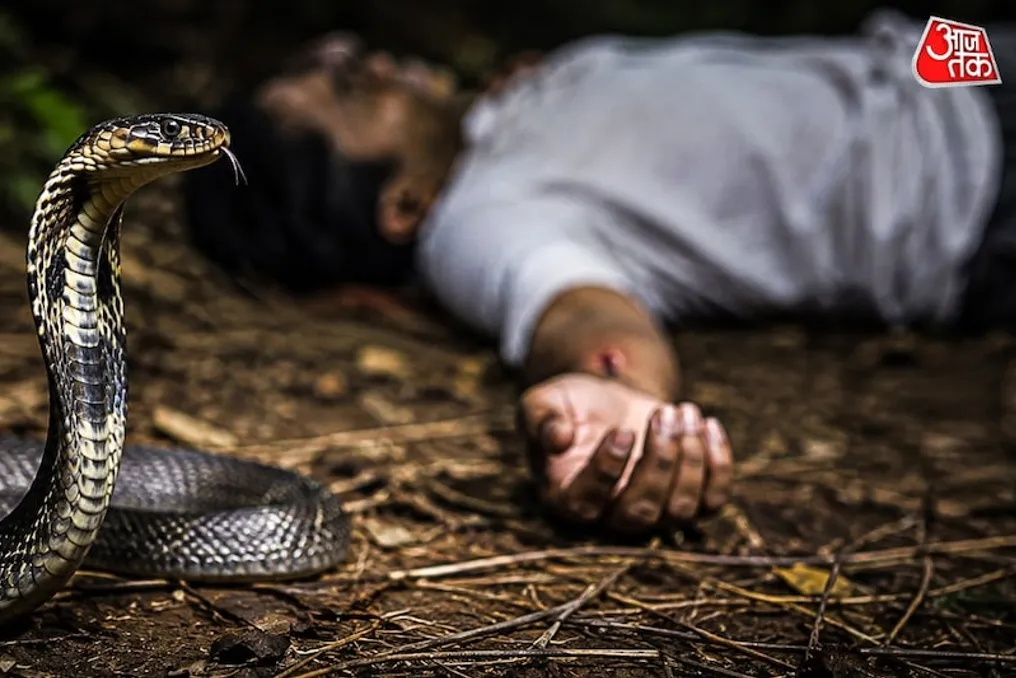
Three female students died from a venomous snakebite at a residential school in Gadchiroli, Maharashtra. It is alleged that the students were sleeping on the ground, which resulted in their death from the snakebite. Following this incident, treatment for other students continues in the hospital, and the administration is currently investigating the matter.
This tragic incident raises the question of how deaths occur from snakebites and under what circumstances it becomes extremely difficult for doctors to save a patient's life.
According to World Health Organization (WHO) data, approximately 5.4 million people worldwide are bitten by snakes every year. Of these, 1.8 to 2.7 million cases result in the poison spreading into the body. Annually, between 81,410 and 137,880 people die from snakebites, and an equal number of people suffer limb amputation or permanent disability. Farmers and children are most affected by this danger, as the bodies of small children suffer more severe effects compared to adults.
According to senior physician Dr. Rajesh, when a venomous snake bites, its venom is so potent that it can directly attack the nervous system. This attack causes the victim to feel lethargic, eyelids to droop, muscle weakness, and respiratory nerves to become blocked.
Dr. Rajesh emphasizes that the only way to save a life is through antivenom. However, every delay in reaching the hospital reduces its effectiveness, so immediate medical attention is necessary in such emergencies, as treatment delay can prove fatal.
Death from a venomous snakebite occurs when the poison spreads throughout the body. If this poison affects the nervous system, the person becomes paralyzed. Snake venom also attacks the nerves controlling the lungs, causing breathing nerves to shut down and leading to severe difficulty in breathing. All these complications are due to the dangerous toxins present in the venom, which attack the nervous system and other vital organs of the body.
Often, patients do not survive even after reaching the hospital. The main reason for this is that they receive medical help late, by which time the poison has spread throughout the body. If the patient does not receive ventilator support at the right time, death by suffocation occurs despite the administration of anti-snake venom (ASV).
Dr. Deepak Kumar, a resident of Safdarjung Hospital, warns that tightly binding the bitten area with a rope or cloth is harmful because it stops blood circulation to that limb and increases damage. Furthermore, actions like cutting the wound or sucking out the venom with the mouth are completely wrong.
If a person suddenly experiences severe abdominal pain, vomiting, or shortness of breath while sleeping (even if no snake is visible), they should be taken to a hospital equipped with antivenom and ventilator facilities without any delay. Timely hospital arrival can prevent a serious condition from developing.