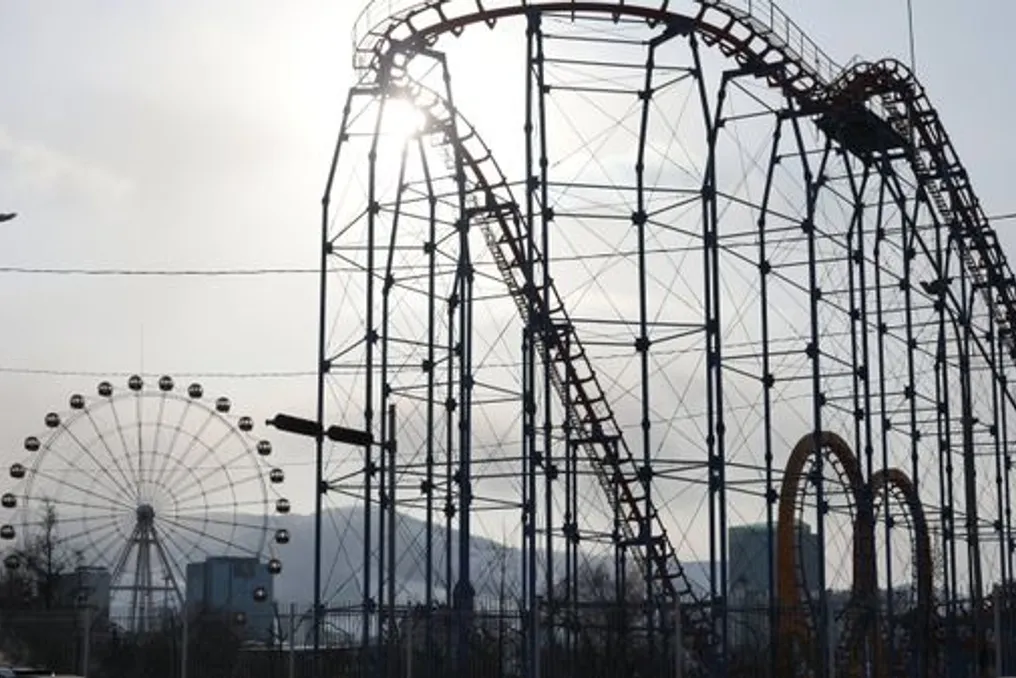
In the first half of 2026, 1,507 attractions were inspected across the republic, resulting in 43 facilities being taken out of operation, and another 102 being temporarily disconnected from the power grid.
In the first half of 2026, 1,507 attractions were inspected across the republic, resulting in 43 facilities being taken out of operation, and another 102 being temporarily disconnected from the power grid.
This was reported at a press conference dedicated to the results of the Industrial, Radiation, and Nuclear Safety Committee's activities for the first half of 2026. The event presented information on the work done to ensure industrial, radiation, and nuclear safety, prevent accidents at hazardous facilities, and digitize the control system.
During the first six months of the year, the Committee conducted 914 inspections, during which 8,055 violations of safety requirements were identified. 908 written directives were issued to eliminate the detected deficiencies. Additionally, 6,634 preventive measures were carried out during the reporting period.
Sardorbek Yakubekov, Deputy Chairman of the Industrial, Radiation, and Nuclear Safety Committee, spoke about the measures being taken to enhance the safety of elevators and attractions. He noted that over the past six months, 2,755 elevators underwent state registration through the unified electronic platform 'Safe Elevator'. Currently, the total number of elevators included in this platform has reached 17,517, and there are 78 companies providing technical maintenance.
Olimjon Joʻraev, Head of the Tashkent City Administration, provided information on the results of compliance checks of the republic's attractions with safety requirements. He stated that the Committee examined 1,507 attractions throughout the republic. As a result of special inspections, appropriate measures were taken against facilities that did not meet safety requirements, including taking 43 attractions out of operation and temporarily disconnecting 102 of them from the power supply.
As part of this event, a unified electronic database was formed for nearly 60 thousand facilities under the Committee's control through the 'Unified Integrated Ecosystem' information system. During the reporting period, 6,918 expert conclusions were recorded through this system.
In the field of public services, 1,487 permits and 544 conclusions were presented for the past period of 2026. It is planned to complete the work on approving 10 Government decrees and 37 departmental documents by the end of the year, as well as adopt 4 draft laws. It is also planned to adapt more than 70 technical documents to international standards and implement an artificial intelligence-based 'virtual assistant' in this information system.
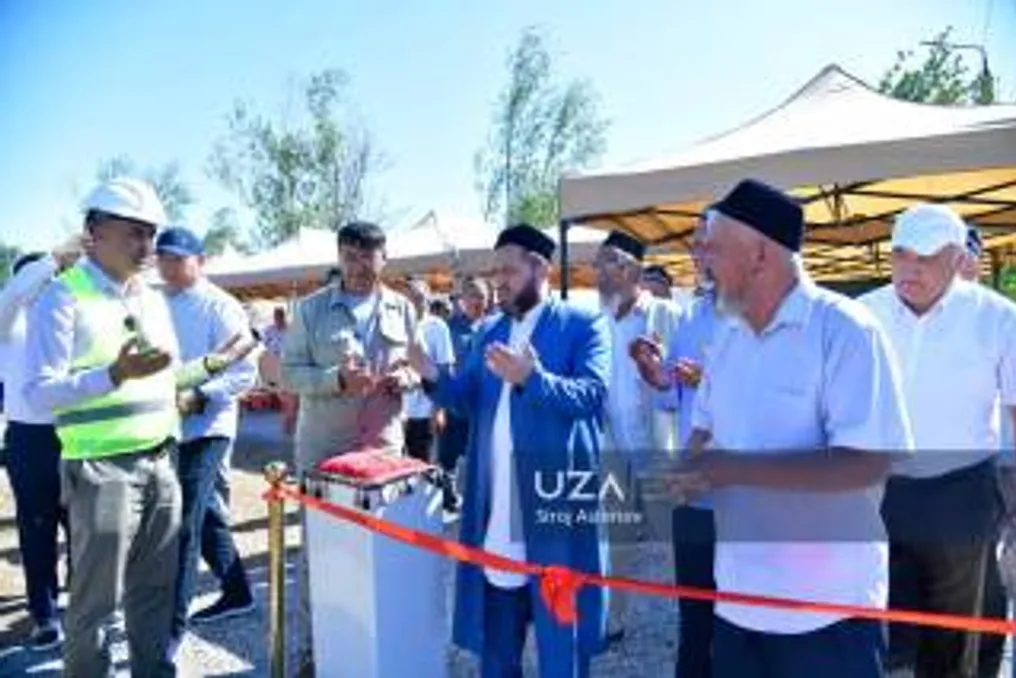
The implementation of a project to construct centralized water supply systems in the center of the Karman district of the Navoi region has begun. During the solemn ceremony of laying the foundation for the facilities that will be built as part of the project, the head of the 'Uzsuvtaʼminot' Administration, Ahmad Suvonkulov, the deputy governor of the region, Akbar Niyozov, the head of the Karman district, Shohrukh Boltayev, and public representatives took part.
It is emphasized that in recent years, close attention has been paid to ensuring the population receives quality utility services, modernizing engineering and communication infrastructure, and strengthening environmental safety in the country.
One of the key documents aimed at achieving these goals is the decree of the President of the Republic of Uzbekistan dated March 18, 2022, on measures to implement projects for the construction and reconstruction of water supply systems in the Karman district of the Navoi region and in the Shahrisabz city and Kitob district of the Kashkadarya region. In accordance with this decision, a large investment project is being implemented to create centralized water supply systems in the Karman district of the Navoi region.
The total cost of the project is 28.5 million US dollars. Of this amount, 25.2 million US dollars are financed by the French Development Agency, and the remaining 3.3 million US dollars are covered by the Republic of Uzbekistan.
According to Azh Otabek Zaripov, head of 'Navoiysuvtaʼminoti', the project will be implemented in three stages. The first stage will involve the construction of a modern wastewater treatment facility with a capacity of 8.2 thousand cubic meters. The second stage plans for the creation of water pipelines spanning 152 kilometers. The final stage includes the construction of four pumping stations (PS) for pumping wastewater and associated pressure pipelines.
As a result of the project's implementation, 55 thousand residents of the Karman district will receive centralized water supply for the first time. Furthermore, the coverage rate of this service in the region will increase from the current 0 percent to 90 percent.
The design is being carried out by the consortium 'SAFEGE Ankara' from Turkey and 'TUMAS2'. Technical support is provided by 'SEURECA' from France, '2Global Business Service' from Uzbekistan, and 'SMEC International PTY' from Australia. To date, $2.8 million has been attracted within the framework of the project. Tender procedures for the construction of the wastewater treatment facility have been completed, and a contract with the contractor is expected to be signed. Additionally, all design work for the pumping stations and water pipelines has been finalized, and the practical phase has begun.
It is planned to attract $10 million for the construction of the wastewater treatment facility in 2026, complete two major tenders, and sign agreements with contracting organizations.