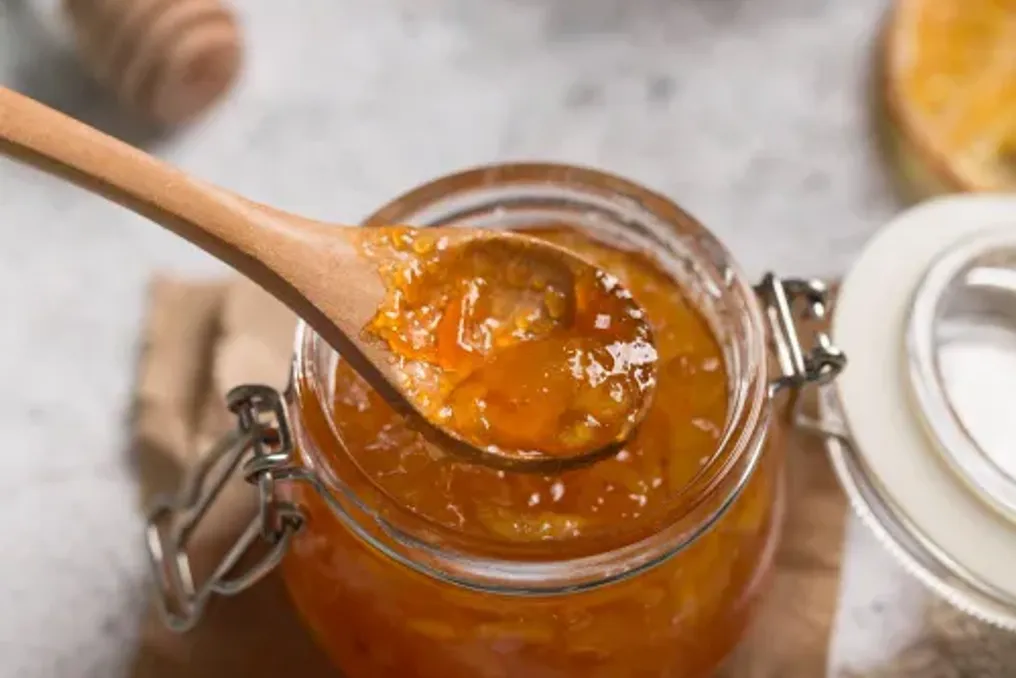
Classic homemade orange marmalade, distinguished by its bright citrus flavor and slight bitterness, is always popular. Preparing this jam is an excellent kitchen project that deserves a full day, especially when citrus fruits are in season.
Using only oranges, lemons, sugar, and water, you can transform ordinary ingredients into a traditional preserved product that lasts for weeks and lends a fresh, vibrant taste to everything: from morning toast to cakes and desserts. The process of making marmalade at home turns out to be much simpler than many assume.
This classic recipe relies on the natural pectin of the fruits, not on thickening additives, which ensures a perfectly balanced jam with the right level of sweetness and mild bitterness. By following the step-by-step instructions and considering several practical tips, you will achieve homemade orange marmalade that rivals traditional varieties.
Recipe for Homemade Orange Marmalade
Approximately 6-8 jars, depending on size.
Ingredients
- 4 large oranges without seeds, thoroughly washed
- 2 lemons
- 8 cups of water
- 8 cups of granulated sugar
Instructions
- Cut the oranges and lemons in half, then slice them into very thin half-moon slices. Remove and discard all seeds, keeping all the juice.
- Place the sliced fruits and juices in a large stainless steel pot. Add the water and bring to a boil, stirring occasionally.
- Remove the pot from the heat and stir in the sugar until completely dissolved.
- Cover the pot and leave it at room temperature overnight.
- The next day, return the mixture to the heat and bring to a boil. Reduce the heat and simmer under a lid for about 2 hours.
- Increase the heat to medium and continue to simmer slowly for another 30 minutes, stirring frequently to prevent burning.
- Skim off any foam that rises to the surface.
- Continue cooking until the marmalade reaches a temperature of 104°C to 105°C. This is the temperature at which the fruit's natural pectin and sugar combine to form the correct consistency.
- To test for doneness, place a small amount of marmalade on a chilled plate. Return the plate to the refrigerator for one or two minutes. Gently press the surface with a finger. If it wrinkles and holds its shape, the marmalade is done. If it is still runny, continue cooking for a few more minutes before retesting.
- Carefully ladle the hot marmalade into sterilized glass jars, leaving a small gap at the top. Wipe the rims with a clean cloth before sealing the lids.
- Allow the jars to cool completely. The marmalade will continue to set over the next 24–48 hours.
Why Homemade Orange Marmalade Sometimes Doesn't Set
One of the biggest disappointments when learning to make marmalade is ending up with a liquid product. In most cases, this means it was not cooked long enough to reach the setting temperature. The simplest way to avoid guesswork is to use a candy thermometer, but the chilled plate test is a reliable alternative. If your marmalade remains runny after cooling, you can return it to the pot and simmer it a little longer before testing again.
Is Pectin Needed for Orange Marmalade?
It is not required for this recipe. Oranges and lemons naturally contain pectin, especially in the peel and white pith. Slow, prolonged cooking allows this natural pectin to form the familiar gel without adding any extra substances. Slicing the fruits thinly also contributes to an even texture throughout the marmalade.
How to Store Homemade Marmalade
After airtight sealing in sterilized jars, homemade orange marmalade can be stored in a cool, dark cupboard if it has been properly processed for long-term storage. If you did not process it in a water bath, it is safer to store the jars in the refrigerator. Always keep the marmalade in the refrigerator after opening and use a clean spoon every time to keep it fresh.
With a little time and careful preparation, this classic homemade orange marmalade provides the bright citrus flavor and mild bitterness that have made it a pantry favorite for generations. Once you master the basics, this is a recipe you will return to every time the citrus season fills the fruit basket.