Volcanoes often have a reputation as places to be avoided, as being near a mountain capable of ejecting lava, ash, and volcanic gases is not a common activity. However, volcanic landscapes are not always forbidden. Many of them can be visited using designated viewpoints, marked trails, or with the permission of guides, and some are located in national parks where extensive monitoring and visitor safety systems are established.
Other volcanoes have long been silent—thousands or even millions of years ago, leaving behind impressive calderas, craters, and unusual landscapes long after the eruptions ceased. Among the world's visitable volcanoes and volcanic landscapes are Sicily, Hawaii, Kenya, and South Africa. It is important to remember one condition: volcanic conditions can change rapidly, so always check official access information before heading out.
An active volcano does not necessarily mean it is erupting at the time of your arrival. The terminology used by volcanologists can vary, but an active volcano is considered one that has erupted in relatively recent geological history or is capable of erupting again. Terms such as 'dormant' and 'extinct' also exist. A dormant volcano is currently quiet but may become active again, whereas extinct volcanoes are generally considered unlikely to erupt again. Since these designations are not always applied uniformly by all geological bodies, travelers are better off relying on the current volcanic alert level and official visitor recommendations rather than assuming a quiet-looking mountain is harmless.
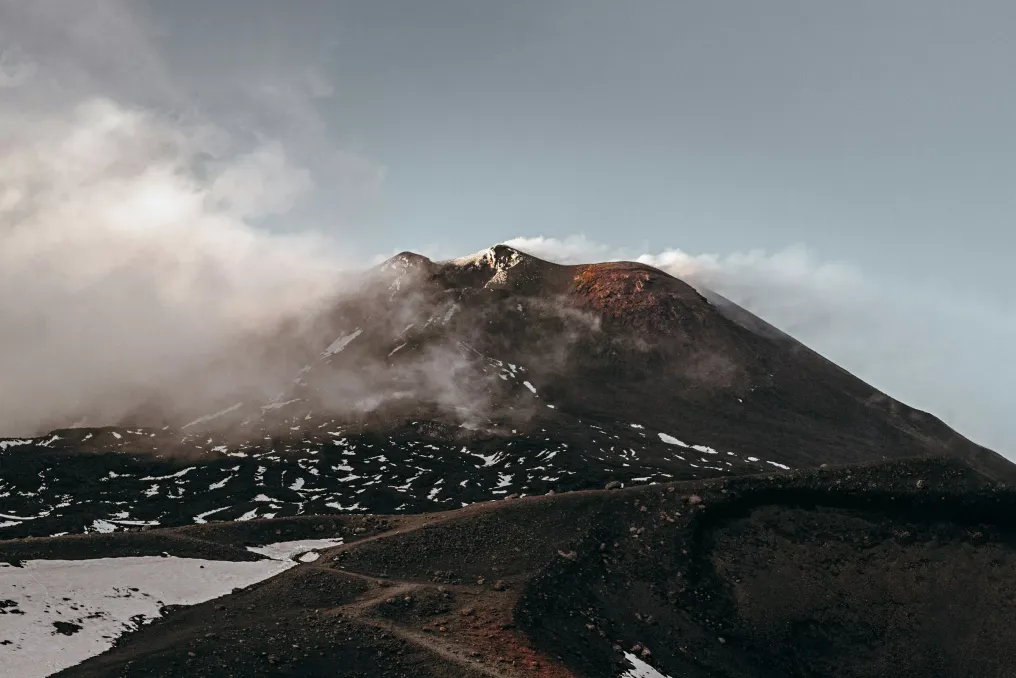
Mount Etna is one of Europe's most active volcanoes and one of Sicily's most recognizable attractions. Located over the eastern part of the island, it has produced frequent eruptions over millennia, ranging from lava flows to explosive episodes. Visitors do not need to be experienced mountaineers to see Etna; lower sections are accessible for hiking, and cable cars and organized tours allow ascent higher under favorable conditions. Access to the upper parts of the mountain is controlled and can change depending on volcanic activity, weather, and safety conditions.
Etna serves as a reminder of how quickly a tourist attraction can turn into a serious natural hazard. In June 2025, a partial collapse in the Southeast crater of the volcano triggered a pyroclastic flow, causing tourists to hastily evacuate the area. Although the summit was closed to visitors and no injuries or fatalities were reported, this incident highlighted the importance of adhering to restrictions. Furthermore, Etna remains active: in August 2026, an eruption released ash that disrupted flights at Catania airport, forcing Italian authorities to maintain a high aviation alert level due to the risk posed by volcanic ash to aircraft. Anyone traveling to Sicily should check the latest data from INGV and the airport before visiting the mountain.
Mount Vesuvius, perhaps best known for its devastating eruption in 79 AD, which destroyed Pompeii and Herculaneum, is still considered active. It rises above Naples and the Bay of Naples and is part of the Vesuvius National Park. Visitors can walk along a specially marked route around the crater, allowing for a better assessment of the volcano's scale up close. The crater can be visited under controlled conditions, with access restrictions imposed if weather or other safety conditions make the visit inadvisable.
Vesuvius has not erupted since 1944, so it may look surprisingly peaceful. This is why it is important to remember that an active volcano does not have to be actively erupting to require constant monitoring. In 2024, a tragic incident served as a reminder that volcanic destinations carry dangers beyond the eruptions themselves: a 56-year-old British tourist died after deteriorating health while climbing Vesuvius during a period of intense heat. The death was registered as a suspected heart attack, not a volcanic event, but it underscores the necessity of taking physical exertion during mountain hikes seriously.
If Etna is dramatic, Stromboli is a volcano that loves to hold attention. This small island north of Sicily is home to one of the world's most famous continuously active volcanoes, which regularly produces small explosions, ejecting glowing volcanic material. This constant activity has earned Stromboli the nickname 'Lighthouse of the Mediterranean.' At night, the glow of its eruptions can sometimes be seen from the sea. Visitors can explore the island and, with official permission, join excursions to higher points. Restrictions can change depending on volcanic conditions, and access to high areas is controlled, so one cannot simply follow an old route found online. Stromboli remains active in 2026, and INGV continues to record strombolian activity and periodic lava flows. A major flare-up was also recorded in June 2026. The last fatal incident involving a tourist related to a Stromboli eruption occurred in 2019, when a tourist died during a strong explosive event, which falls outside the five-year period covered in the article but remains part of the modern history of volcano safety.
Nowhere is one better able to experience active volcanism than in the Hawaii Volcanoes National Park on the Big Island. Kilauea is one of the world's most active volcanoes, which has produced episodic eruptions at its summit in recent years. The current eruption began in December 2024 and has occurred in episodes of lava fountaining separated by pauses. As of August 10, 2026, Kilauea has not erupted, although the U.S. Geological Survey predicted the possibility of another eruption between August 12 and 15. The situation can change rapidly, so anyone planning a visit should consult the latest updates from the USGS and the National Park Service, rather than relying on yesterday's information. The eruptive zone itself is closed due to hazards, including volcanic gases, unstable cliffs, ground fissures, and falling volcanic material. Instead, visitors can observe the volcanic activity from approved areas when possible. The National Park Service specifically warns visitors not to enter closed zones and to monitor air quality. These warnings are not theoretical: in February 2026, a person entered a closed zone on the eastern side of the Kilauea caldera. At the time, the volcano was not erupting, but the terrain was steep and dangerous, and the person was later found dead. This case is a particularly instructive reminder that a volcanic landscape can remain dangerous even during an eruption pause.
At an altitude of 3,715 meters above sea level, Mount Teide is Spain's highest mountain and the central element of Teide National Park. It is also a volcano and part of an active volcanic system, although Teide itself is not currently erupting. It is important to distinguish here: the last eruption on Tenerife occurred in 1909 (the Chinyero eruption), not an eruption from the summit of Teide itself. The Chinyero eruption took place on the northwest ridge of Santiago and is the last confirmed eruption on the island. The landscape around Teide looks almost otherworldly, with lava formations, volcanic rocks, and the vast Las Cañadas caldera. Visitors can ascend to great heights via cable car, although access to the summit requires additional permits and depends on weather and other factors. At this altitude, one must consider not only the volcano: cold temperatures, strong sun, thin air, and rapidly changing weather can make what seems like a simple walk significantly more challenging.
Arénal is one of Costa Rica's most recognizable landmarks, rising above the tropical forest near La Fortuna. The volcano became famous due to a long period of activity following a major eruption in 1968, during which lava flows, explosions, and other volcanic activity were observed for decades. This period of eruptions ended in 2010, and Arénal has been dormant since then. It is usually described as dormant, not extinct, meaning its volcanic history remains relevant when considering the surrounding landscape and hazards. Visitors cannot simply wander across the volcano. The surrounding area contains steep terrain, volcanic rocks, and other natural hazards, so travelers must stick to designated trails and viewpoints. One of the best aspects of visiting Arénal is that the volcano is only part of the attraction; the surrounding area with hot springs, tropical forest, waterfalls, and wildlife is a destination in itself.
The Tongariro National Park in New Zealand is a magnificent example of a volcanic landscape that is also a hiking destination. The park includes several volcanic peaks and systems, such as Mount Tongariro, Mount Ruapehu, and Mount Ngauruhoe, each with its own geological history and current level of activity. The famous Tongariro Alpine Crossing passes through an environment shaped by volcanic eruptions, featuring emerald lakes, lava formations, and dramatic crater landscapes. Nevertheless, it is important to remember that this is an active volcanic environment, not just a scenic hike. New Zealand uses a six-level volcanic alert system for volcanoes in the national park, ranging from no volcanic activity to increasing levels of concern and eruption. Consequently, the alert level and trail status can change, and visitors must check the latest data from GeoNet and the Department of Conservation before setting out.
One does not have to leave South Africa to be inside an ancient volcanic landscape. Pilanesberg National Park in the North West province is located within the remnants of the Pilanesberg alkaline ring complex—an ancient volcanic structure formed about 1.2 billion years ago. The circular mountain formations around the park are deeply eroded remnants of this ancient volcanic complex. Today, there is no active lava or erupting crater here. Instead, the old volcanic landscape is home to lions, elephants, rhinos, buffalo, and leopards. The origin of the volcano is easily overlooked when one is busy spotting wildlife, but the unusual ring-like landscape serves as a reminder of what occurred here on a geological timescale.
Ngorongoro is one of Africa's greatest geological wonders. The massive crater is actually a caldera—the collapsed remains of a giant ancient volcano. It formed approximately 2.5 million years ago after the volcanic mountain collapsed following a major eruption. Today, visitors can descend into the crater on safari without worrying about an eruption. The crater walls, grasslands, and lakes have created a wonderful ecosystem supporting a large number of wild animals. This is a good example of how volcanic activity can continue to shape the landscape even after the volcano has gone silent. There is no actively erupting volcano in the crater today, although the wider region remains volcanically active, with other volcanic systems in the East African Rift.
For something simpler, one can go to Diamond Head in Oahu. The distinctive crater overlooking Honolulu is an ancient tuff cone formed during a relatively explosive episode of volcanic activity. It is better viewed as a volcanic landscape rather than an active volcano like Kilauea or Etna. The volcanic activity that formed Diamond Head ceased long ago, and today it is one of the most famous hiking spots in Honolulu. A designated trail leads to the summit, where hikers enjoy panoramic views of Honolulu and the Pacific Ocean.
Rising from the Great Rift Valley of Kenya, Longonot Mountain is a young stratovolcano with a large crater at its summit. It is presumed to have last erupted in the 1860s, so it is usually described as dormant, not extinct. Its volcanic system also...
hel