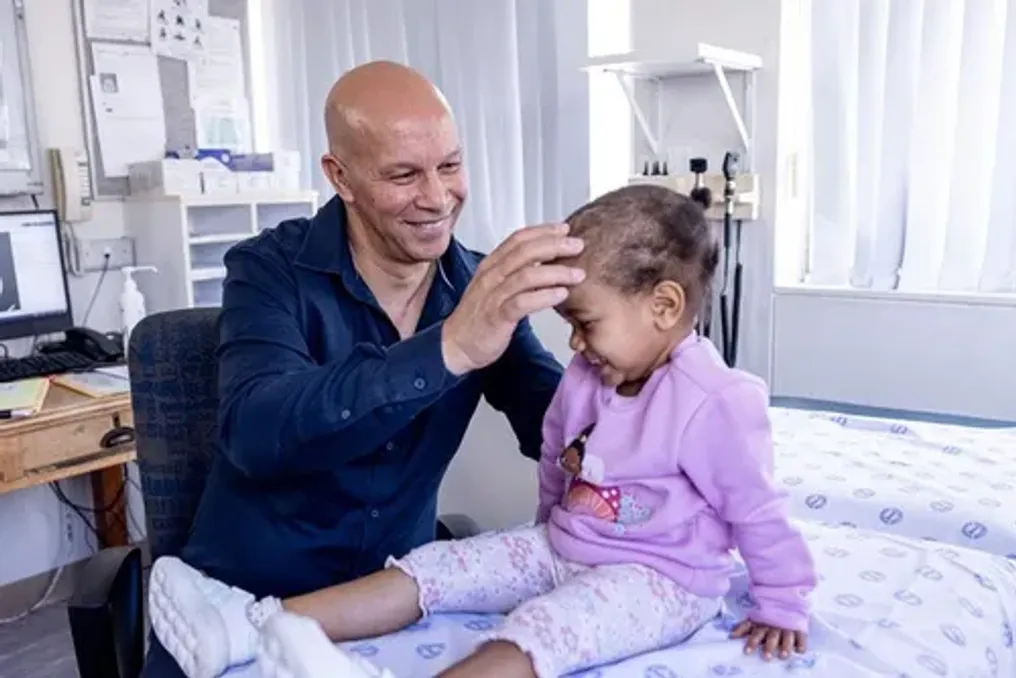
The University of Cape Town (UCT) has opened an innovative high-tech neuroscience center aimed at expanding scientific research and education in the field of neuroscience across Africa, striving to positively impact children's lives.
The human brain is the most complex organ in the known universe. In childhood, it undergoes significant changes, developing, adapting, and laying the foundation for the entire future life of a person. However, injuries, severe infections, or sudden illnesses can irreversibly alter a child's life path.
To counter this problem, UCT launched an advanced neuroscience center dedicated to protecting and studying the developing brain. This new facility, known as the SAMRC Discovery Neuroscience in Children Unit, provides a long-term scientific platform for improving the diagnosis and treatment of acute brain conditions, as well as for training a new generation of neuroscience leaders directly in Africa.
Professor Anthony Figgadi, director of the new unit, notes: 'Africa has more children than any other region, and numerous brain-affecting conditions collectively represent the largest burden of diseases causing mortality and disability worldwide.' He adds that these two factors present both a serious challenge and a huge opportunity to study and protect the young brain to ensure a healthy future for the continent.
Years of Foundation Building
The launch of this unit marks a significant milestone for the African Brain Child (ABC) initiative. This clinical and research program is based at the Pediatric Neurosurgery Department of the Red Cross War Memorial Children's Hospital and the University of Cape Town's Neurobiology Institute. The group spent years building world-class capabilities in pediatric brain health.
The initiative emphasizes that their unique combination of high incidence rates, complex infrastructure, and extensive clinical and laboratory experience positions them advantageously to become a leading center for pediatric brain research. The establishment of this unit, which is one of seven new Extramural Units (EMUs) funded by the South African Medical Research Council (SAMRC), officially recognizes ABC as one of the continent's leading research initiatives.
Professor Lizel Zülke, Vice President for Extramural Research and International Portfolio at SAMRC, welcomed the expansion, noting that the unit increases the council's reach in neuroscience and child health.
From Laboratory Discoveries to Real-World Care
The main goal of the new center is to translate scientific discoveries from the laboratory directly to the patient's bedside, a process known as translational science. The unit's researchers are studying:
Cellular Mechanisms:
How brain tissue responds to acute injury and infection at the cellular level.
Drug Delivery:
How medications travel through the bloodstream and penetrate the brain's protective barriers.
Biomarkers and Genomics:
Identifying clear genetic markers for earlier and more accurate diagnosis of conditions.
In addition to pediatric neuroscience, UCT is expanding its activities into other modern fields. Professor Nicola Mulder will lead the SAMRC/UCT AI Unit for African Public Health research, which uses artificial intelligence to transform public health data in the region.
Associate Professor Ursula Rolvink, Deputy Director of the new neurobiology unit, shares her view: 'We have the privilege of working at the intersection of critical scientific frontiers, including neuroscience, immunology, and precision medicine, focusing on the most remarkable stage of human life—childhood.'
Empowering Africa’s Next Generation
Beyond laboratory breakthroughs, the center serves to develop local talent. Through postgraduate training, specialized mentorship, and collaborative networks in South Africa and globally, the unit actively prepares African scientists and doctors to lead world-class research on their home continent.
Professor Tokozani Madjosi, Deputy Vice-Chancellor of UCT for Research and Internationalization, stressed that the ultimate measure of the unit's success is its impact on people. By protecting young minds and fostering local scientific leadership, the new center is investing directly in Africa's future.