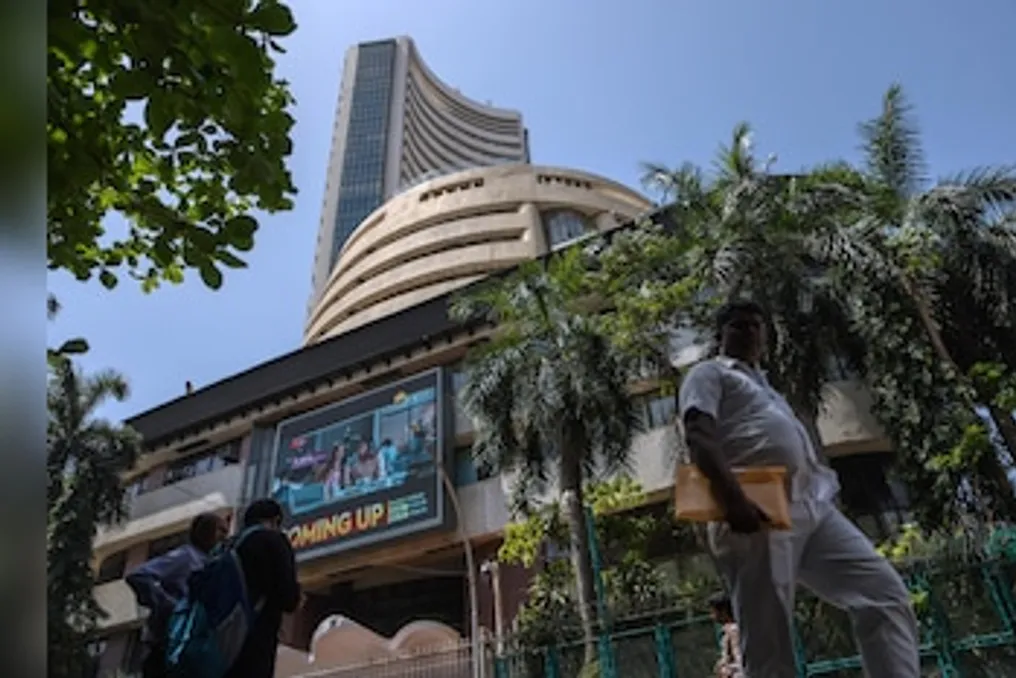
The latest sale of a stake in the Life Insurance Corporation of India (LIC) marks another significant step in the government's privatization program. The data provides information on the sales of stakes in Public Sector Undertakings (PSUs), proceeds from privatization, and major share placements.
Last week, the government raised approximately ₹31,552 crore by selling 6.5 percent of Life Insurance Corporation of India (LIC) shares through an Offer for Sale (OFS) at a minimum price of ₹382 per share. This was the largest OFS in the country. The two-day OFS, held on August 4 and 5, generated high demand, allowing the government to exercise its full green-button option. The sale also helped LIC meet the Securities and Exchange Board of India (SEBI) requirement for a minimum public float, increasing public ownership to 10 percent, which was achieved approximately nine months before the deadline of May 16, 2027.
This latest OFS is the second reduction in the government's stake in LIC since its landmark listing in 2022. The government's stake decreased from 96.5 percent after the IPO to 90 percent. The chart tracks the government's ownership of LIC from the IPO to the latest OFS.
Prior to May 2022, the government held 100 percent of LIC. Changes in the Life Insurance Act through the Finance Act 2021 paved the way for the insurer's listing. In May 2022, the government sold 3.5 percent of shares through an IPO at an issue price of ₹949 per share, raising about ₹21,000 crore. This transaction reduced the government's stake to 96.5 percent, with the remaining 3.5 percent held by public shareholders.
The latest OFS offered 6.5 percent of shares, comprising a base offer of 2.5 percent and a green-button option of 4 percent. The sale led to the government's stake decreasing to 90 percent and the public stake increasing to the mandated 10 percent.
The deal with LIC also offers insight into the overall evolution of the Indian PSU stake sale program—from ambitious privatization goals and large-scale offerings to a growing number of government-backed companies in the listed space.
Privatization Targets Often Exceeded Actual Receipts
The government's privatization program has struggled to consistently meet the targets announced in the budget over many years. An analysis of previous budget documents shows that, with the exception of a short period of financial success in the 2018 and 2019 fiscal years when actual receipts exceeded targets, the government regularly failed to meet initial indicators. Actual receipts peaked at ₹100,045 crore and ₹94,727 crore in the 2018 and 2019 fiscal years, respectively.
The discrepancy was most noticeable in the 2021 and 2022 fiscal years, when initial estimates sharply rose to historical highs of ₹2.10 trillion and ₹1.75 trillion, respectively. However, pandemic-related disruptions lowered actual receipts to a fraction of these targets, amounting to ₹32,886 crore and ₹13,531 crore, respectively. Although targets were subsequently lowered, receipts remained moderate in subsequent years. Starting from the 2024 fiscal year, the government stopped announcing a separate privatization target, instead grouping privatization and asset monetization into the broader category of 'other capital receipts.'
The proceeds from the latest LIC OFS significantly boost the government's privatization receipts for the current fiscal year. According to official data, the government has already received ₹27,568.06 crore for the 2027 fiscal year from privatization and asset monetization. Including the LIC sale, the annual total now approaches ₹59,000 crore, against a planned ₹80,000 crore under other capital receipts for this year.
Privatization Remains a Key Component of Non-Debt Capital Receipts
Historically, privatization has been the primary source of India's Non-Debt Capital Receipts (NDCR), accounting for approximately 70 to 85 percent of this fund during most periods from the 2015 to the 2021 fiscal year. According to the Ministry of Finance's accounting system, NDCR generally includes loan and advance repayments, as well as other capital receipts. The latter include income from the privatization of state-owned enterprises and, increasingly, the monetization of infrastructure assets.
Dependence on privatization was particularly high in the 2018 fiscal year, when receipts of nearly ₹100,000 crore accounted for about 86 percent of NDCR, the highest figure in over a decade. This dependence sharply declined in the 2022 fiscal year amid increased global market volatility and delays in strategic sale execution, while relatively stable loan and advance repayments provided an alternative source of non-debt capital receipts. The share received in the following year decreased.
Starting from the 2024 fiscal year, privatization and asset monetization have been merged into MCR, so the share no longer reflects only privatization. Instead, it represents a broader set of capital receipts. Proceeds from the latest LIC OFS are expected to further increase the share of MCR in non-debt capital receipts this year.
LIC OFS Leads the List of Largest Stake Sales in Indian State-Owned Enterprises
For many years, the government has generated substantial revenue from privatization by selling stakes in major state-owned enterprises through OFS and IPO channels. In addition to the latest LIC OFS, major stake sales have included shares of Coal India, Oil and Natural Gas Corporation (ONGC), and National Thermal Power Corporation (NTPC), among others. The government's stake sale program has also been influenced by SEBI's Minimum Public Shareholding (MPS) requirements, which mandate listed companies to maintain a prescribed level of public ownership. For large government-backed companies, compliance with these norms has provided an additional incentive for the government to reduce its stakes and expand public share packages.
The number of listed Central Public Sector Enterprises (CPSEs) is steadily growing. As of mid-2026, 74 listed CPSEs and their subsidiaries are registered on the BSE and the National Stock Exchange (NSE) out of approximately 448 total CPSEs. Over the last decade, the number of listed government entities has steadily increased from about 50 in 2016-17 to 74 in 2026, driven by consistent public offerings and strategic privatization initiatives. The growing number and weight of CPSEs in stock indices and exchange-traded funds reflect a broader government drive to monetize state assets and increase public participation in state-owned companies.
Of the 74 tracked organizations in the chart, 68 are corporate CPSEs, while the remaining six are major public financial and insurance organizations, including SBI and LIC. Thus, this figure is broader than the count of CPSEs reported by some official government sources, such as the Department of Investment and Public Asset Management, because banking and insurance entities operate under separate legislation and regulations rather than the general Companies Act.