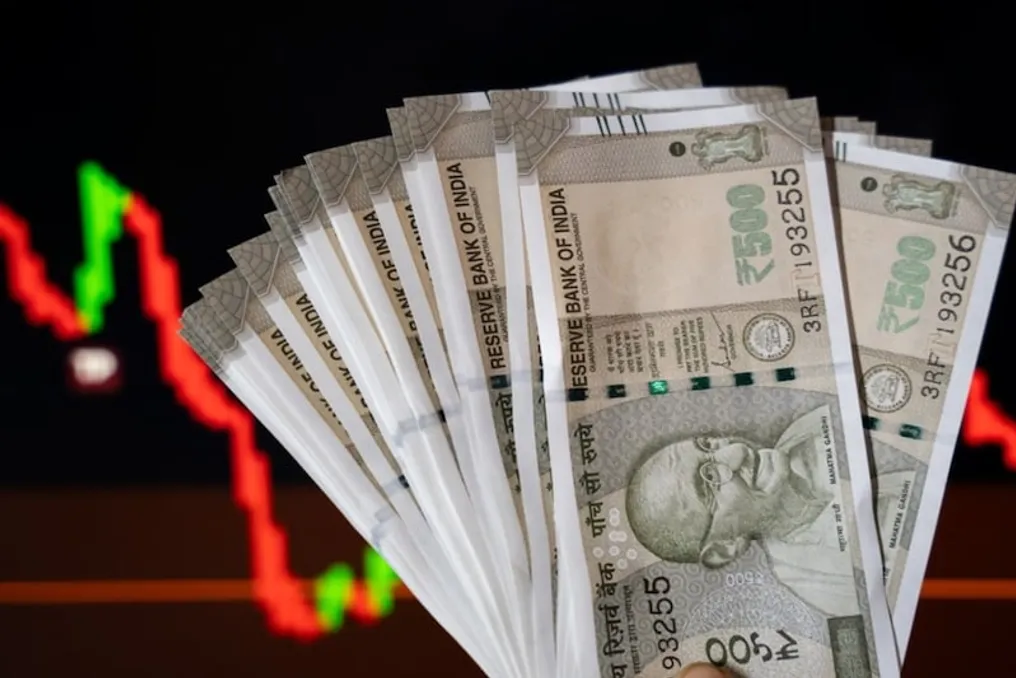
If you only have 5000 rupees left after covering expenses at the end of the month for investment, the question arises: should these funds be placed in a Fixed Deposit (FD), Recurring Deposit (RD), or should you start a Systematic Investment Plan (SIP)? There is no single correct answer here. According to Harsh Soni, CEO of NYVO Money, the investment decision should be based on the purpose for which the money is needed.
The choice of the optimal option depends on when you will need the money, what your goal is, and what level of risk you are willing to accept. For example, if two people invest 5000 rupees monthly: one wants to build an emergency fund within a year, and the other wants to accumulate capital for retirement in 20 years, their investment strategies cannot be the same.
Before starting savings, it is crucial to link your savings to a specific goal. Harsh Soni notes that for building an emergency fund, relatively safe options such as FD or liquid mutual funds can be considered. If the planning horizon is 8–10 years or more, investing in equity mutual funds through SIP should be considered. Charu Pahuj, COO of Wise FinServ, believes that for goals spanning 2–3 years, FD or RD are more suitable, whereas for goals exceeding five years, equity SIP can be the better choice. Thus, the same 5000 rupees saved monthly can be directed towards different goals in different ways.
If you invest 5000 rupees every month, you will accumulate a total of 60,000 rupees in a year, and 9 lakh rupees from your pocket over 15 years. According to Charu Pahuj's estimates, with a projected annual return of 7%, this amount could reach about 15.8 lakh rupees after 15 years. With a projected annual return of 12%, this amount could reach approximately 25 lakh rupees. However, it should be remembered that these are just examples; the returns of mutual funds and equity investments depend on the market and are not guaranteed.
The main advantage of a Fixed Deposit (FD) is its predictability. The investor knows in advance the interest rate, term, and the amount they will receive upon maturity. Therefore, this option is useful for short-term goals and creating an emergency reserve. Nevertheless, FD interest may be subject to taxation, and inflation erodes the real purchasing power of money over time. Harsh Soni emphasizes that the primary function of FD is to ensure safety and stability, not high profit. Before depositing funds into an FD, it is necessary to familiarize yourself with the rules for early withdrawal and associated penalties.
A Recurring Deposit (RD) can be useful for those who aim to develop the habit of setting aside a fixed amount every month. In this instrument, specific amounts are deposited regularly, and the accumulated sum is paid out at the end of the term. RD can be considered for achieving certain relatively short-term goals, such as a vacation, buying a gadget, a wedding, a down payment on a car or house.
Investments through SIP are made at regular intervals into mutual funds. If SIP is directed into an equity fund, the value of the investment is subject to market fluctuations. In some months, the value may rise, and in others, it may fall. Therefore, an investor considering SIP for a long-term goal, such as 10–15 years, should not make decisions based solely on the returns of a few months. The longer the investment period, the higher the ability to withstand stock market volatility.
If a person does not yet have an emergency fund, they can consider allocating their monthly 5000 rupees to different goals. For example, 2000 rupees in a safe option and 3000 rupees in an equity SIP. However, this is not a universal formula. Such allocation would only be reasonable if the investor has two different goals and corresponding timeframes.
If you are starting to invest for the first time, start by defining your goal, not by choosing any product. If you need the money in 1–2 years, consider FD or other relatively safe instruments. For goals of 2–3 years, options like RD or FD are suitable. If the goal exceeds 5 years, equity SIP can be considered depending on your risk tolerance. For long-term goals, 10–15 years and more, equity SIP can offer greater growth potential. It is important not to base investment decisions solely on recent high returns. You should also avoid closing SIP during a downturn in equity markets if your initial goals, timelines, and acceptable risk have not changed.
Ultimately, for every investor, none of the options—FD, RD, or SIP—can be the only correct one. If money is needed urgently, safety and liquidity may be more important. For achieving a specific goal with regular small savings, RD is useful. At the same time, for goals of 10 years or more, equity SIP can provide greater growth, albeit with risks.