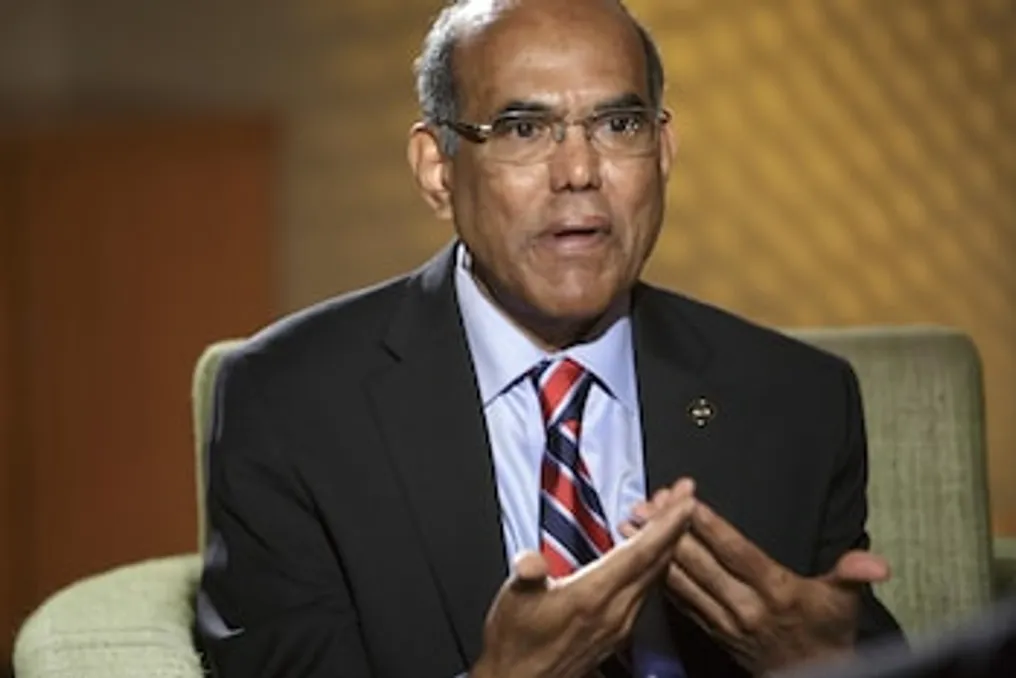
Former Governor of the Reserve Bank of India, Duvvuri Subbarao, noted that the declining attractiveness of India to foreign investors means that short-term measures to attract capital are unlikely to stop the rupee's weakening, which strengthens calls from other economists for deeper structural reforms.
Subbarao, who headed the Reserve Bank of India from 2008 to 2013, commented on a recent move made in June to attract a larger volume of foreign currency by incentivizing Indians living abroad. He considers this measure 'too costly' to justify if its main goal is merely to boost confidence in the rupee. In May, the currency reached a historic low, approaching 97 per dollar.
The measure, known as FCNR-B (foreign currency deposits for non-residents), attracted $36.72 billion by July 31, and bankers and analysts predict that the inflow will exceed $50 billion by the program's close on September 30.
According to Subbarao, FCNR deposits are 'borrowed dollars' that must be repaid at maturity. He emphasized: 'They do not build confidence. We need flows that build confidence through foreign direct investment and portfolio investment.'
Furthermore, the former central bank chief pointed to potential measures such as reducing transaction and tax costs for foreign investors, as well as further liberalizing access to stock and bond markets.
Currently, in 2026, foreign investors have withdrawn a net of $17.3 billion from Indian stocks and bonds, putting pressure on the currency. Despite the sell-off, Indian stocks are trading at a 44% premium compared to the broader Asian index. High valuations force investors to seek other markets, while Indians themselves are also transferring more funds abroad. The situation is exacerbated by the rapid growth of investments in artificial intelligence and semiconductors in other regions.
The Reserve Bank of India's strategy to strengthen the currency showed less effect compared to a similar strategy implemented in 2013. The rupee fell by 0.5% in the first 46 days after these measures were announced, whereas in 2013, there was a 7% increase over the same period.
Subbarao noted that 'the cost-benefit calculation was quite clear in 2013' because abundant global liquidity made attracting FCNR deposits relatively cheap. He added that the situation today is less convincing. The expert also concluded that stronger domestic demand would help revive investment and attract FDI, stating: 'If there is demand, investment will come.'