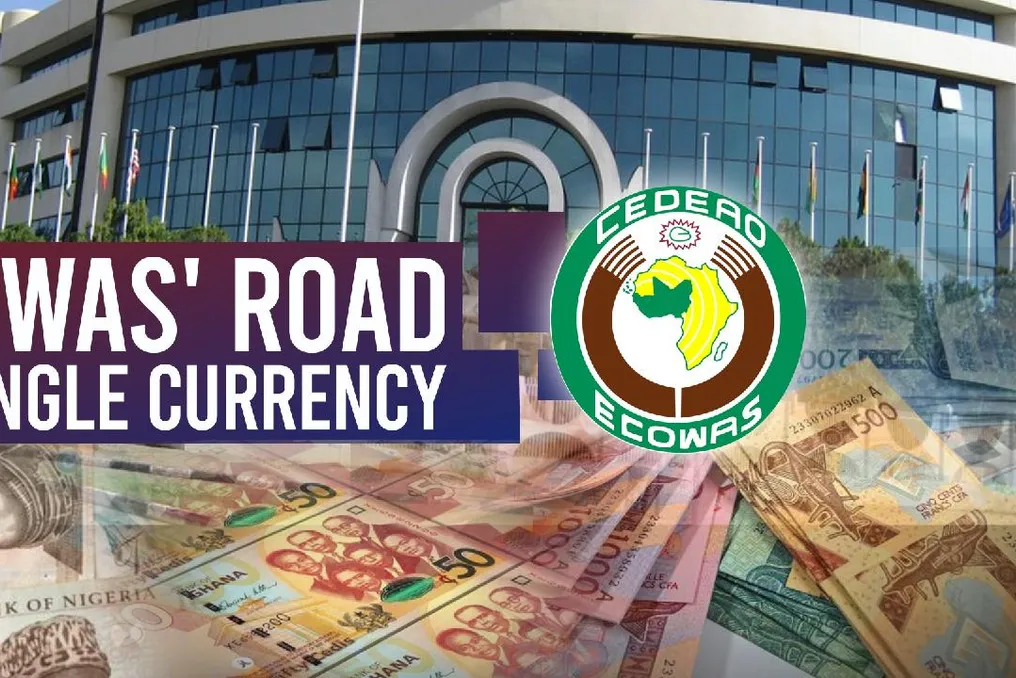
The Economic Community of West African States (ECOWAS) continues to strive for the implementation of a single regional currency, Eco, which is intended to replace the CFA franc and other national currencies within the bloc. This economic maneuver opens unprecedented opportunities to eliminate trade barriers and stimulate overall economic growth in West Africa.
However, the realization of this plan faces several serious challenges: there are significant macroeconomic obstacles, some member states may refuse to participate, and disputes over sovereignty related to the French-backed CFA franc persist, jeopardizing the planned timeline.
A History of Broken Promises
The region's ambitions are overshadowed by a series of past failures. The Eco concept was first developed decades ago, but its implementation has been postponed and derailed at least five times, with notable delays in 2003, 2005, 2010, 2015, and 2020. These constant delays are linked to member states failing to meet strict criteria for macroeconomic convergence, as well as global shocks such as the COVID-19 pandemic.
This continuous cycle of procrastination has generated widespread distrust regarding whether the new 2027 deadline is a realistic financial goal or merely another administrative mirage. Dr. Pippa Hughes, a policy analyst at the Nkafu Institute of Policy's Governance and Democracy Department, told CGTN that achieving full consensus before launching Eco is practically impossible because each country in the region operates within completely different geopolitical interests. Nevertheless, she remains hopeful that 2027 could be a 'magic year,' given the phased approach allowing countries to join after meeting agreed-upon economic conditions.
Regional Geopolitics & Economic Realities
This ideological divide highlights a fundamental disagreement on how to launch the currency. Dr. Daniel Amatee Animi, Chief Economist for Economic Development Initiatives, acknowledges that adhering to strict indicators—including single-digit inflation, a fiscal deficit of 3% of GDP, and long-term debt sustainability—has historically been problematic. However, he argues that waiting for an ideally stable and uniform macroeconomic environment across all nations will lead to perpetual stagnation of currency progress, so the region must move forward despite these economic imbalances.
This sharply contrasts with the geopolitical hurdle raised by Dr. Ndongo Samba Silla, Regional Director for International Development Economics at Associates. Dr. Silla insists that the fragmented political landscape and competing national interests make regional consensus on a common currency virtually impossible. According to Dr. Silla, 'there is no interest among countries to share one currency,' noting that Nigeria accounts for more than two-thirds of the region's GDP. He adds that even if it were achievable, it would only be a new name for the Nigerian currency.
Lessons from the Eurozone
Referencing the experience of the Eurozone, Dr. Silla warns that launching a single currency without a unified political federation or central fiscal authority would be a historical mistake. This raises an important question about the region's existing monetary infrastructure. Dr. Animi advocates for a continental 'trial and error' approach, urging African countries to build up and integrate the Pan-African Payment and Settlement System (PAPSS) directly into the Eco economic model to create momentum.
Conversely, Dr. Silla views this payment alternative not as an interim step but as a complete replacement for the doomed monetary project. He points out that crucial preparatory work—such as central bank charters, localized payment infrastructure, and physical banknotes—is entirely absent for a 2027 launch. Reinforcing his warning about the Eurozone, Dr. Silla believes that without a unified West African political foundation for managing joint expenditures, the regional currency is logically doomed from the start.
Breaking Neocolonial Ties
Despite these serious structural arguments, the drive for monetary sovereignty remains a powerful impetus. Among the 12 ECOWAS member states, five still use the French-backed CFA franc, which is pegged to the euro, following the exit of Mali, Niger, and Burkina Faso. Dr. Hughes states: 'I think it is time for us to break free from this French neocolonial method and try to see how we can adopt an African perspective.'
To support this sovereignty, Dr. Animi emphasizes the need to establish a functional central bank backed by reliable foreign reserves to meet citizen demand, while simultaneously moving away from import-driven vulnerabilities by prioritizing local production, added value, and intra-African trade.
Unification or Cooperation?
Instead of forcing a flawed currency union that has seen constant postponements since 1983, Dr. Silla proposes shifting towards regional monetary cooperation, specifically by using common payment and settlement systems for cross-border trade without reliance on the US dollar. Ultimately, the future of West African integration may depend on redefining the objective itself. While proponents view the 2027 launch of Eco as a vital step toward overcoming colonial oppression and ensuring economic discipline, critics argue that the region should cease chasing the illusion of monetary unification.