The rainy season is considered favorable for plant growth and maintaining their green condition. Thanks to the air humidity and cool weather during the monsoon season, many plants begin to actively produce new leaves and branches. Tulsi is also among these plants, for which rain is an ideal time for rapid growth. However, relying solely on rain is not enough; excess water, constant humidity, and lack of sunlight can lead to root rot and yellowing leaves.
If you want your indoor tulsi bush to be not just green, but very dense with many branches, you need to slightly adjust your care approach during the rainy period. By following a few simple rules, you can significantly improve the growth of tulsi.
How to make tulsi lusher
To achieve a dense and green appearance, tulsi requires regular pruning. Gently pinching the top growing tip with your fingers stimulates the appearance of new side shoots from below. This allows the plant to develop as a shrub rather than just growing one long stem.
It is also recommended to timely remove flower stalks or flowers that appear on the tulsi. This directs the plant's energy not towards seed formation, but towards the development of new leaves and branches.
The danger of overwatering in the rainy season
During the monsoon season, the greatest harm to the tulsi plant can be caused by excess water. Since constant rain already makes the soil in the pot moist, additional external watering is not required. Before watering, check the top layer of the soil with your finger; water only if the soil is dry. Furthermore, the pot must have drainage holes so that water can flow out freely. Waterlogging leads to the rotting of tulsi roots.
The importance of lighting
For good tulsi development, a sufficient level of light is necessary. During rainy days, there are often cloudy periods, so the plant should be placed in a spot where it receives as much natural light as possible. If possible, expose the tulsi to a sunny spot for several hours daily. Good lighting promotes the retention of healthy leaf color and improves overall plant growth.
Soil requirements
For tulsi to become dense, it is necessary not only to fertilize it but also to ensure the correct soil composition. The soil should allow water to pass through easily, rather than stagnating. To do this, you can mix garden soil with sand or fine gravel and add well-rotted organic compost. This prevents the soil from becoming heavy and ensures air access to the roots, which is especially important during the rainy season.
Fertilizing every few weeks
When the plant is actively growing in the monsoon season, it needs nutrients. Small amounts of vermicompost or well-rotted organic fertilizer can be added to the soil periodically. Excessive fertilization can harm the plant instead of benefiting it, so it is better to fertilize in moderate doses, based on the plant's needs.
Pest control measures
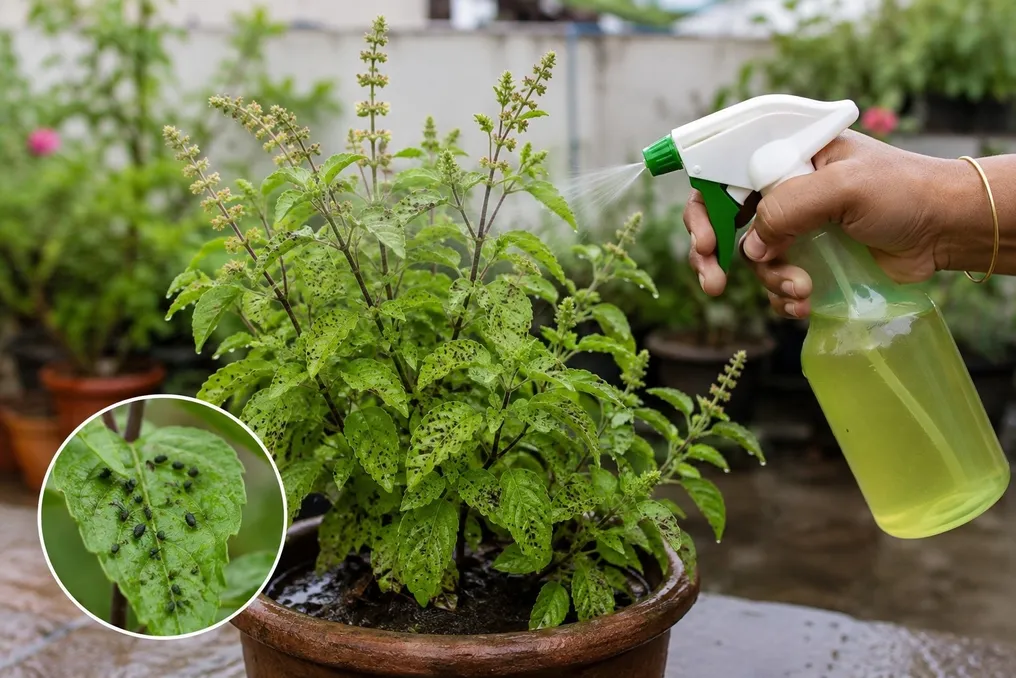
Under conditions of high humidity during the rainy season, small insects or fungal problems may appear on the tulsi. Therefore, it is worth inspecting the leaves and stems every one or two weeks. If pests are found, a neem spray can be used.
Don't forget to remove flower stalks
The appearance of flower stalks on tulsi is common, but if the goal is to obtain a denser bush with more leaves, regularly removing old or excessive flower stalks will be beneficial. It is also important to remove dry, yellow, or damaged leaves.
Simple formula for a lush tulsi in the rainy season
Caring for tulsi in the monsoon season is not just about watering and fertilizing. If the plant is provided with proper lighting, limited watering, soil with good drainage, timely pinching, and balanced nutrition, its growth can be significantly improved. The most important thing is to avoid overwatering due to excessive attention to the plant during the rainy season.