For a long time, the dominant scientific concept among astronomers was the assumption that the surface of Mars froze about three billion years ago and has remained in that state ever since. According to this model, any liquid water either ended up buried beneath the surface or was lost to space long ago.
However, a new analysis of data obtained by the Chinese Zhurong rover casts doubt on this established hypothesis. Researchers led by Jia Chen Liu from the University of Hong Kong re-examined the data collected by Zhurong and found evidence contradicting the previous theory.
If the team's interpretations prove correct, they point to the presence of mineral crystals that could have formed only in standing water on the Martian surface significantly more recently than previously assumed. The results of this study were published in the journal Nature Astronomy.
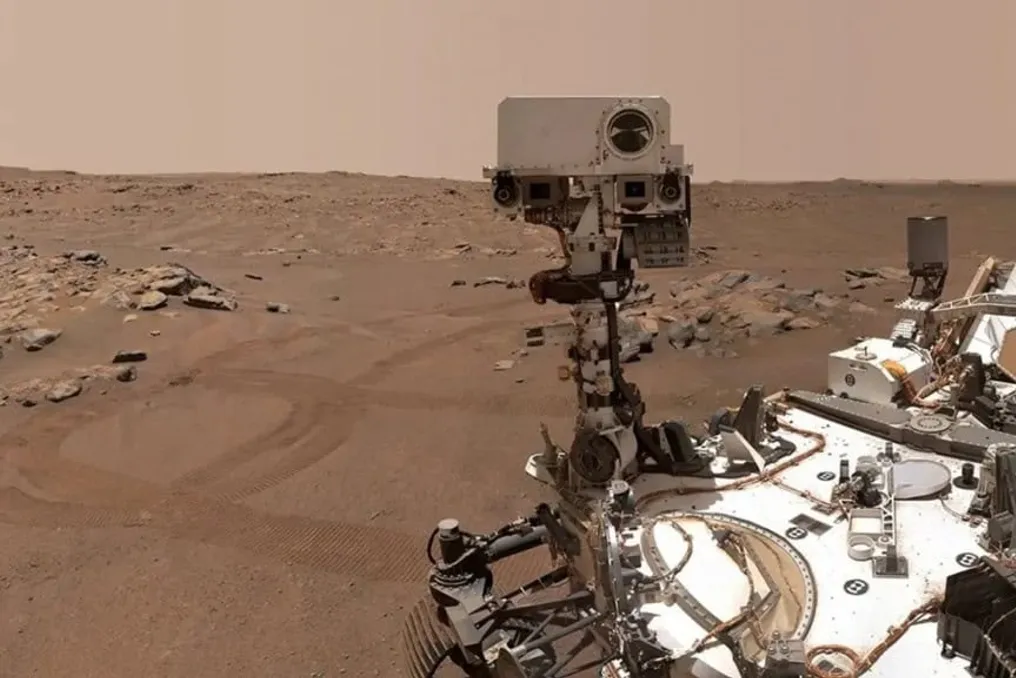
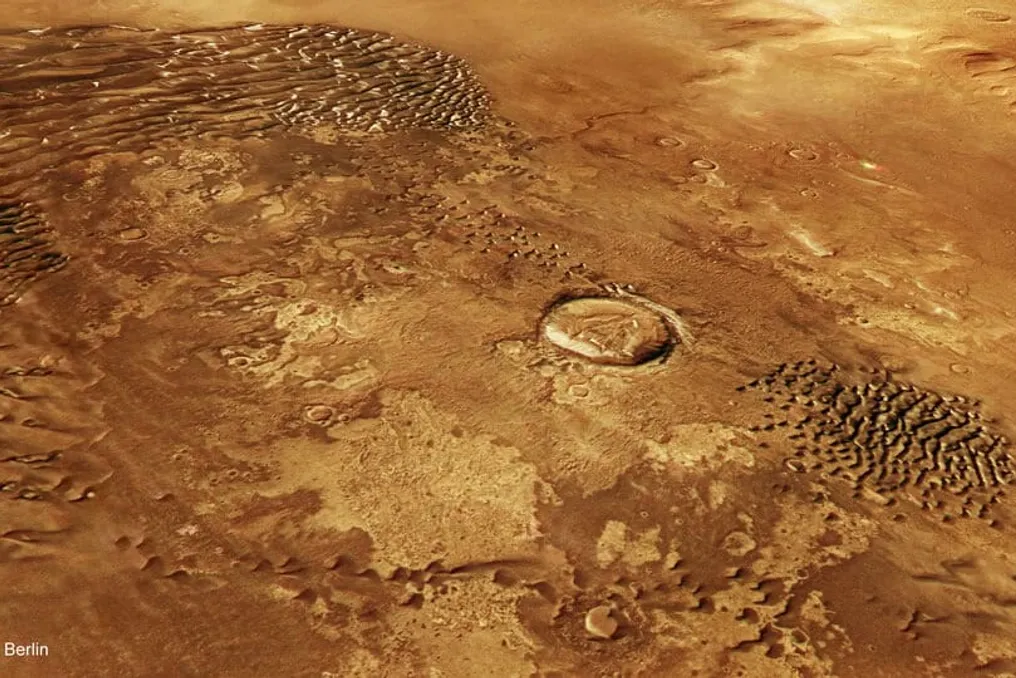
The Zhurong rover landed in Utopia Planitia, a vast plain in the northern hemisphere of Mars, in May 2021. For 93 days, it collected data on the Martian surface before its mission was interrupted by a dust storm in 2022.
During this period, the rover's cameras captured flat, shiny rocks protruding from the sand, and its instruments registered readings indicating a high water content in the minerals of these rocks. Nevertheless, based solely on images, researchers were unable to determine the mineral composition of these rocks with precision.
More detailed information
If the measurements conducted by the team are accurate, they could indicate that liquid water on the surface of Mars may have persisted for hundreds of millions of years longer than predicted by most scientific models. Since selenite crystals are capable of sealing small pockets of the liquid in which they formed, they could potentially preserve the chemical record of this ancient environment.
For this reason, this area of Utopia Planitia could become an important candidate for more detailed study by future rovers equipped with instruments to analyze ancient environments preserved within crystalline structures.