OpenAI announced on Monday the expansion of Daybreak, its cybersecurity service introduced earlier this year, and simultaneously launched a new artificial intelligence (AI) model dedicated to digital security tasks.
OpenAI announced on Monday the expansion of Daybreak, its cybersecurity service introduced earlier this year, and simultaneously launched a new artificial intelligence (AI) model dedicated to digital security tasks.
This initiative comes amid a growing proliferation of attacks orchestrated by AI agents, which include intrusions into Hugging Face, attacks on an academy website, and the creation of fake profiles for social engineering purposes.
Daybreak consolidates access to models, tools, and workflows intended for defense specialists. With this expansion, the service now operates at two levels, named Blue and Red, granting previously approved clients access to the company's most advanced models, which previously had considerable restrictions on permitted user use.
The frontier models are the most sophisticated available and have already generated controversy; the Trump administration, for example, sought cooperation with AI companies for the launch of these models, mentioning security-related concerns.
Critics argue that the increase in attacks carried out by AI agents also represents a marketing opportunity for the laboratories that develop such models. OpenAI framed the expanded Daybreak within this scenario, stating in a blog post:
"The world of cybersecurity is changing rapidly — threat agents will increasingly use AI to conduct cyberattacks at unprecedented speed and scale, including in fully autonomous ways. As these capabilities spread, defenders have an ever-shrinking window to prepare."
In parallel, other corporations are showing interest in hiring the protection offered by AI labs, precisely because these labs have direct knowledge of security risks. Anthropic, a competitor of OpenAI, had already made available its own cybersecurity-focused model called Mythos.
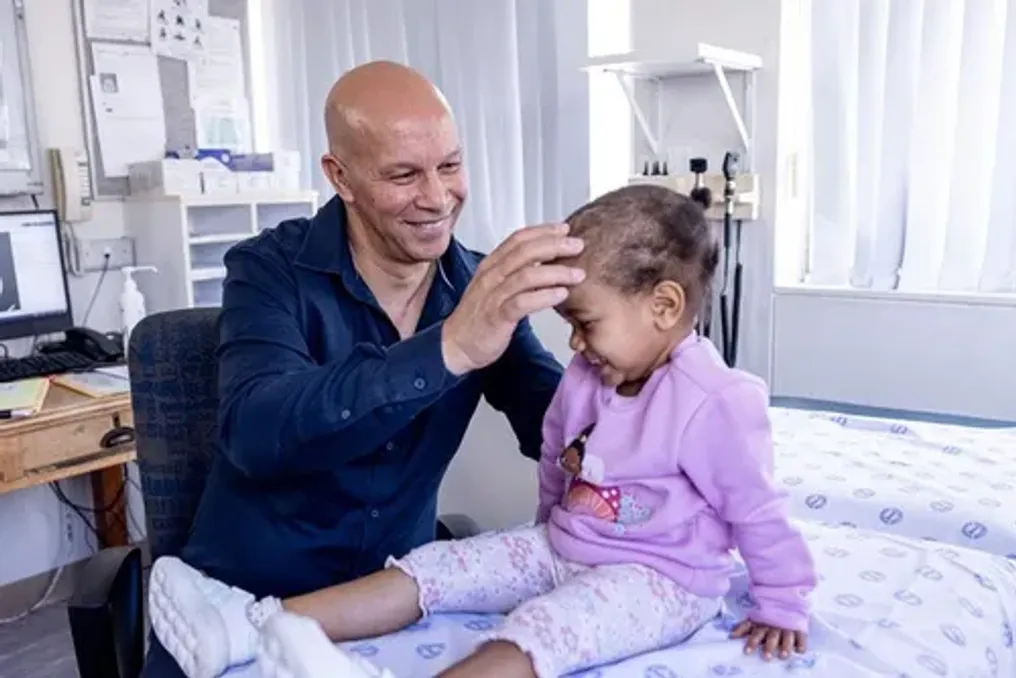
The University of Cape Town (UCT) has opened an innovative high-tech neuroscience center aimed at expanding scientific research and education in the field of neuroscience across Africa, striving to positively impact children's lives.
The human brain is the most complex organ in the known universe. In childhood, it undergoes significant changes, developing, adapting, and laying the foundation for the entire future life of a person. However, injuries, severe infections, or sudden illnesses can irreversibly alter a child's life path.
To counter this problem, UCT launched an advanced neuroscience center dedicated to protecting and studying the developing brain. This new facility, known as the SAMRC Discovery Neuroscience in Children Unit, provides a long-term scientific platform for improving the diagnosis and treatment of acute brain conditions, as well as for training a new generation of neuroscience leaders directly in Africa.
Professor Anthony Figgadi, director of the new unit, notes: 'Africa has more children than any other region, and numerous brain-affecting conditions collectively represent the largest burden of diseases causing mortality and disability worldwide.' He adds that these two factors present both a serious challenge and a huge opportunity to study and protect the young brain to ensure a healthy future for the continent.
The launch of this unit marks a significant milestone for the African Brain Child (ABC) initiative. This clinical and research program is based at the Pediatric Neurosurgery Department of the Red Cross War Memorial Children's Hospital and the University of Cape Town's Neurobiology Institute. The group spent years building world-class capabilities in pediatric brain health.
The initiative emphasizes that their unique combination of high incidence rates, complex infrastructure, and extensive clinical and laboratory experience positions them advantageously to become a leading center for pediatric brain research. The establishment of this unit, which is one of seven new Extramural Units (EMUs) funded by the South African Medical Research Council (SAMRC), officially recognizes ABC as one of the continent's leading research initiatives.
Professor Lizel Zülke, Vice President for Extramural Research and International Portfolio at SAMRC, welcomed the expansion, noting that the unit increases the council's reach in neuroscience and child health.
The main goal of the new center is to translate scientific discoveries from the laboratory directly to the patient's bedside, a process known as translational science. The unit's researchers are studying:
How brain tissue responds to acute injury and infection at the cellular level.
How medications travel through the bloodstream and penetrate the brain's protective barriers.
Identifying clear genetic markers for earlier and more accurate diagnosis of conditions.
In addition to pediatric neuroscience, UCT is expanding its activities into other modern fields. Professor Nicola Mulder will lead the SAMRC/UCT AI Unit for African Public Health research, which uses artificial intelligence to transform public health data in the region.
Associate Professor Ursula Rolvink, Deputy Director of the new neurobiology unit, shares her view: 'We have the privilege of working at the intersection of critical scientific frontiers, including neuroscience, immunology, and precision medicine, focusing on the most remarkable stage of human life—childhood.'
Beyond laboratory breakthroughs, the center serves to develop local talent. Through postgraduate training, specialized mentorship, and collaborative networks in South Africa and globally, the unit actively prepares African scientists and doctors to lead world-class research on their home continent.
Professor Tokozani Madjosi, Deputy Vice-Chancellor of UCT for Research and Internationalization, stressed that the ultimate measure of the unit's success is its impact on people. By protecting young minds and fostering local scientific leadership, the new center is investing directly in Africa's future.
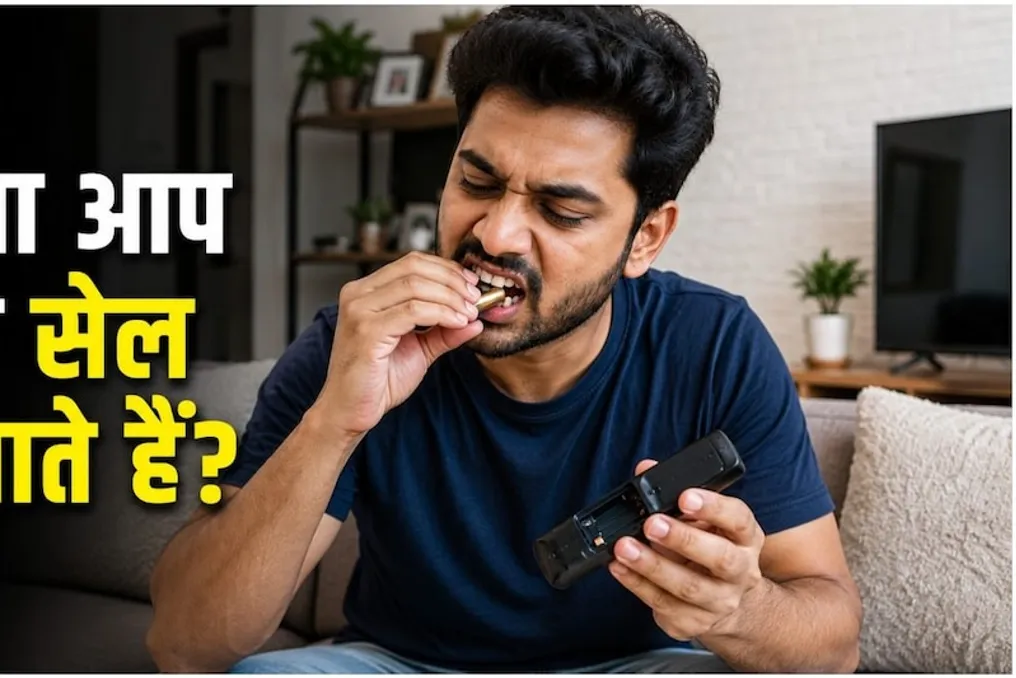
When a TV or air conditioner remote control stops functioning properly, people often try to solve the problem in various ways. Most often, they hit the back of the remote, remove the batteries, clean them, and then try to bite them, hoping that the remote will work again and the batteries will last longer.
There are many folk remedies that users employ. When a remote suddenly stops working while watching TV, instead of putting in new batteries, people might throw the remote on a table or sofa. Others rub the batteries against each other or throw them on the floor. Some even try to chew them or slightly bite them, believing this will allow the batteries to last a little longer, even if they are slightly flattened.
Examining the effectiveness of these tricks reveals that tapping or lightly hitting the remote can temporarily restore its function. However, this does not mean that the impact generates new energy in the battery. Often, the impact causes a slight displacement of the metal contacts in the battery and the remote, which can lead to the destruction of a thin layer of oxides or dirt, improving the electrical connection. If the contact between the battery and the remote is initially poor, this may provide a temporary effect.
The method of rubbing batteries can also work for a short time. By rotating the battery in place, the edge may rub against the remote's spring, cleaning the contact surface. Because of this, a weak remote may start working again. Nevertheless, this does not restore the actual capacity of the battery; it only ensures temporary contact for using the remaining energy.
However, the method of biting down on them can be dangerous. With such pressure, the external sealed casing of the battery may be damaged. If a hole forms in the battery, it may leak, creating a risk of short circuit. Battery safety guidelines clearly warn against crushing, bending, or puncturing cells.
The Indian electric vehicle market is projected to nearly triple by 2032, with the majority of this growth attributed to two- and three-wheeled vehicles providing last-mile mobility.
However, many manufacturers entering the country's market lack a clear plan for managing vehicles after they are sold to customers. They have limited information regarding vehicle location, battery status, or malfunctions.
Nexular, a Mumbai-based company, aims to change this situation. The startup provides connected hardware, cloud software, and an artificial intelligence-based intelligent layer that allows electric vehicle manufacturers in India, Southeast Asia, and Africa to monitor, manage, and monetize their vehicles.
Nexular was founded in 2023 by computer scientists trained in Sweden—Joel and Emma Rosada, who co-founded over 10 companies, along with Matthias Hulten. They created Nexular with Matthias Hulten, an expert in mobility, operations, and product development. Joel serves as Chairman, Emma as CFO, and Matthias as CEO.
Joel Rosada notes: 'Manufacturers have already decided to connect their vehicles. The only open question was which supplier to use and at what price.'
This defined Nexular's concept: in-vehicle hardware, data management software, and an intelligent layer that transforms this data into useful functions. A compact device is installed near the battery, tires, and engine on the production line. It collects data such as location, battery status, and speed, and can remotely disable the vehicle if necessary. Different hardware options are available for various markets.
Each manufacturer operates within its own dedicated software environment, where data is stored on private local servers. This configuration ensures customer data privacy and security, helping manufacturers comply with local data regulations as Nexular expands into new markets.
The third layer, according to Nexular, is its distinguishing feature. Since the company owns the entire technology stack, it can release new features significantly faster than competitors working with multiple suppliers. Features such as payment tools, analytics dashboards, and remote control functions can be added without needing a complete platform overhaul. Rosada asserts that this approach allows Nexular to advance 100 times faster than traditional development cycles. He gives an example: 'A project that usually takes a year, we can do in two days.'
Unlike gasoline cars, which are largely disconnected after sale, electric vehicles remain digital throughout their service life. Manufacturers can manage battery swap networks, leasing programs, and after-sales service, but only if they know how the vehicles are being used.
This transparency also impacts financing. If lenders know where the financed vehicle is and how it is being used, risks decrease, and borrowing costs may reduce. Rosada emphasizes: 'For couriers and freelance drivers, this interest rate gap can be the deciding factor between the ability to acquire a vehicle and the income it generates, or the lack thereof.'
For couriers, the technology is presented as a simple mobile application displaying location, battery charge level, and a digital key. Meanwhile, manufacturers and fleet operators gain access to monitoring dashboards showing real-time vehicle location, service alerts, and maintenance warnings. This data can be integrated into existing systems or used to create branded applications for customers and leasing partners.
Nexular receives a one-time fee for each hardware unit sold, as well as a recurring software subscription. Manufacturers can choose individual products or implement the full platform.
The company is also developing software that uses vehicle data to automate financing, leasing, and battery swap services, especially in markets where vehicle financing remains slow and paperwork-heavy.
Creating the technology was only half the task; convincing manufacturers to adopt it required integration into the existing automotive supply chain. Instead of selling directly to couriers, Nexular acts as a Tier 1 supplier to vehicle manufacturers. Among its clients are the motorcycle company Roam, as well as micro-mobility players Clean Motion and EVX Mobility. The platform supports all types of vehicles—from two-wheelers to quadricycles and commercial vehicles.
Nexular competes with players such as Vecmocon Technologies, which handles battery and smart system management for EV OEMs, and Intangles, known for its AI-based predictive fleet maintenance.
The company has signed three contracts with OEMs worth over $400,000 and is negotiating five more. According to Nexular, its commercial portfolio exceeds one million vehicles in India, Southeast Asia, and Africa, representing a potential first-year opportunity of $10–20 million.
Rosada compares today's Indian EV industry to China's early rise, pointing to companies like BYD, which transformed from domestic producers into global brands within a decade. He states: 'We are building the infrastructure for those who will do it.'
Nexular positions itself as 'Made in India, international standard,' combining local manufacturing with export-ready technology.
Rosada insists that speed remains its main advantage. Owning the entire technology stack allows the company to develop and deploy products much faster than competitors operating through disparate systems.
Rosada initially invested about $3 million of his own capital before Nexular raised another $550,000 from Saganaki Ventures, 8+ Ventures, Lindia Invest, Skare Invest, and a group of European angels in March 2026. These funds were used to finance production, hire staff, and acquire customers, and the company's Edge Series is now in full production in India.
With production underway, Nexular's immediate goal is order fulfillment and market share growth. A Series A round will follow sales growth. In the near term, Nexular aims to become the leading connectivity platform for EVs in India and Southeast Asia. In the long term, Rosada believes connectivity will form the basis of a broader mobility ecosystem.
He expects that within the next two years, the platform will feature AI-driven financing, leasing, and rentals. 'We will be able to automate vehicle-level financing decisions and lower the cost of credit. This will make electric vehicles accessible to people who use motorcycles as their business, not just for transport.'