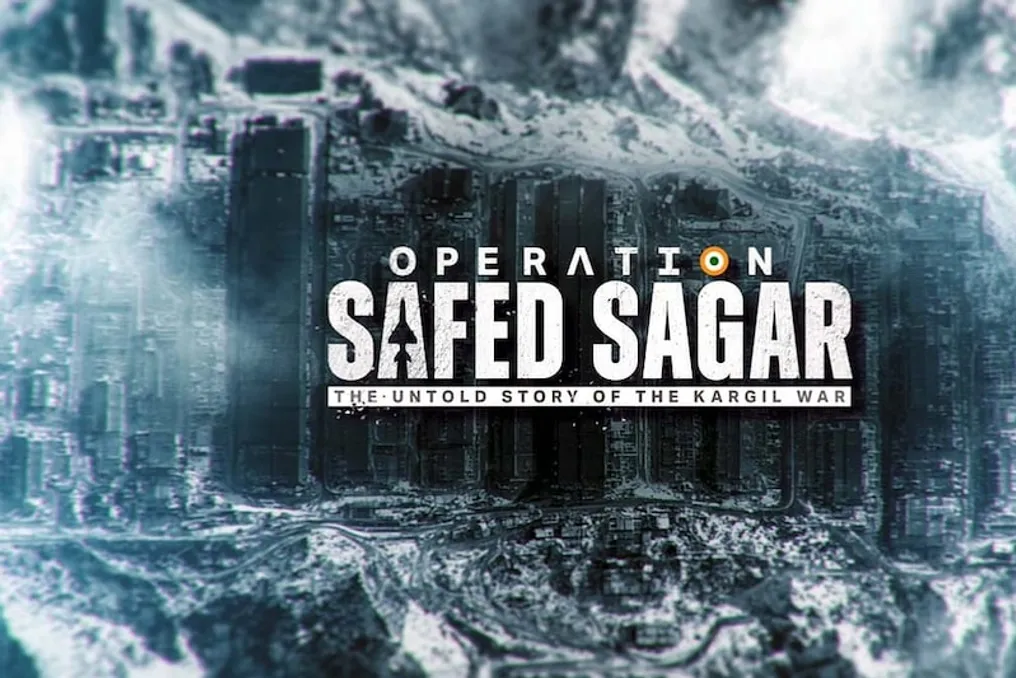
The series 'Operation White Sea,' released on Netflix, sheds light on an obscure aspect of the Kargil War, presenting the history of the Indian Air Force. This six-episode drama, directed by Ani Sen, is distinguished not only by its gripping plot but also by its deep emotional content, while avoiding overt patriotism.
The series is based on the Indian Air Force's mission, 'Operation White Sea,' during the Kargil conflict in 1999. When Pakistani invaders occupied the high peaks, the air force had to carry out missions under extremely difficult conditions. The plot centers around Wing Commander Tony Dhanoa and Squadron Leader Ajay Ahuja.
Ajay Ahuja is responsible for training a team of young pilots who then participate in real combat operations. A strong point of the series is that it portrays war not just as a battle. It presents a harmonious blend of the pilots' personal lives, their families' anxieties, the fun during training, and serious moments. Here, the characters are shown not merely as heroes, but as people—they laugh, they get tired, they are afraid, yet they still take off. This human element sets the series apart from other war films.
The political aspect is also presented in a balanced manner: the peaceful initiatives of Atal Bihari Vajpayee, the weakness of Nawaz Sharif, and the cunning of Parvez Musharraf are shown, but without unnecessary animosity. The character of Musharraf is certainly a villain, but he is not exaggerated.
Siddharth brilliantly portrayed Squadron Leader Ajay Ahuja, demonstrating discipline, leadership qualities, and emotional depth. Jimmy Shergil created the image of Wing Commander Tony Dhanoa, who appears calm yet strong. Young actors Abhay Verma, Mihir Ahuja, Taruk Raina, and Arnab Bhasing convincingly conveyed the journey from inexperienced to fearless pilot. Adil Hussain, Sanjay Suri, Barun Sobti, and other actors left their mark even in limited time. Vinay Patak excels in the roles of Nawaz Sharif and Manu Rishi Chadha as Parvez Musharraf. Female characters, such as Diya Mirza, Amrita Bagchi, and Pradjakta Koli, reflect the anxiety and anticipation of families.
The true essence of the series lies in the aerial combat scenes. The flights of fighter jets, the shooting, and the dangerous missions are filmed so captivatingly that the viewer feels as if they are in the cockpit. Although the visual effects are based on CGI, they look organic within the context of the story. The camera masterfully conveys both the vastness of the Himalayan landscapes and the claustrophobia of the cockpit. The music by Anugur Sakhi accompanies the narrative, following the mood of the story rather than imposing patriotic motives. The production design also deserves praise; the airfield, command center, and military setting look authentic.
In some parts, the narrative becomes somewhat explanatory, and the dialogues resemble orders. The scenes involving the American and Chinese sides seem weak. Furthermore, the female characters could have been given more depth. However, these shortcomings do not affect the overall quality of the series. 'Operation White Sea' is completely free of nationalistic sentiments and presents patriotism with dignity. The series proves that war is won not only by weapons and bombs, but also by planning, courage, teamwork, and sacrifice. It is a tribute to the pilots who defended the country from the skies. Overall, it is one of the best Indian war series of recent years, evoking a sense of pride and respect alongside entertainment.