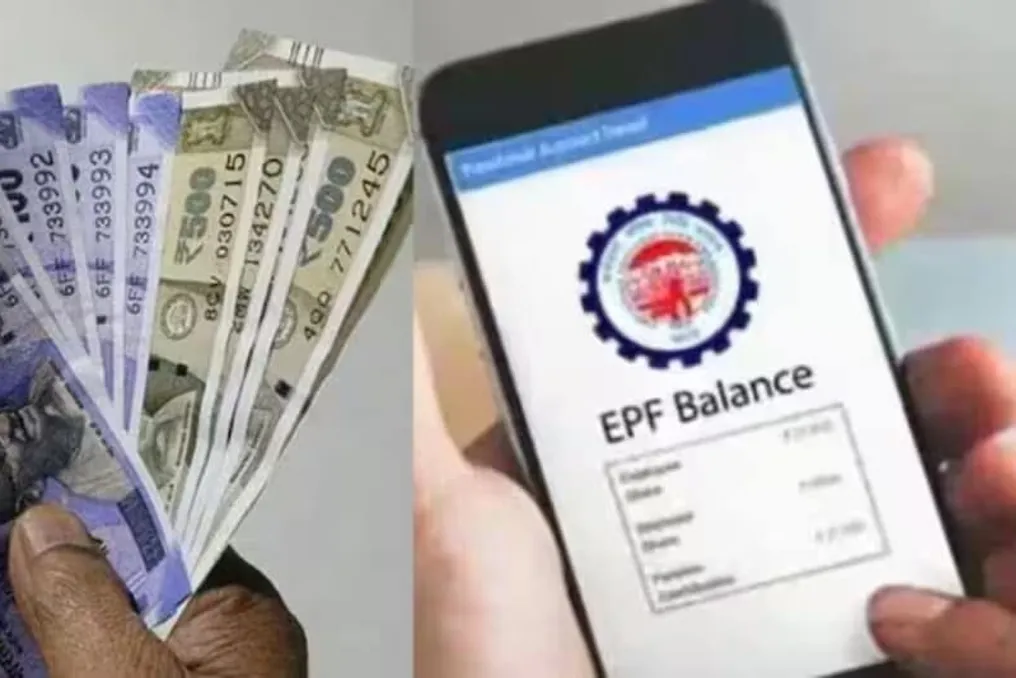
The Employees' Provident Fund Organisation (EPFO) has introduced new regulations regarding partial and full withdrawals from the Provident Fund (PF) Balance. Under the Employee Provident Fund Scheme 2026, waiting periods have been established for early final settlement of PF and receipt of Employee Pension Scheme (EPS) benefits.
These changes have raised questions among employees about how they can utilize their pension savings if needed. The government provided information on these changes in a written response in the Lok Sabha on August 10th.
Questions were posed to the government regarding amendments to the rules for partial and full withdrawal from the EPF balance and employee access to their savings.
The Union Minister of Labour and Employment, Shobha Karandalade, informed the Lok Sabha that the EPFO has set a 12-month waiting period for the early final settlement of EPF. A 36-month waiting period has been set for receiving EPS benefits. This means that EPFO members will not be able to make a final settlement of their entire EPF balance immediately after resignation.
Similarly, members receiving EPS benefits will have to wait the stipulated period of 36 months.
The introduction of a waiting period does not mean that EPFO members cannot make any type of withdrawal from PF during this interim period. According to the government, the EPFO has simplified and made the rules for partial and advance withdrawal from PF more flexible.
EPFO members can withdraw up to 75% of their pension balance under three broad categories. These categories allow funds to be withdrawn from PF to cover expenses during unemployment, in case of a medical emergency, for education, housing, and other urgent needs.
The Labour Minister also clarified that in special circumstances, EPFO members can withdraw up to 75% of their PF balance twice a year without specifying a reason. Thus, despite the waiting period for final settlement, access to a significant amount of PF remains available in case of acute necessity, provided the withdrawal conditions are met.
Questions were raised about the 36-month waiting period for receiving EPS benefits and the requirement to maintain a minimum balance of 25% in the PF account. In its response, the government did not provide detailed information on any specific objections or suggestions from employees, trade unions, or employers. However, the minister stated that a consultation process with all stakeholders was conducted before the rule changes.
The discussion took place at the Central Board of Trustees (CBT) of EPFO, which includes representatives of recognized trade unions, employer organizations, as well as representatives of the central and state governments. According to Shobha Karandalade, all amendments were put up for discussion at the 238th meeting of the CBT, where they were thoroughly reviewed and discussed, after which a recommendation was sent to the government for notification.
The government also addressed questions regarding financial difficulties that employees might face due to the new PF withdrawal rules, and issues related to their implementation. The response indicated that the EPFO operates on three levels. Although a waiting period has been introduced for early final settlement of EPF and receipt of EPS benefits according to the new rules, the possibility of partial PF withdrawal to meet urgent needs, housing issues, and in special circumstances will remain, subject to compliance with the established rules and eligibility criteria.