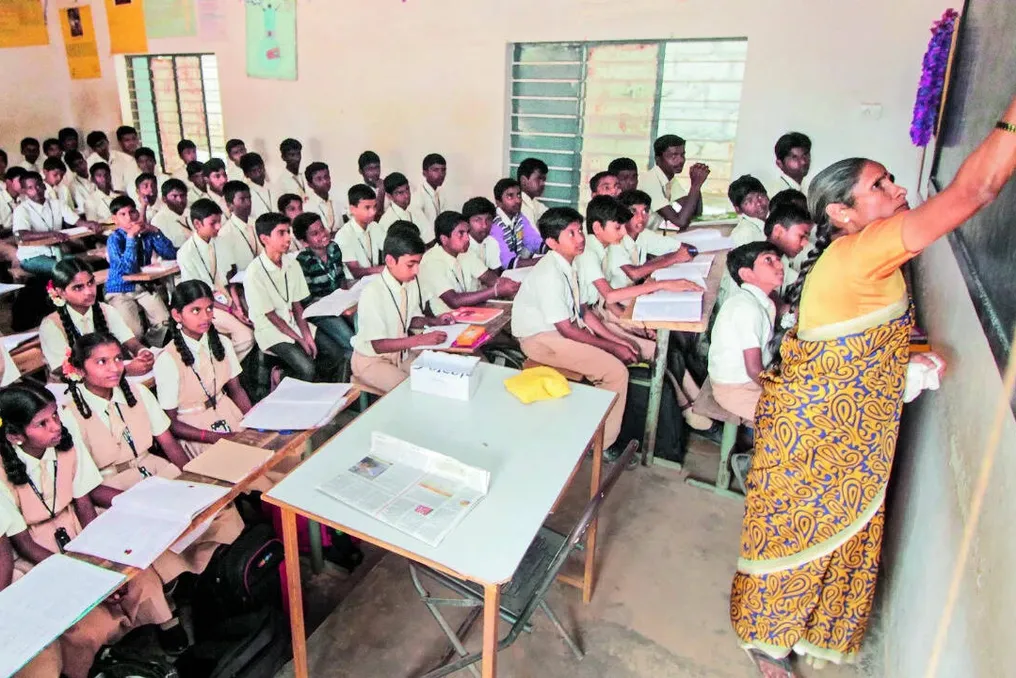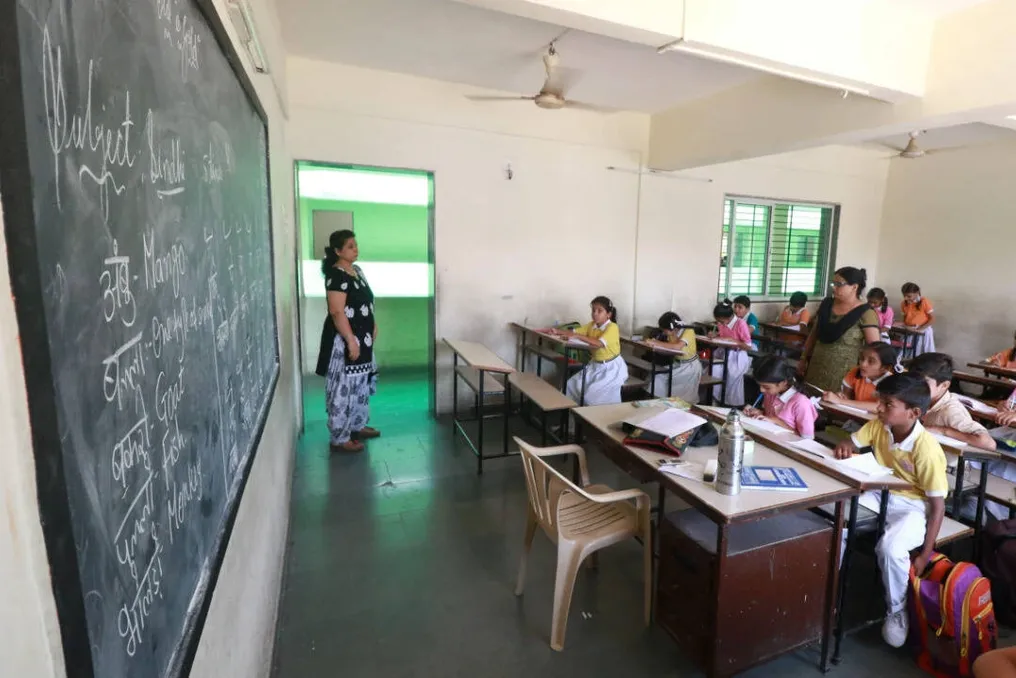
According to data presented in the Lok Sabha on Monday, the total number of government primary schools across the country has decreased by nearly 10 thousand over the course of the year. The sharpest decline was recorded in the states of Meghalaya, Telangana, and Andhra Pradesh.
UDISE+ data showed that the number of primary level government schools dropped from 889,806 in 2024-25 to 879,940 in 2025-26, representing a decrease of 9,866 schools, or approximately 1.1%.
This official data was provided in response to a question by DMK MP T. R. Baalu regarding whether a large number of primary schools have been closed due to insufficient student enrollment and what steps are being taken to prevent student dropouts. However, the Ministry of Education did not specify how many schools were closed due to lack of students, providing only the overall figure for government primary schools over two academic years.
Meghalaya demonstrated the largest numerical reduction, as the number of government primary schools fell from 7,633 to 5,459, a drop of 2,174 schools. Telangana followed with a decrease of 1,961 schools, reducing the figure from 22,983 to 21,022. Andhra Pradesh recorded a decline of 1,446 schools, decreasing the count from 37,449 to 36,003.
Other states that also reported reductions include Madhya Pradesh (by 1,043 schools), Karnataka (by 615), West Bengal (by 587), Rajasthan (by 473), and Maharashtra (by 357). Himachal Pradesh reported a decrease of 259 schools, and Assam—by 209.
Uttar Pradesh, which maintains the largest network of government primary schools, saw a slight fall in the number of schools—from 134,115 to 133,948.
Not all states experienced a reduction. In Bihar, the number of schools increased from 66,803 to 66,915, and in Chhattisgarh—from 43,836 to 43,853. In Jammu and Kashmir, Puducherry, and the Andaman and Nicobar Islands, the figures remained unchanged.
The Ministry noted that the opening, closing, and rationalization of schools fall under the jurisdiction of state and territorial governments, as education is listed under the Concurrent List. It was stated, however, that access to education has improved: the overall access ratio increased between 2018-19 and 2025-26 from 96.49 to 98.14 at the upper primary level, from 88.24 to 95.05 at the middle level, and from 65.05 to 94.79 at the upper secondary level.
The Centre stated that states receive support through the Samagra Shiksha and PM POSHAN programs, as well as assistance in developing school infrastructure, creating residential schools and hostels, providing transportation, conducting enrollment drives, and supplying textbooks and uniforms to reduce dropout rates and improve enrollment.