
A new security agreement concluded between Pakistan, Saudi Arabia, and Turkey is transforming the geopolitical landscape in the Middle East, uniting three influential Muslim world powers within a collective defense system.
The agreement, named after the holy city where it was signed on Friday, stipulates that an attack on one of the participants will be considered an attack on all three. This clause, similar to NATO's Article 5, gives the pact immediate geopolitical significance, even though the joint statement leaves specific military obligations unclear.
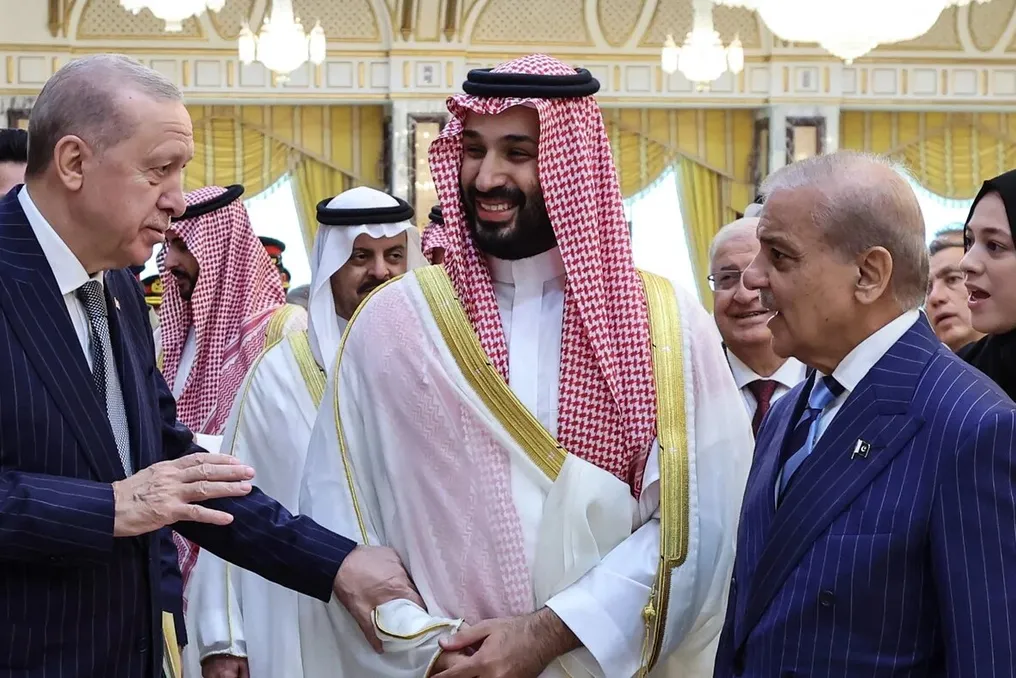
For Pakistan, the only state with a nuclear arsenal among Muslim countries, this treaty marks a sharp departure from its traditionally cautious position as a regional mediator. Standing alongside Saudi Arabian Crown Prince Mohammed bin Salman and Turkish President Recep Tayyip Erdoğan, Islamabad positions its armed forces as a potential guarantor of security at the center of a forming axis spanning South Asia and the Persian Gulf.
This pact signals a possible significant shift. As the established regional order, reliant on Washington, experiences growing strain amid wars and changing alliances, Middle Eastern countries are seeking greater control over their own security, with Pakistan's nuclear and conventional military potential potentially becoming a new pillar.
The deal also comes against a backdrop of unprecedented pressure on the traditional Middle Eastern security order. The US-Israel war against Iran has altered the regional strategic landscape, leading to direct strikes on Saudi territory and serious disruptions in commercial shipping in both the Strait of Hormuz and the Red Sea.
A Pakistani security official monitoring the region told Middle East Eye on condition of anonymity: 'All three countries have common economic and defense interests in preventing further escalation, which ultimately forced them to sign the pact.'
Disruptions in shipping through the Strait of Hormuz have affected the supply of Saudi energy and fertilizers, causing shocks to the global economy. Import-dependent countries like Pakistan and Turkey have been particularly vulnerable to these disruptions.
However, the security calculus has even more serious implications. Both Saudi Arabia and Turkey have faced attacks linked to the broader regional conflict, while Islamabad and Ankara are deeply concerned about instability across their borders stemming from their long frontiers with Iran.
Ankara faces an additional security dilemma: there is a possibility that the arming of Iranian Kurdish militias by external powers could undermine the fragile and hard-won peace process with the Kurdistan Workers' Party (PKK).
The wider conflict has also emboldened Iran and its Houthi allies in Yemen, who have intensified direct attacks on Saudi territory. For Gulf leaders, the inability of traditional US security guarantees to deter such strikes has raised questions about Washington's reliability as a security partner.
As a result, regional heavyweights are resolutely pushing for the creation of defense agreements that rely less on external guarantees. Former Pakistani ambassador Asif Durrani characterized the pact as 'the first concrete building block of an emerging regional security architecture,' asserting that it indicates a move towards greater regional responsibility for security.
Analysts emphasize that this pact is not an isolated event but rather the culmination of deepening trilateral cooperation. Michael Kugelman, Senior Fellow for South Asia at the Atlantic Council, called the pact 'a logical development of deepening security ties' between the three countries in recent months.
It builds on existing foundations: Riyadh and Islamabad signed a bilateral mutual defense agreement at the end of 2025, under which approximately 8,000 Pakistani troops, fighters, and air defense systems were deployed in the kingdom, and Turkey remains a major arms supplier to both nations.
For Washington, this pact may be particularly welcome. According to Kugelman, speaking on X, 'it will be well received in Washington, which wants to see a greater burden-sharing from leading allies,' given the pact's main focus on collective regional deterrence aimed at Iran.