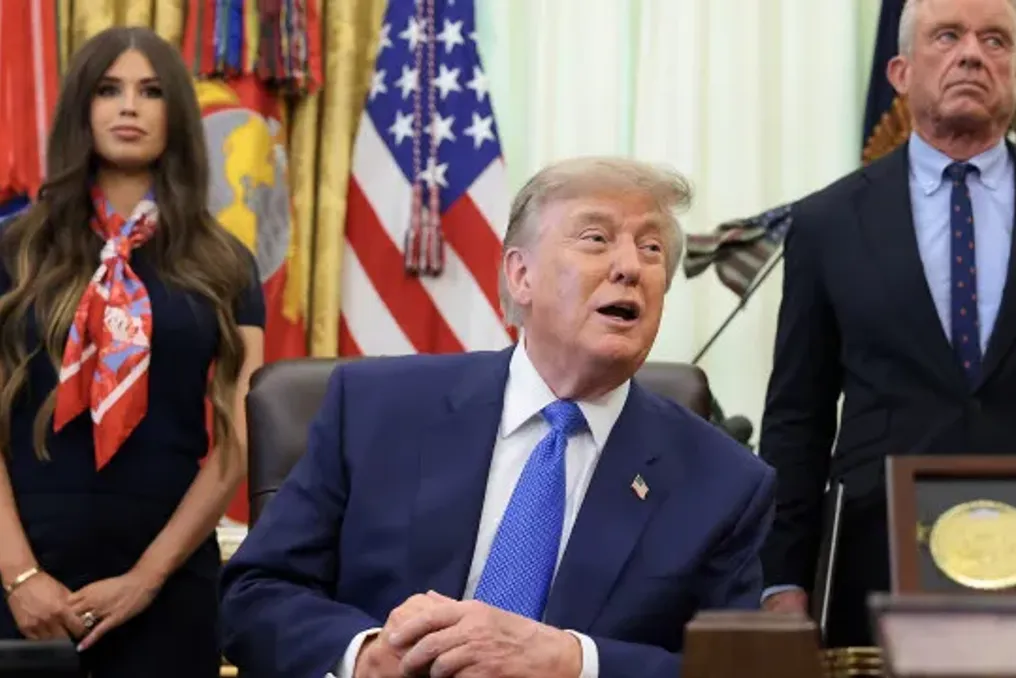
A White House document, reported by North American press, determined the withdrawal of the recommendation for the measles, mumps, and rubella (MMR) vaccine for children in the United States. The new order suggests administering the MMR vaccine in three separate doses, given during distinct appointments, and requests the Department of Health to intensify its investigation into vaccines.
Currently, isolated vaccines against measles, mumps, and rubella are not available for children in the US; only the MMR vaccine is used. Although childhood vaccination during school age is the responsibility of American states and not the federal government, many Republican state governments will have to comply with guidelines issued by the White House.
Trump's presidential order advises states to update their legislation to mirror government guidelines. This measure comes at a time when the school year is beginning and the country is facing a measles outbreak, which, according to specialists, could lead to the loss of disease-free status.
Public health experts cited by the AP agency expressed concern that the interval between vaccine doses, as suggested by Trump, could increase the risk of children contracting diseases during the period between appointments, even if they are immunized.
Although childhood vaccines undergo rigorous study processes and their safety is continuously monitored, they have been the target of conspiracy theories, which spread mainly in groups linked to radical sectors of the Republican Party.
In December, Trump instructed the Department of Health and Human Services to survey vaccination recommendations in other nations and to consider revising American guidelines for alignment.
The department, under the leadership of Health Secretary Robert F. Kennedy Jr.—a known skeptic regarding vaccination—initially responded by reducing the number of recommended vaccines per child, but this action was later blocked by a court decision.
More recently, with the approach of the November midterm elections, Trump has focused on less controversial health topics, such as promoting healthy eating and efforts to reduce drug costs.
Surveys indicate that most American citizens still support mandatory school vaccination, although Republicans show less predisposition to defend it compared to Democrats. Trump's executive has also linked autism to vaccines, another conspiracy theory disseminated by radical groups, despite scientific consensus and decades of research showing no connection between the two.