The question of whether tourism can approach snow leopards in Ladakh without leading to their extinction is pressing, as the region plans to introduce organized safaris along popular routes for bird and snow leopard watching.
However, conservationists express concerns that turning fragile high-altitude wilderness into a tourist route could disrupt wildlife, lead to the commercialization of off-road trips, and pave the way for the construction of roads, cafes, and other tourist infrastructure.
Dr. M.K. Ranjitsin, a member of the honorary staff of the Wildlife Institute of India, who has dedicated nearly 50 years to developing conservation strategies and participated in shaping the Wildlife Protection Act of 1972 and Project Tiger, stated that spotting a snow leopard from a jeep is impossible without illegal actions, such as using lures or sheep to attract the animal.
He emphasized that 'Kaziranga is not Ladakh, and Ranthambore is not Ladakh. The ecology is completely different.' In the open valleys of Ladakh, vehicles are visible for many kilometers, and vegetation is concentrated along the valley floor, attracting animals for food and water.
Ladakh is home to 477 snow leopards out of an estimated 718 in the country, representing the largest population. Furthermore, it hosts over 38 species of mammals, 340 species of birds, and 1800 species of vascular plants.
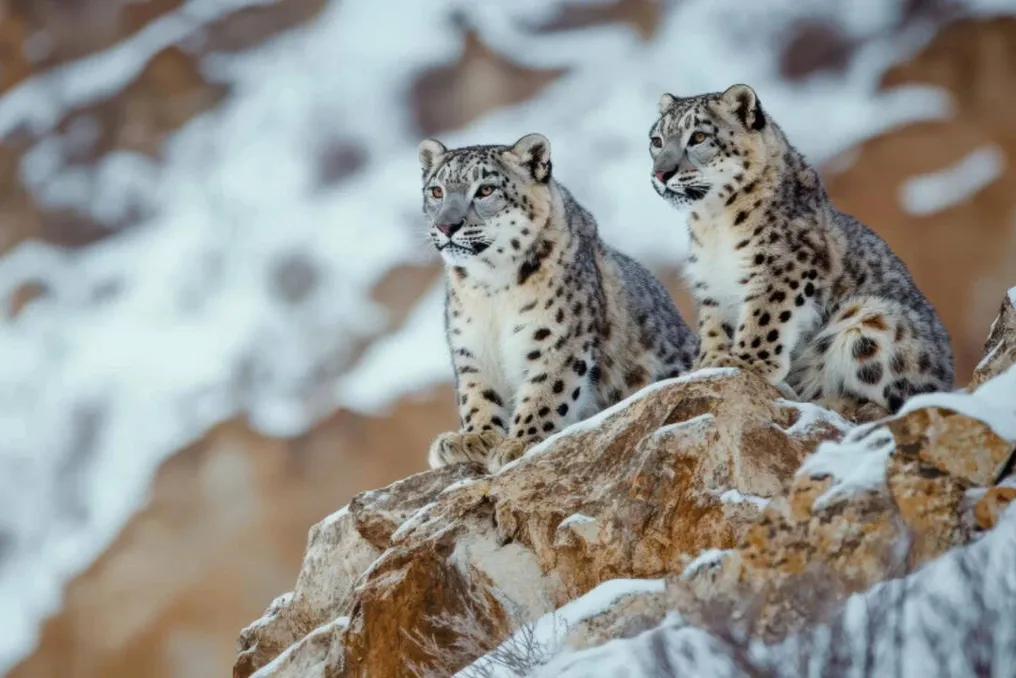
Nevertheless, spotting a snow leopard is extremely difficult: its thick, spotted fur blends with the rocky slopes, and the steep, remote terrain gives it a huge natural advantage.
A representative of the Ladakh government reported that the Lieutenant Governor, Vinay Kumar Saxena, instructed the Forest Department to introduce organized safaris based on models of national parks such as Kaziranga and Ranthambore. These tours will be conducted in specially designed open vehicles, driven by trained local drivers and guides. According to the government, this measure aims to prevent illegal off-roading and wildlife disturbance.
The plan was approved at the first meeting of the governing body of the Snow Leopard and High Altitude Nature Conservation Society chaired by Saxena. Forestry staff have been tasked with studying routes through Hemis National Park, the Changtang and Karakoram reserves, as well as the Nubra, Zanskar, Sham, Kargil, and Dras areas.
Ranjitsin fears a different future, warning that 'wild safaris may be good in principle, but in practice, it could become a disaster.' He cautions that the lobbying interests of tourism and hospitality businesses could ultimately outweigh state control, leading to increased demand for roads, dining spots, and other infrastructure, potentially turning the entire landscape into a festival.
One wildlife official noted that safaris are most effective where animals gather in large groups or herds, which differs from the mountainous and trans-mountainous landscape of the Himalayas. Roads already exist in protected areas in Ladakh, and tourist vehicles have access to all zones except for some restricted border areas.
This official also stated that 'they are actually planning to legalize and commercialize off-road trips,' warning that entry into fragile meadows might be permitted for a fee.
Kaziranga and Ranthambore have become part of the imagination of Indian safaris. The proposed safari in Ladakh will explore a completely different world, where snow leopards are scattered across a harsh landscape, and the first rule for finding them is knowing where not to look.