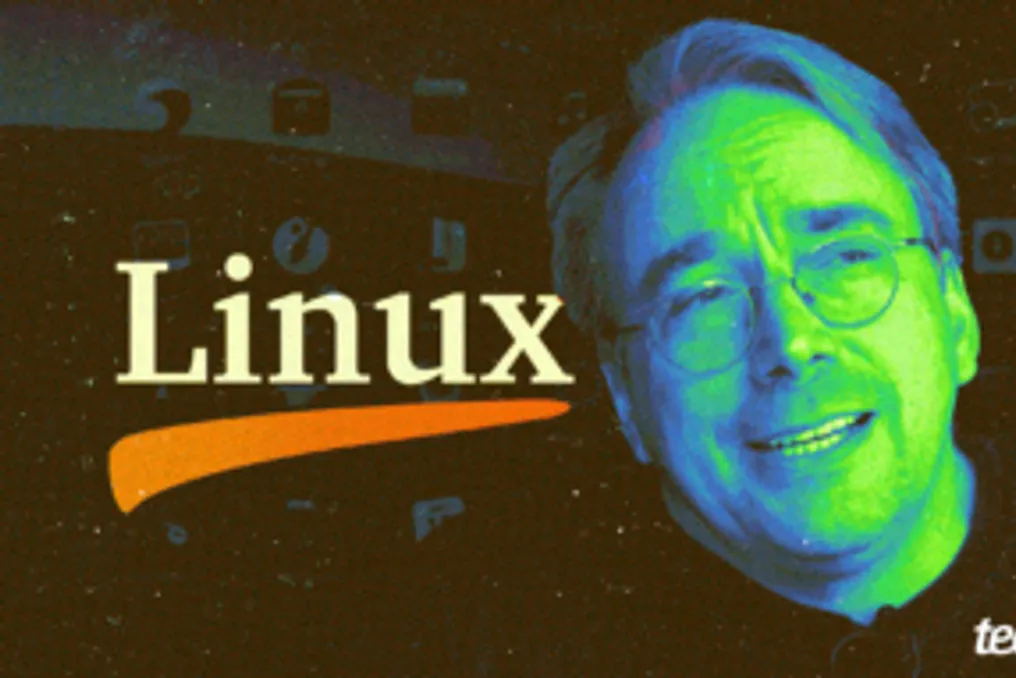
The seventh and likely final release candidate for Linux 7.2 was announced on Sunday, August 9th, indicating that the next kernel iteration is about to be released. As is usual, the updates include code fixes, many of which were identified through Artificial Intelligence tools, according to Linus Torvalds.
Torvalds expressed a sense of resignation regarding the volume of changes, stating that having many fixes is the new standard, with a large part of them resulting from analysis performed by various AI tools. Although nothing seems alarming, he highlighted the large quantity of alterations present.
The reserved tone of Linus's message, published on the project's mailing list, reflects the reality that, like in other software, AI tools are being used to locate security flaws in the kernel. The challenge lies in the excess of alerts generated by these tools.
On one hand, this dynamic allows for the discovery of critical vulnerabilities that might otherwise go unnoticed or take time to find. On the other hand, it overwhelms kernel developers with notifications about irrelevant bugs—those that are in the correction queue or have already been resolved.
It is no coincidence that the previous kernel version, Linux 7.1, was released after developers managed to handle the high volume of failure warnings produced by AI systems. However, Torvalds does not show aversion to the tools; he supports the use of AI in the kernel, provided its application is coherent and genuinely beneficial.
In his most recent communication, Torvalds signaled that the development of the Linux 7.2 kernel required more effort than anticipated due to the vast number of fixes, many of which were pointed out by AI. Despite this, the official release of Linux 7.2 remains scheduled for next weekend, as most of these fixes are classified as minor. It is important to note that release candidates precede the final launch.
Additionally, there is a possibility that Linux 7.2 may omit obsolete code that was pending removal, but whose process was accelerated in a way that ceases related notifications from the AI. Currently, developers are seeking a balance: they recognize the benefits of AI but need to calibrate the intensity of its use.