Ashish Kumar believes that education is a privilege, not a guaranteed opportunity, as school was not something assured for him for many years. He grew up in a rented room with a family of six, where his father worked as a carpenter, and every expense required careful planning. There were times when he felt he would have to stop studying because they were simply trying to manage daily life.
Ashish wanted to study, but desire is not enough; a child also needs school fees, books, time, home support, and the belief that tomorrow will be a little easier than today. Without this, it is easy to fall behind, and catching up becomes harder.
Years later, Ashish became a living example of what Kushal Raj Chakravarty, founder of Lotus Petal Foundation, believed: many children drop out of school not because they lack dreams, but because no one helps them hold onto those dreams long enough.
Life in structure until reality interrupted it
Kushal built his life on a completely different foundation. He grew up in Ranchi in a family that valued education and consistency. He told The Better India that he had everything necessary for growth, including school, support, and three meals a day.
After studying at St Xavier’s, he earned a degree in electrical engineering and electronics from BIT Mesra, graduating in 1996. In the same year, he started working at HCL, and after a short period, continued his studies and obtained an MBA from IIM Lucknow. By 1999, he was firmly established in the corporate world.
His career continued to grow. He worked at BPL and Amway before joining IKEA in 2005, where he spent over ten years in global roles. His work took him across cities and countries, and he learned to build systems, manage teams, and think on a large scale.
He noted that for him, leadership always meant setting a vision and creating systems that would outlive individuals. At that time, nothing indicated that he would leave all this behind.
The cold morning that never faded
In November 2011, on a cold morning in Gurugram, he stood at a bus stop with his daughters. He had just returned from a trip and, as always, drove them to school himself. They were bundled up in warm winter clothes. He recalls still doubting if they were warm enough. This thought lasted only a moment.
Then two children walked past him. He noticed they didn't have sweaters, and one didn't even have shoes. This sight immediately worried him. He assumed the parents of these children wanted the same for them as for his children, but the only difference was that he had opportunities they did not. He could not ignore this thought.
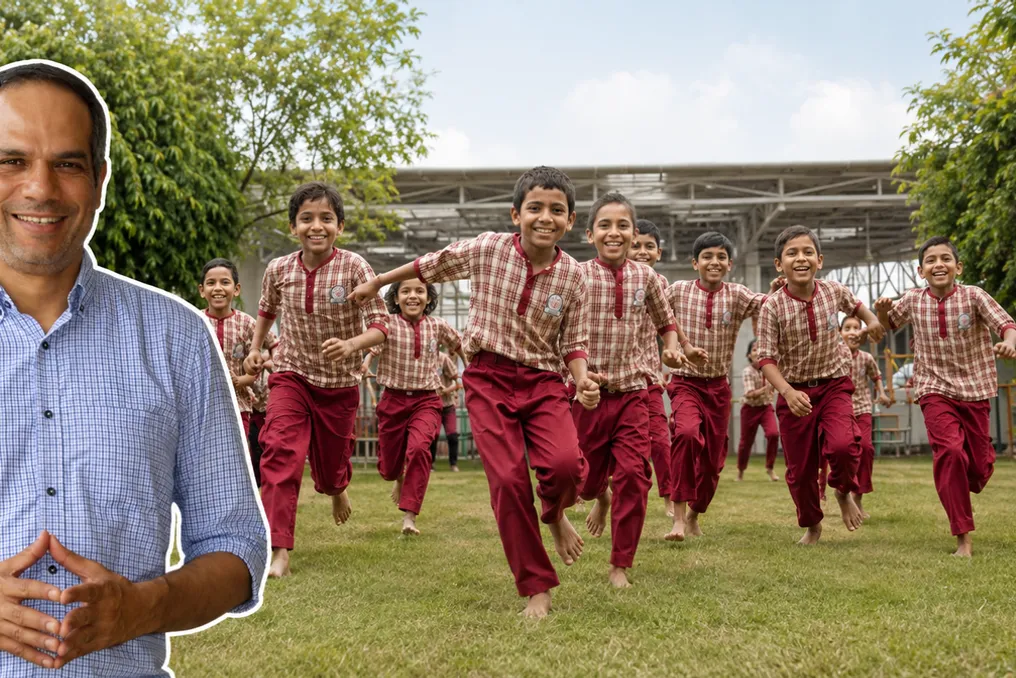
Kushal found these children in a small school near a temple not far from his home in South City 1. Upon entering, he saw not two or twenty, but 250 children! He noted that they were smart, enthusiastic, and diligent, but lacked basic necessities. He started with what he could do immediately: bought them shoes, socks, and warm clothes.
However, faced with this situation, it became difficult for him to view the problem as a one-time need. The children needed warm clothes, but they also needed a way to stay in school, catch up, and build a future beyond daily survival. He realized that if he truly wanted to change their lives, he needed a long-term approach.
This thought slowly became the basis of his work. He registered the Lotus Petal Foundation to create a system that could support children year after year, rather than helping them once and disappearing.
He said it gave him a sense of fulfillment he had never experienced before. When you experience that, you want to do more.
A year later, when he decided to check on the children again, he noticed something much more alarming. He saw a 12-year-old in the 3rd grade and a 15-year-old in the 5th grade. They were stuck in the system. He saw the future that often follows this: limited opportunities, low-paying jobs, and a cycle that will repeat. He believed that if nothing changed, they would become like their parents and remain in that position for life.
Creating a path back for neglected children
This realization prompted Kushal to think about a better solution. He stated that education cannot be fixed in one day; one must work with the child year after year.
By April 2013, he launched the first accelerated learning program in a rented room located in a busy mall in Gurugram. He used his savings and even took a loan of about 40 lakh rupees. He wanted to ensure that this initiative could function stably for at least several years, independent of uncertain support.
He started with just six students, each of whom was several years behind the educational curriculum. The idea was simple: these children were already behind despite their potential; life had given them fewer opportunities. His goal was to help them catch up with their peers and give them a chance to be on par with others, instead of leaving them where they were.
The rented room was modest, but he saw potential everywhere: in the bright eyes of the children, in their curiosity, and in the resilience that comes from living in conditions of scarcity. He acknowledged that even a small space filled with care, attention, and structured learning can become a place of change.
This model challenged conventional wisdom. Kushal developed a five-year plan for older children to complete high school and acquire professional skills, communication skills, and digital literacy. He emphasized that they focused on results: teaching was important, as was where the child reached.
Convincing parents proved difficult. They asked, 'How can my child learn so much in such a short time?' Nevertheless, he went door-to-door, talking to families, explaining his vision, and gradually earning their trust.
Next came the search for teachers. He needed educators who believed in the child's potential and in the curriculum. A math teacher joined first and worked at the organization for over ten years. Soon, other teachers began to join, initially through word-of-mouth, attracted by the foundation's vision and the desire to learn from the children. Many started as volunteers, without hesitation investing their time and skills.
Even in this single room, the founder implemented systems. He installed a biometric machine, which drew ridicule. But he believed that systems build discipline. All this happened while he continued to fulfill his global duties at IKEA.
Leaving a global career for a classroom
By 2016, the first group of students passed the CBSE board exams. This moment gave Kushal clarity. He understood that the model worked. In September 2016, he resigned from IKEA. He knew he had to dedicate all his time to this cause, as something like this could not be built halfway. His decision strengthened the foundation's credibility, and donors began paying attention to it, leading to rapid organizational growth.
In 2017, with the support of a classmate from IIM Lucknow, he acquired land and built a campus in Gurugram. Today, the school serves about 1200 students from kindergarten to grade 12.
But the foundation does much more than just provide education. Kushal notes that they take care of everything a child needs to succeed in learning. Students receive two nutritious meals daily, designed to meet their needs. They have access to healthcare, counseling, digital learning, and life skills training. He emphasizes: 'If a child is sick, emotionally unsupported, or worried about home, learning will not happen.'
We charge 1500 rupees, and then we return everything
Despite serving underprivileged families, the foundation charges a monthly fee of 1500 rupees. He explains that they want parents to participate because it gives them dignity. Most parents work as drivers, electricians, domestic helpers, or in similar fields. This contribution fosters a sense of belonging and commitment. It also ensures that families remain involved.
The foundation also offers scholarships. If parents remain involved and children show positive changes, the full fee is refunded. This teaches children that effort brings rewards.
What is required to help a child continue learning
Today, the foundation is managed by over 250 staff members, including more than 120 teachers and counselors. The teacher-to-student ratio is 1:14. Kushal calls his teachers 'superparents' because many children do not receive support at home. Counselors work closely with students and families, addressing emotional and social issues. The school maintains robust systems of feedback, assessment, and improvement. He constantly asks himself: 'How can we do better for the child?' An independent evaluation by KPMG showed that every 1 rupee invested yields 3.64 rupees in social value.
For Gudiya Kumari, the changes began with confidence. She used to say she was very insecure and didn't believe in herself. Today, she works as a software quality assurance specialist and project coordinator. She says this journey taught her to speak, think, and dream big, changing everything for her and her family.
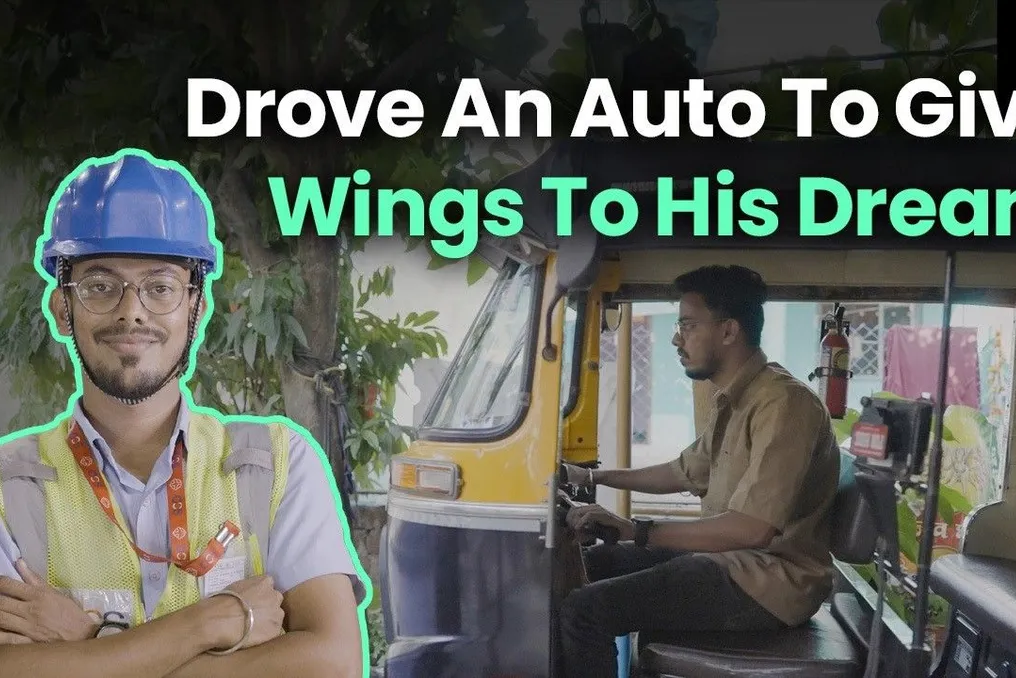
Ashish reflects on his journey with determination. He recalls that he used to study because he had to, but now he studies knowing where he wants to go. He currently works as a technical consultant while pursuing a degree. He adds that education has changed his life and the future of his family.
Chanchala, who used to hesitate to speak, now teaches others. She shares that she used to doubt herself but now wants to help others grow. She adds that she wanted not only her own success but also to uplift others.
When one student became a doctor
One of the strongest moments in the foundation's history was in 2024. One of the first six students became a doctor. Kushal recounts that she joined them at the age of 14, studying in the 4th grade, and achieved medical college in six years. He pauses before adding that this moment felt like a dream and proved that it is possible when a child is given the right opportunity.
From one campus to schools in 16 states
During the COVID-19 pandemic, the foundation expanded its presence. The founder asked himself: 'Why do we exist?' The answer led to action. The team launched the Vidya Sahyog program, using digital platforms for distance learning. Today, it supports over 275 schools in 16 states, covering more than 10,000 students. He mentions that they previously experimented with hybrid learning, which helped them advance quickly.
Since then, the foundation has conducted over 90,000 hours of training, contributed to the improvement of over 50 government schools, and trained over 2600 young people in professional skills.
What keeps him going?
For Kushal, this work remains deeply personal. He says he is inspired by meeting alumni and watching how their lives have changed. He speaks of students who now support their families, save money, and build a stable future.
Every story reveals a common belief. Chanchala asserts: 'Your speed does not determine your future.' Ashish adds: 'You haven't started late. You just started from a different point.' And Kushal, recalling that cold morning in 2011, says: 'If you want to give, you can do it anywhere.' Sometimes it all starts with an observation, and then with a choice of action.
} , 3. {