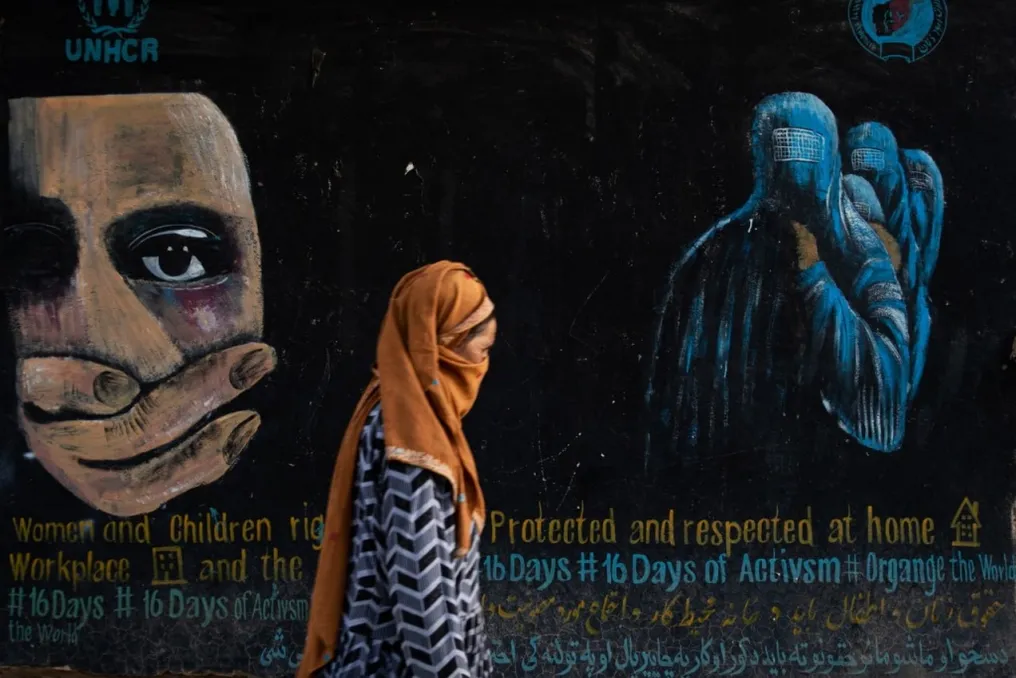
In Afghanistan, after the Taliban took power, 231 cases of women being murdered were registered. However, in more than one-fifth of these cases, death was officially recognized as suicide. Many of the deceased are presumed to have been victims of domestic violence, and an ineffective legal protection system allows perpetrators to go unpunished.
A study conducted by The Guardian in collaboration with Zan Times covered ten out of thirty-four provinces in the country, starting from August 2021. The sample included 174 cases reported by local media outlets, as well as 57 incidents discovered by journalists themselves. Out of the total 231 deaths, 53 were recorded as suicides, despite relatives' and witnesses' claims of violence.
A total of 58 arrests were made, but only in approximately one in four murder cases was a suspect detained, and some of those detained were later released.
Prevalence and Victims
The highest number of registered cases was noted in Jowzjan (36 cases), Herat (32 cases), Badakhshan (28 cases), and Ghazni (26 cases). The age of the victims ranged from five to 65 years. It is particularly noteworthy that 165 women who died as a result of violence were homemakers without their own income or access to protective institutions.
Most acts of violence occurred directly in the victims' residences. One example is the story of 33-year-old Liza Shams, who told her relatives in February that she was being beaten by her husband, including during pregnancy. After another attack, Liza was taken to a hospital in Kabul, where she died about an hour later. Medical documents recorded multiple fractures and facial injuries, but the official cause of death was listed as possible poisoning by rat poison; an autopsy was not performed.
Protection Issues and Legislation
According to the investigation's findings, difficulties arise even in situations where relatives try to protect women from aggression. In Kandahar province, a husband killed a 14-year-old girl whom he married. Her younger brother, who tried to help his sister, also sustained a gunshot wound and died a week later. The man, who is a member of the Taliban, was not arrested, although authorities initiated a case.
The new Taliban penal code establishes harsher sanctions for women and their relatives in certain circumstances than for the husband who committed the violence. For beating a spouse without visible injuries, the husband faces up to fifteen days in prison. However, if a woman leaves the home of her husband's relatives without his consent, and the family refuses to return her at his request, she and her relatives may face up to three months in prison.
Loss of Institutional Support
After the Taliban returned to power, the Ministry of Women's Affairs, the specialized prosecutor's office for violence against women, and the network of shelters were dismantled. About 250 female judges were suspended from work, and female prosecutors were sent home. Furthermore, women lost the right to participate independently in their own court proceedings.
The authors of the study emphasize that the 231 recorded cases do not reflect the full picture of women's murders in Afghanistan, as journalists worked only in ten provinces and faced threats when contacting the families of the deceased. In their opinion, the data obtained only demonstrates the scale of the problem and how the lack of protection and impunity contribute to the emergence of new crimes.
It should be noted that even before the Taliban came to power, the level of violence against women in Afghanistan exceeded the global average. According to UN Women, in 2018, nearly 35% of Afghan women reported partner violence in the previous year, compared to a global average of 13%.