The website uses a security service to protect against cyberattacks. The action you performed triggered this protective system.
The website uses a security service to protect against cyberattacks. The action you performed triggered this protective system.
There are several actions that can lead to such a block, including entering a specific word or phrase, executing an SQL command, or submitting incorrect data.
Users are advised to contact the website owner to report the block. When contacting them, they should specify what actions were being performed when this page appeared, and also provide the Cloudflare Ray ID, which is located at the bottom of the page.
The most recommended Garmin models for 2026 are notable for high GPS accuracy, sophisticated sports functionalities, and long battery life, even in entry-level options.
While the Fenix line stands out for offering advanced navigation with maps and extreme activity features, the Forerunner, Venu, and Instinct lines present alternatives focused on running, daily health tracking, and extreme durability.
Tecnoblog has prepared a detailed guide presenting the ten top Garmin smartwatches, allowing consumers to analyze the pros and cons before making a purchase.
The Forerunner 965 features a 1.4-inch AMOLED screen, titanium build, multi-band GPS, and built-in color maps. It includes features such as VO2 max, Training Readiness, which calculates the level of preparation for a new workout, and Real-Time Stamina, which monitors available energy during exercise. Additionally, it has ClimbPro and PacePro to assist in planning efforts on climbs and setting paces.
This model has 32 GB of storage, offline music support, Garmin Pay (with limited availability in Brazil), Wi-Fi, Bluetooth, and 5 ATM water resistance. Its battery can last up to 23 days in smartwatch mode. Compared to the Forerunner 265, it adds maps, a larger screen, and a titanium bezel; however, compared to the Fenix 8, it is lighter and lacks a flashlight, microphone, or speaker.
With a 1.2-inch AMOLED screen (390 x 390), touchscreen, five buttons, integrated GPS, barometric altimeter, and 5 ATM water resistance, the Forerunner 165 weighs only 39 g. It provides running metrics, such as Body Battery, which indicates body energy based on sleep, stress, and activity, along with tools for sleep and recovery monitoring.
However, it does not incorporate multi-band GPS, full triathlon profiles, or Training Readiness, features present in the Forerunner 965. The battery life reaches 11 days, and although it surpasses the Forerunner 70 in sensors and features, it lags behind the 265 in terms of GPS and advanced training.
The Fenix 8 is available in AMOLED versions with sizes of 43, 47, and 51 mm, and also in Solar versions with an MIP display (a type of LCD screen). This watch integrates multi-band GPS, full maps, LED flashlight, microphone, and speaker. There are editions with titanium and sapphire glass, and the device has specific functions for deep diving up to 40 meters.
Battery life varies: 10 days for the 43 mm AMOLED model, 16 days for the 47 mm, and 29 days for the 51 mm. Although it is heavier and more expensive than the running-focused models, it adds features like advanced navigation, diving capability, and a flashlight; unlike the Forerunner 965, it also offers a microphone and speaker.
The Garmin Instinct 3 Solar features a 45 or 50 mm polymer case, MIL-STD-810 certification, and 10 ATM water resistance, equivalent to 100 meters of pressure. Its screen technology allows for potentially infinite battery life under ideal solar exposure conditions, while multi-band GPS with SatIQ optimizes positioning to balance accuracy and power consumption.
This model also includes a flashlight, compass, barometric altimeter, and HRV Status, which tracks heart rate variability, along with health monitoring. The screen is monochrome, without a touchscreen or integrated color maps. It serves as a more rugged and autonomous option compared to the Fenix 8, but it lacks detailed maps, a microphone, or a speaker.
The Venu 4 has an AMOLED touchscreen and 41 and 45 mm cases, equipped with a microphone and speaker to make calls and receive voice commands when connected to a compatible smartphone, in addition to an LED flashlight. It offers ECG in regions where it is compatible, multi-band GPS with SatIQ, and Training Status, which assesses load and performance progression during training.
The battery lasts up to 10 days on the 41 mm model and 12 days on the 45 mm model. Unlike the Forerunner 965 and Fenix 8, it does not have integrated maps, but it adds ECG, multi-band GPS, calls, and voice commands to the Vivoactive 6.
The Garmin Forerunner 265 features a 1.3-inch AMOLED touchscreen (416 x 416), Gorilla Glass 3 protection, a 46 mm case, and weighs 47 g. The watch stores 8 GB for offline music, has multi-band GPS, triathlon profiles, Training Readiness, and 5 ATM water resistance.
The battery lasts 13 days in smartwatch mode and 20 hours in GPS-only mode, depending on sensor configuration. It surpasses the Forerunner 165 in GPS and training features, but it does not include the integrated color maps offered by the Forerunner 965.
The Forerunner 70 is the brand's newest entry-level model, featuring a 1.2-inch AMOLED screen, over 80 activity types, and Garmin Coach, which provides guided training plans. The device also offers Morning Report and Evening Report, which summarize sleep, recovery, and daily activity data. Furthermore, it monitors heart rate variability, overall health, and post-workout body energy. Its battery lasts 13 days in smartwatch mode and 23 hours in GPS-only mode. It does not have Garmin Pay, music storage, barometric altimeter, or multi-band GPS, being the successor to the Forerunner 55 in the entry category and falling below the Forerunner 165 in sensors and features.
The Forerunner 55 is considered the best value Garmin smartwatch. It has a 1.04-inch LCD screen (208 x 208), a 42 mm case, weighs 37 grams, and operates via buttons. It includes features such as heart rate monitoring, Garmin Coach, PacePro, which assists in defining running pace strategy, and daily training suggestions, with 5 ATM water resistance. This model's battery lasts up to 14 days in smartwatch mode and 20 hours with GPS, but it does not have a touch screen.
Abu Dhabi is offering free visas for entry into the UAE for Indian citizens from August to October 31, provided certain conditions are met.
The Abu Dhabi Department of Culture and Tourism has developed a special program that applies to hotel bookings with the condition of staying in the city for at least three nights. In the initial phase of the pilot project, the program is designed to support up to 20,000 visas.
To participate in the program, the booking must include a continuous stay of at least three nights, as well as a return flight from India. This opportunity is available to those who fly out of India and arrange their vacation through participating tour operator partners.
Abdulla Yusuf, Director of International Operations at the Department of Culture and Tourism, noted that India remains one of the most important international markets for the region, and they intend to continue close cooperation with tourism partners to make Abu Dhabi even more accessible to Indian travelers.
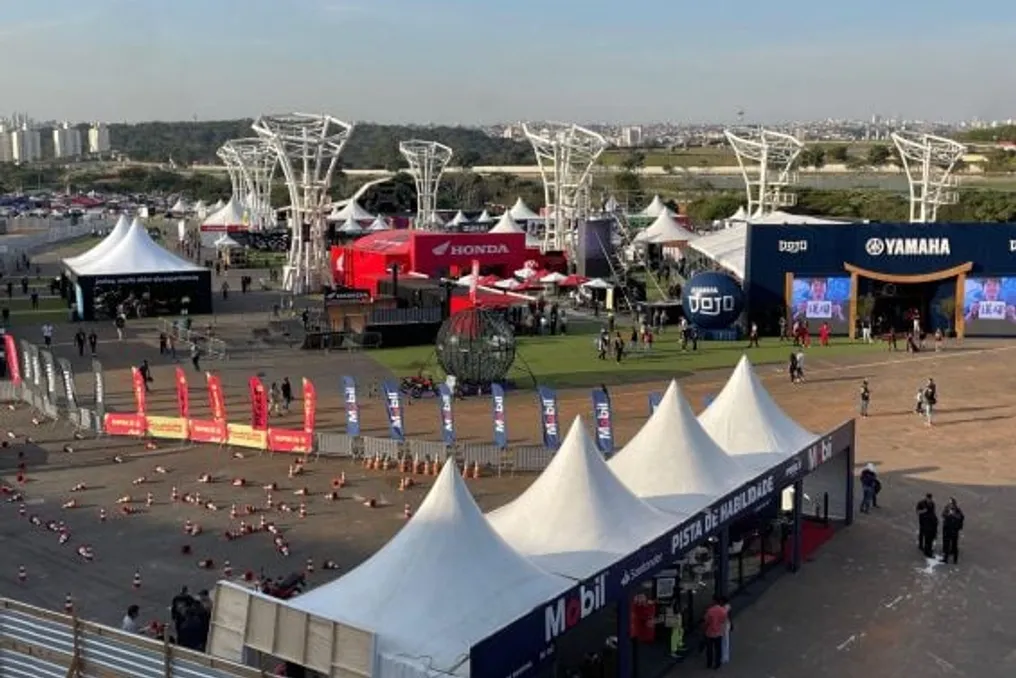
The Interlagos Festival has established itself as an alternative to conventional vehicle shows. The edition dedicated to motorcycles in 2026 is scheduled to welcome the public starting August 13th, featuring industry launches and musical attractions.
The event will take place from August 13th to 16th. On the first day, operating hours will be from 12 PM to 8 PM, while on subsequent days, the hours will be from 8 AM to 8 PM. Musical performances are scheduled for later, between 5 PM and midnight.
In addition to the motorcycle exhibition, participants will have the opportunity to ride them at the Interlagos racetrack, provided they have purchased tickets with this benefit. There will also be displays of competitions and freestyle demonstrations.
There are several ticket options for the Interlagos Moto Festival 2026. The most basic model is the Street Pass, which costs R$ 152.00 and allows visitors to attend the event to see the bikes, shows, and activations, without including a test ride.
For those who wish to try out motorcycles, the Ducati Pass, costing R$ 449, allows for a test ride on a bike from the Italian manufacturer, although the Panigale V4 and Panigale V4S superbikes are not included. Another option is the Ride Pass, valued at R$ 692, which grants the right to ride three different models from various brands available for testing.
For more experienced riders, the Sport Pass, priced at R$ 1,295, offers the possibility of test riding three superbikes and includes access to the Sport Pass Lounge for rest during the Festival.
There are also tickets focused on the musical experience: the Pista Premium, for R$ 296, and the VIP Lounge, for R$ 980. These latter are similar to the Street Pass but guarantee seats in privileged locations during the shows.
It is important to note that the prices presented refer to entry for only one day of the Interlagos Festival 2026. The event is supported by the Brazilian Association of Manufacturers of Motorcycles, Mopeds, Scooters, Bicycles, and Similar Vehicles (Abraciclo). Several important market brands, including newcomers, have already confirmed their participation.
After the track activities conclude, the Interlagos Festival will present a show schedule, and all types of tickets grant access to these attractions. The show dates include August 14th (Friday), August 15th (Saturday), and August 16th (Sunday).