China has completed tests of a factory dedicated to producing synthetic rubber using rare earth-based catalysts. This material is considered strategic for both electric vehicle tires and trucks, according to O Globo.
China has completed tests of a factory dedicated to producing synthetic rubber using rare earth-based catalysts. This material is considered strategic for both electric vehicle tires and trucks, according to O Globo.
This new unit was built by Dushanzi Petrochemical, a subsidiary of PetroChina, and received support from the Changchun Institute of Applied Chemistry. It began operations on July 16th and has a projected annual production capacity of 100 thousand tons.
The technology employed uses neodymium-based catalysts, a rare earth whose extraction and refining are largely controlled by China. The country is responsible for approximately 70% of global extraction of these elements and about 90% of their refining, in addition to establishing a requirement for prior licensing for the export of several of them starting in 2025.
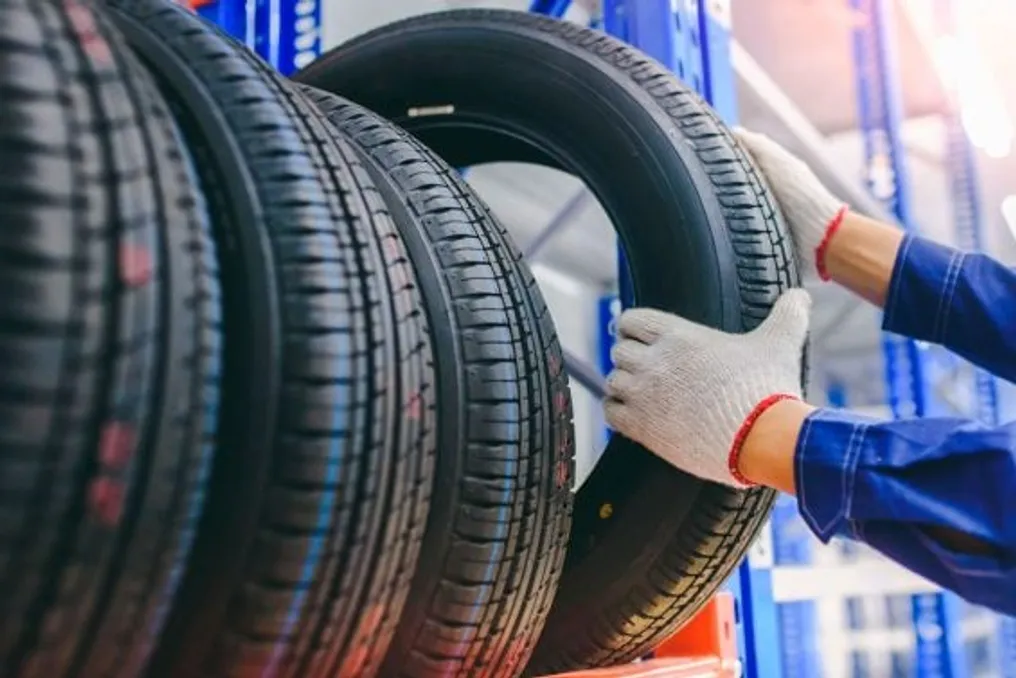
The product generated in this factory is butadiene rubber, one of the primary types of synthetic rubber used in the industry, recognized for its high wear resistance. When manufactured with rare earth catalysts, this rubber demonstrates superior mechanical strength, improves low-temperature performance, reduces heat emission during use, and exhibits greater tear resistance compared to those made with traditional catalysts, such as nickel.
According to the Changchun Institute of Applied Chemistry, these qualities make the compound particularly advantageous for electric vehicle tires, given that these require more robust rubbers due to the extra weight of batteries and the high torque of the motors, in addition to being applicable in heavy vehicles.
The application of this technology has already been validated on an industrial scale. Shandong Shenchi Petrochemical developed truck tires, replacing 50% of natural rubber with isoprene rubber obtained using rare earth catalysts. The Testing Center of the China Rubber Industry Association confirmed that this material achieved a vulcanization rate comparable to natural rubber and surpassed the performance of imported products.
It is important to note that synthetic rubber is mainly derived from petrochemicals, such as styrene and butadiene, unlike natural rubber, which is harvested from rubber trees. Research conducted by the Changchun institute indicates that the country began investing in this area in the 1950s, motivated by the scarcity of natural rubber and technological restrictions imposed by Western nations. In the 1960s, Chinese scientists published the world's first study on the synthesis of cis-butadiene rubber using rare earth catalysts. Collaboration with Dushanzi to scale this technology industrially dates back to 2006.
A study released in 2020, conducted by researchers from Sinopec Research Institute, classified synthetic rubber as an 'important national strategic resource,' used in crucial sectors such as transport, industry, defense, and consumer goods. For these researchers, the new production route has the potential to expand domestic manufacturing, reduce the deficit of natural rubber, and increase the country's autonomy.
This development occurs at a time when the Brazilian tire industry faces difficulties against imported Asian products. According to Anip, the sector association, imported items reached 72% of the replacement market for passenger and cargo tires in January 2026, contrasting with the national participation, which fell from 66% in 2021 to only 28%.
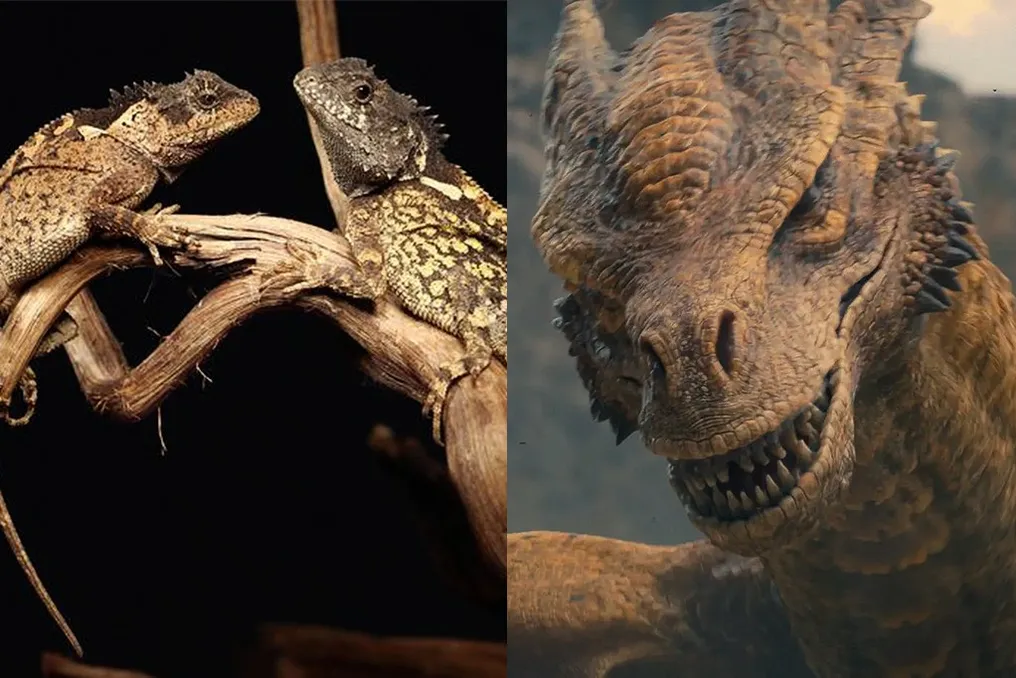
A new variety of lizard, which resides in the mountainous regions of Thailand, has been named in allusion to a dragon present in the Game of Thrones universe. Specifically, Acanthosaura syrax honors Syrax, the female dragon ridden by Queen Rhaenyra Targaryen in the production House of the Dragon.
The genus Acanthosaura is popularly known as the 'horned mountain dragons' due to the prominent spines on its back and head, as well as its habit of living at high altitudes in Southeast Asia.
This new species was located in the forests of Mae Wong National Park, situated in western Thailand, at an altitude of 1,300 meters.
Scientists affiliated with the Royal Chulabhorn Academy and Kasetsart University justified the choice of name because in the series House of the Dragon and the book Fire & Blood, the dragon Syrax is portrayed as a modestly sized animal (compared to other dragons) and with a yellowish coloration. Furthermore, it is described as having laid numerous eggs.
Interestingly, these characteristics coincide with the new lizard: it is smaller than most members of its genus, has a yellow-green hue, and lays a large number of eggs despite being small in body.
The distinction of this species from others in the same group was determined by visual differences; for example, it does not exhibit the black spot around the eye seen in other lizards of the genus, but rather a distinct dark collar-shaped mark on its neck.
Additionally, DNA analyses confirmed that A. syrax is genetically distant from its closest relative, A. lepidogaster.
The species appears to be restricted to a small forest area in the mountainous zones. Scientists warn that this geographical limitation could put the animal at risk of extinction if human interventions occur in the region. For this reason, the team requests that more research be conducted and that the reserve be maintained under the protection of competent authorities. The study detailing this new species was published in a scientific journal.
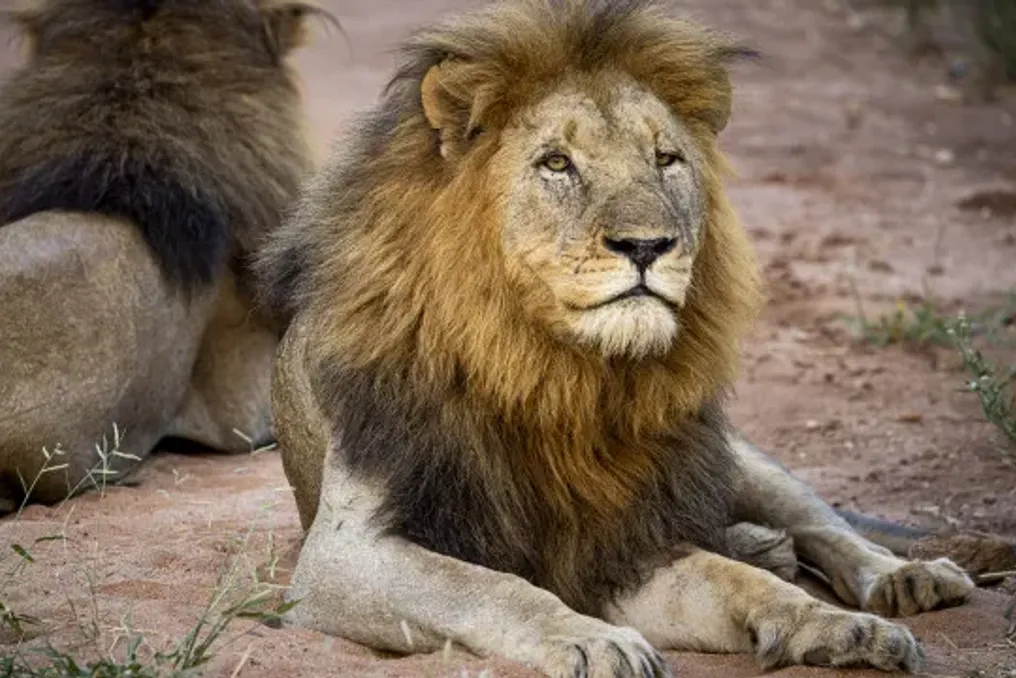
Non-governmental organizations have demanded that South Africa introduce a complete ban on breeding lions in captivity. This appeal was made during a press conference organized on the occasion of World Lion Day, which was observed on Monday.
Organizations such as FOUR PAWS South Africa, Humane World for Animals South Africa, Voice4Lions, and Blood Lions participated in the event. Fiona Miles, Director of FOUR PAWS South Africa, stated in a statement published after the conference that although the government pledged to gradually phase out captive lion breeding, the practice remains legal, and the industry continues to operate significantly.
According to the NGOs, approximately 8,000 lions continue to be under the control of commercial breeding and exploitation in South Africa. This persists despite the fact that in May 2021, the then Minister of Forestry, Fisheries and the Environment, Barbara Crisi, announced the government's intention to end this practice.
This industry encompasses commercial lion breeding, their containment in private facilities, trophy hunting of captive-bred animals, internal trade of lions and their derivatives, as well as other forms of commercial exploitation.
NGO representatives emphasized that World Lion Day serves as an important reminder that South African lions should inhabit thriving and functional ecosystems, rather than breeding facilities where they are commodified throughout their lives.
In this regard, Matthew Schurch, a researcher from Humane World for Animals South Africa, appealed to the current South African Minister of Environment, David Maynier, to 'follow in the footsteps of his predecessors.'
The organizations assured that they will continue to cooperate with the government, stakeholders, and the public to achieve a responsible transition that protects South Africa's international reputation regarding nature conservation and tourism.
The landscape project titled 'Tales of Water' (AR-AR) by Martínez Arquitectura y Paisaje is an initiative to promote reforestation and the recovery of a cloud forest area located in the rural zone of the municipality of Villamaría, in the department of Caldas, along the Condor Route, specifically in the Claro River sub-basin and the Chinchiná River basin.
Previously, this land was used for pasture and livestock activities, which resulted in the deforestation of native forest to make way for invasive pasture areas. To enable restoration, the property was segmented into three distinct reforestation zones, also incorporating contemplation shelters that serve as both temporary housing and an environmental education center.
Each planting zone was adapted to its specific characteristics, aiming to foster ecosystem diversity. In the upper and western section, pioneer species will be planted with the goal of regenerating the soil damaged by cattle farming. On the eastern side, near a stream, the planting will focus on protecting fertile soil and providing refuge for species in the watershed corridor.
The lowest zone, characterized by high humidity and the presence of native forest, will be planted with trees and shrubs intended to support local and migratory birds.
In Andean and high-Andean ecosystems, water movement in its gaseous and liquid states is fundamental for ecosystem survival. This water, stored in tiny suspended structures in the air, circulates through plants such as mosses, epiphytes, and ferns towards the river basins. These biodiverse environments depend on tree cover, which performs vital functions such as thermal regulation, soil protection against erosion, and the formation of ideal microclimates for vegetation.
The recovery of this vegetation cover is considered crucial to reestablish natural dynamics and ensure controlled water flow towards the rivers.
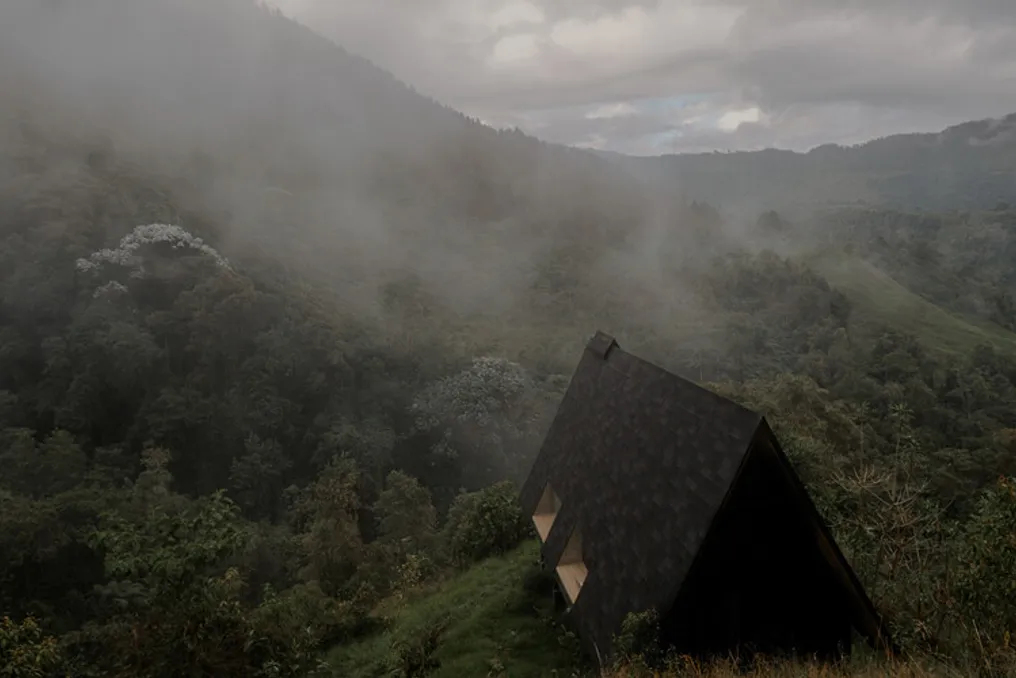
The shelter designated for birds provides an intimate connection with the surrounding environment; from inside, one can perceive the native forest surrounding it and the sound of water from various streams. The new vegetation integrates with the shelter, transforming into a welcoming element. The design of this space seeks to make the experience there a direct extension of the ecological restoration process, allowing the architecture to become visually and sensorially discreet in the natural setting.
The constant combination of mist, water sounds, humidity, and the variety of birds stimulates contemplation and understanding of the cycles inherent to the Andean forest, reinforcing the bond between individuals and the territory.
The viewpoint shelter is positioned at a strategic point on the mountain, offering a spectacular view of the canyon carved by the Taguambí and Claro Rivers. The waters of these rivers descend from the Los Nevados National Natural Park, shaping the landscape and nourishing regional ecosystems. This cabin demonstrates how ecological restoration interventions have enabled the gradual return of vegetation, strengthening biodiversity, soil stability, and the ecological interconnection of the area.