China has completed tests of a factory dedicated to producing synthetic rubber using rare earth-based catalysts. This material is considered strategic for both electric vehicle tires and trucks, according to O Globo.
This new unit was built by Dushanzi Petrochemical, a subsidiary of PetroChina, and received support from the Changchun Institute of Applied Chemistry. It began operations on July 16th and has a projected annual production capacity of 100 thousand tons.
The technology employed uses neodymium-based catalysts, a rare earth whose extraction and refining are largely controlled by China. The country is responsible for approximately 70% of global extraction of these elements and about 90% of their refining, in addition to establishing a requirement for prior licensing for the export of several of them starting in 2025.
The product generated in this factory is butadiene rubber, one of the primary types of synthetic rubber used in the industry, recognized for its high wear resistance. When manufactured with rare earth catalysts, this rubber demonstrates superior mechanical strength, improves low-temperature performance, reduces heat emission during use, and exhibits greater tear resistance compared to those made with traditional catalysts, such as nickel.
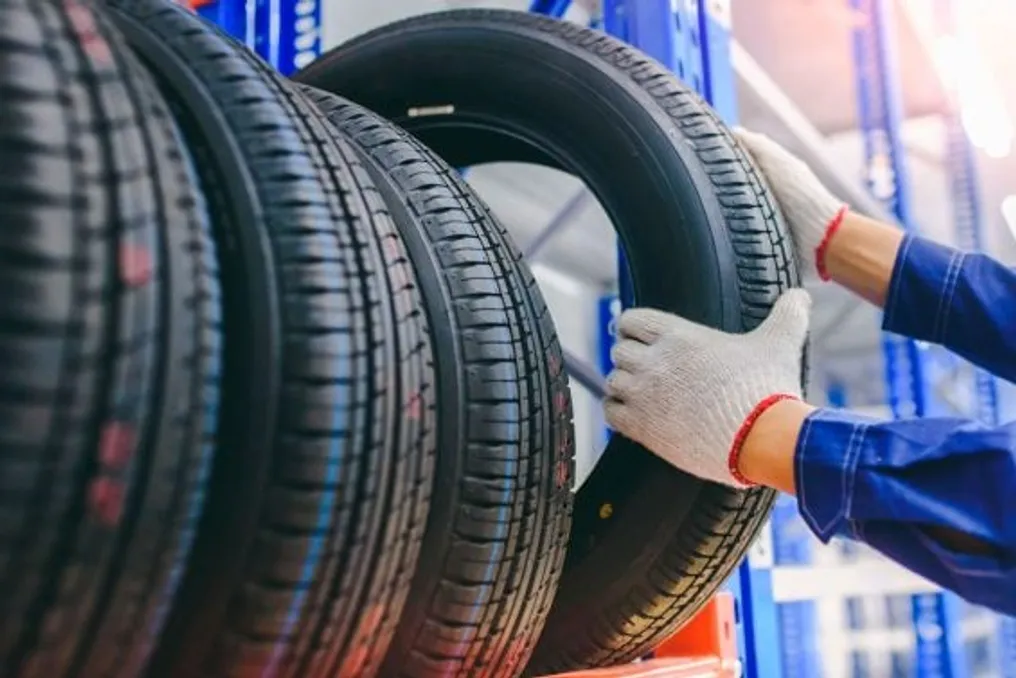
According to the Changchun Institute of Applied Chemistry, these qualities make the compound particularly advantageous for electric vehicle tires, given that these require more robust rubbers due to the extra weight of batteries and the high torque of the motors, in addition to being applicable in heavy vehicles.
The application of this technology has already been validated on an industrial scale. Shandong Shenchi Petrochemical developed truck tires, replacing 50% of natural rubber with isoprene rubber obtained using rare earth catalysts. The Testing Center of the China Rubber Industry Association confirmed that this material achieved a vulcanization rate comparable to natural rubber and surpassed the performance of imported products.
It is important to note that synthetic rubber is mainly derived from petrochemicals, such as styrene and butadiene, unlike natural rubber, which is harvested from rubber trees. Research conducted by the Changchun institute indicates that the country began investing in this area in the 1950s, motivated by the scarcity of natural rubber and technological restrictions imposed by Western nations. In the 1960s, Chinese scientists published the world's first study on the synthesis of cis-butadiene rubber using rare earth catalysts. Collaboration with Dushanzi to scale this technology industrially dates back to 2006.
A study released in 2020, conducted by researchers from Sinopec Research Institute, classified synthetic rubber as an 'important national strategic resource,' used in crucial sectors such as transport, industry, defense, and consumer goods. For these researchers, the new production route has the potential to expand domestic manufacturing, reduce the deficit of natural rubber, and increase the country's autonomy.
This development occurs at a time when the Brazilian tire industry faces difficulties against imported Asian products. According to Anip, the sector association, imported items reached 72% of the replacement market for passenger and cargo tires in January 2026, contrasting with the national participation, which fell from 66% in 2021 to only 28%.