Shiprocket intends to allocate a significant portion of the funds raised from its Initial Public Offering (IPO) towards developing artificial intelligence and new business verticals. The company's goal is to provide merchants with comprehensive technological solutions covering advertising, logistics, and commerce.
The company aims to enable sellers to manage their operations using voice commands instead of navigating multiple software tabs. Furthermore, internal AI applications will reduce the time spent on data collection and routine tasks.
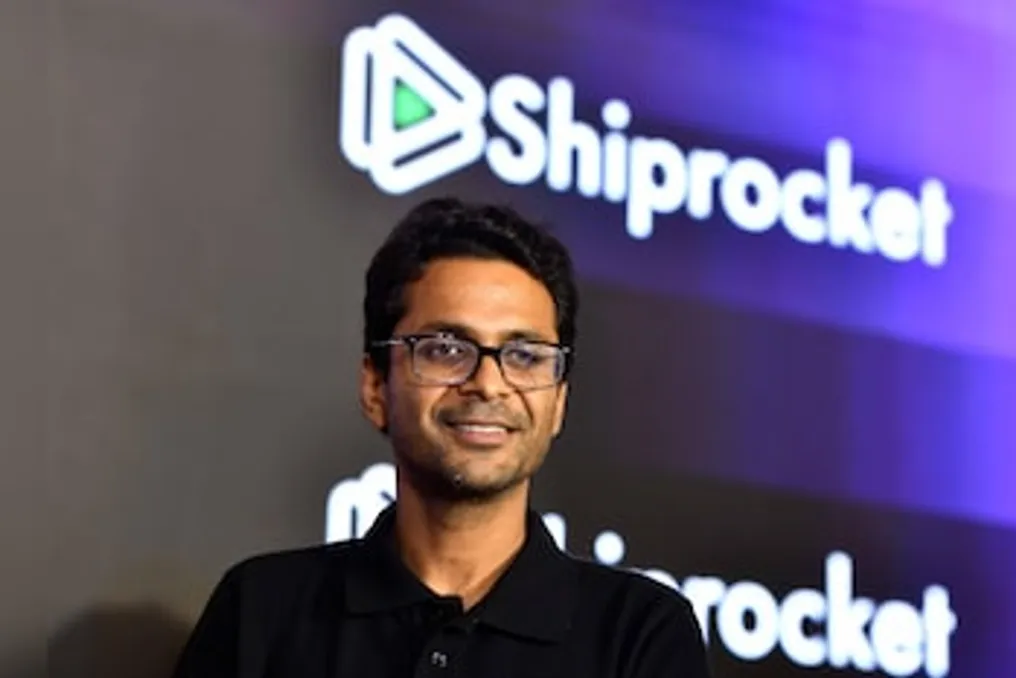
Sahil Goel, Managing Director and CEO of Shiprocket, told Business Standard that the company seeks to integrate AI experience directly into the merchant's workflow.
Most of the capital freed up after debt repayment will be directed towards the faster-growing segment—new ventures, including technology, as well as sales and marketing. According to Goel, revenue from this new business reached ₹538.7 crore for the fiscal year 2026, compared to approximately ₹1,485.4 crore from the core business during the same period. The growth of the new vertical is estimated at around 65 percent.
Shiprocket's IPO is scheduled for August 12, with share pricing set between ₹92 and ₹97 per share. The offering size was reduced by about 30 percent to ₹1,617 crore, with a fresh issue of ₹885 crore and an offering for sale of ₹732 crore. At the upper end of the price range, Shiprocket's valuation would be ₹7,056 crore, which is approximately 30 percent less than its valuation of ₹10,000 crore established during the last funding round in December 2024.
The largest selling shareholder, Lightrock, is offloading shares worth ₹272 crore, though it is expected to receive only about 0.72 of its investment. McKinsey, through AFOS and Moore Strategic Ventures, are also selling below cost, with projected returns of 0.59 and 0.67, respectively. Co-founders Goel, Gautam Kapoor, and Vishesh Hurana are also selling their stakes: Goel and Kapoor each selling about ₹61 crore, and Hurana selling ₹20 crore.
Shiprocket's largest shareholder, Bertelsmann India Investments, declined to participate in the offering, and Eternal (formerly Zomato) and Temasek are also not participating in the sale. Goel noted that Lightrock India is the only fund exiting the company, which, in his view, indicates the long-term shareholders' belief in the potential for significant value unlocking. He attributed the difference in investor returns to the disparity between private and public market valuations.
With 2.14 lakh merchants on the platform and business growing by 24–25 percent, over 80 percent of the founders' stake remains invested in the company. Goel emphasized that the investments are expanding Shiprocket's reach without diluting its core focus, noting that the scale of the company is difficult to replicate with money.
Over 14 years, Shiprocket has captured about 4–5 percent of the Indian e-commerce market, and data collected from over 150 million Indian consumers and more than 700 million deliveries gives it an advantage in understanding fraud risk and courier performance.
Previously, Shiprocket entered into a joint venture agreement with Ultrasafe AI in September 2025 to create the foundational AI model Shunya.ai, but did not actually invest, and this agreement has since expired. Goel believes that India requires its own AI stack, as foreign models are designed for workers whose costs in developed markets range from $30,000–$50,000 annually, whereas in India, this is approximately ₹2–4 lakh. After developing open-source models, Shiprocket shifted focus to applied AI and developed its own voice model trained on its call center data, which is already used internally and will be offered to merchants.
Shiprocket's global strategy is focused on helping small Indian businesses sell abroad, rather than launching overseas operations. This is because artisanal enterprises often sell to exporters with a margin of 5–10 percent, while intermediaries reap greater benefits internationally. The company has created cross-border routes connecting international postal networks with customs and logistics hubs in India, ensuring delivery within seven to ten days. Goel added that the company has no plans to enter foreign markets, given that digital retail penetration in India is only about 8 percent.
In 2021–22, Shiprocket made several acquisitions, the last three being Pickrr, Shiprocket Omuni, and Swiftly, which resulted in goodwill impairment. Goel stated that the acquisition strategy has changed since then, and omnichannel and martech channels acquired are among the fastest-growing segments.
Goel believes that going public has fostered discipline and governance at Shiprocket, rather than restricting innovation, as the company scales toward ₹2,000 crore in revenue while maintaining the core business as a market leader.
According to RHP financial statements, Shiprocket reported a 24 percent year-over-year growth in operating revenue to ₹2,024 crore in FY2026, up from ₹1,632 crore in the previous fiscal year. Consolidated net loss increased to ₹79.25 crore in FY2026 compared to ₹74.45 crore in FY2025, representing an annual increase of approximately 6.5–7 percent. Operating cash flow was positive, exceeding ₹50 crore in FY2026, compared to approximately ₹1.9 crore in the previous year. The core business generated ₹186 crore in cash EBITDA and has been profitable since FY2021–22, with EBITDA margins increasing from about 6 percent to 12 percent, and cash generation rising from approximately ₹70 crore three years ago to over ₹180 crore. The net loss largely reflects planned investments in the new business, rather than cash burn, as profitability improves with product scaling.
Although only 2.14 lakh out of approximately 60 million Indian enterprises are digitized on the platform, Goel asserts that Shiprocket has significant potential for growth without external funding. His broader mission is to digitize Indian merchants, providing every seller, retailer, and kirana store access to digital infrastructure for payments, advertising, delivery, and logistics.