China is undergoing a significant evolution, transitioning from the status of a global manufacturing center to a leader in innovation. The foundation of this transformation lies in artificial intelligence (AI), robotics, and the development of breakthrough pharmaceuticals.
For decades, China's image in the global economy was closely tied to manufacturing. The export of goods such as clothing, furniture, and home appliances, known as the 'old trio' of export items, helped establish China as the world's factory, linking Chinese production lines with consumers worldwide.
The country's perception later changed with the emergence of a new generation of industries. Electric vehicles, lithium-ion batteries, and solar panels, dubbed China's 'new trio' of exports, demonstrated the country's growing ability to compete in technologically complex manufacturing and contribute to the global shift towards cleaner energy.
Another paradigm shift is currently taking place: AI, robotics, and innovative medicines are becoming China's new 'trio' of exports. Their significance extends beyond trade figures, reflecting a transition from exporting finished products to exporting technological capabilities, intelligent systems, and innovation-based solutions.
This evolution signals a broader change in China's role in the global economy—from a manufacturing powerhouse to an increasingly significant participant in global innovation.
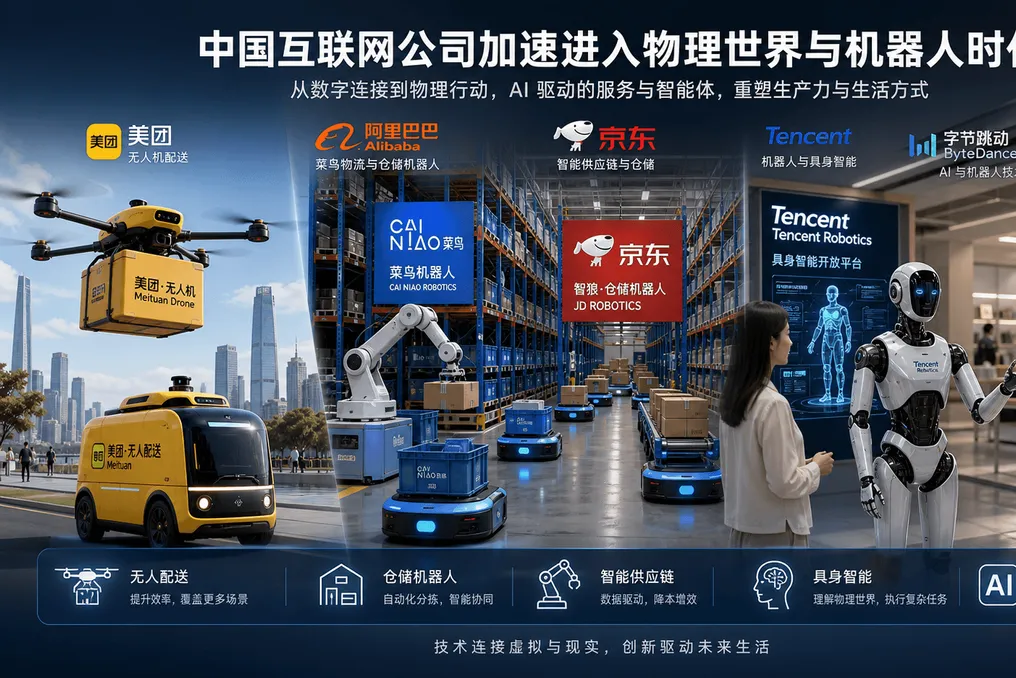
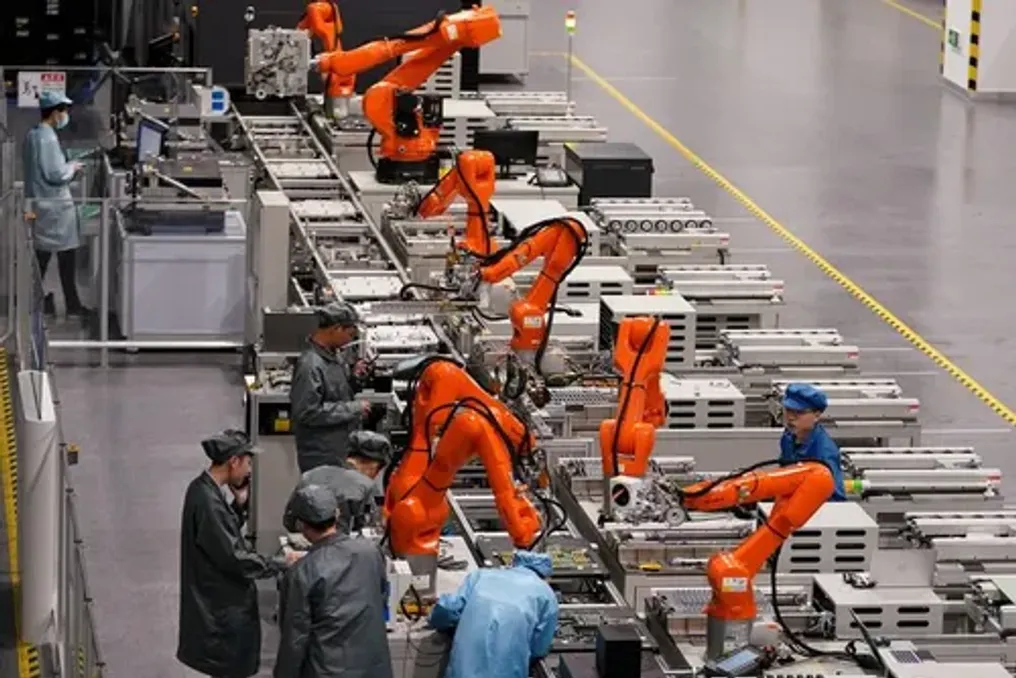
Robotics has become one of the most obvious symbols of China's transition to high-tech smart manufacturing. China's industrial ecosystem has created a unique base for the development of robotics. Years of manufacturing experience, extensive supply chains, and a large domestic market have allowed robotic technologies to rapidly move from research laboratories to practical application.
Trade data shows that in the first half of 2026, China's export of industrial robots reached 6.29 billion yuan (approximately 929 million US dollars), an 18.6% increase, with products sent to 141 countries and regions. Furthermore, the export of surgical robots increased threefold, and their international markets expanded from 23 to 49 countries, reflecting growing global demand for advanced medical technologies.
In addition to traditional industrial robots, China has achieved rapid success in new areas such as quadruped and humanoid robots. Quadruped robots developed in China have gained significant presence in the global market, and the country has produced over 400 fully functional models of humanoid robots, accounting for more than half of the global volume.
Despite China's rapid progress in humanoid robotics, which is changing the competitive landscape of intelligent manufacturing, this sector has also become a subject of geopolitical disputes. The US has imposed restrictions on foreign-made humanoid and quadruped robots under the pretext of national security.
However, the importance of robotics goes beyond export figures or geopolitical debates. Many economies around the world face similar challenges, such as aging populations, labor shortages, and the need to improve workplace safety. Intelligent machines are becoming tools that can boost productivity, enhance efficiency, and support human workers, whether in factories, warehouses, hospitals, or government institutions.
In this sense, China's robot export represents more than just goods; it offers solutions to common global challenges.
Artificial intelligence is perhaps the clearest example of how China's new export categories extend beyond physical products into technological capabilities. Unlike traditional exports measured by shipments and sales, AI is embedded in algorithms, computing infrastructure, and real-world applications. Its value lies in its ability to help industries, businesses, and societies become more efficient and innovative.
China's AI ecosystem is rapidly expanding due to its large digital economy, wide range of application scenarios, and continuous investment in research and development. Data from the global AI model aggregation platform OpenRouter shows that Chinese large language models processed 36.11 trillion tokens per week from July 13 to July 19, 2026, more than 30% higher than the previous week, securing the top spot in global usage for 12 consecutive weeks.
More importantly, Chinese AI technologies are increasingly being used abroad. In Brazil, Chinese AI models assist local energy companies in improving inspection and maintenance of power grids in challenging conditions. In South Africa, the railway sector has implemented intelligent monitoring systems developed by the Chinese tech giant Huawei to improve infrastructure management and operational efficiency. Across Southeast Asia, Chinese AI solutions support small and medium-sized enterprises in their digital transformation process, helping to bridge the digital divide and boost productivity.
A key feature of AI development in China is the growing open ecosystem. By making advanced AI tools more accessible, open models allow developers, businesses, and developing economies to adopt intelligent technologies at lower costs.
AI development also raises global issues regarding data security, privacy, and governance. Solving these problems requires international cooperation and common standards.
Ultimately, the significance of China's AI export lies not only in exporting models or software but also in expanding access to digital intelligence. As AI becomes a critical driver of economic transformation, its greatest impact will be measured by how widely its benefits can be shared.
Innovative medicines represent another vital area in China's new 'trio' of exports, reflecting a shift from producing pharmaceutical products to developing original healthcare solutions. For many years, China's pharmaceutical industry was primarily focused on manufacturing active pharmaceutical ingredients and generics. Today, Chinese companies are moving toward high-level biopharmaceutical innovations, investing more in discovering original drugs and becoming a more active participant in global medical innovation.
In the first half of 2026, China approved 38 Class I innovative drugs, including 11 drugs with first-in-class targets and novel mechanisms of action—all developed by Chinese pharmaceutical companies. Meanwhile, licensing deals for Chinese innovative drugs abroad reached a record $110 billion, equivalent to about 80% of the total annual volume for 2025. These deals covered 10 therapeutic areas, including oncology, immunology, and neurology, and involved partners from 20 countries and regions, including the US, UK, France, and Italy.
The global impact of China's pharmaceutical innovations is already evident. Some drugs developed in China have been included in international treatment guidelines, offering new options for patients worldwide. Through licensing agreements, joint research, and global partnerships, Chinese pharmaceutical companies are integrating deeper into the international innovation ecosystem.
As healthcare systems worldwide face rising costs and aging populations, a broader base of medical innovation can accelerate the development of new treatments and improve access to advanced therapies. This transformation reflects a wider shift of China from exporting medications to contributing to global medical innovation.
Robotics, AI, and innovative medicines are not just new trade categories; they are technologies capable of solving common problems, from labor shortages and industrial efficiency to healthcare accessibility and economic development. China's experience shows that innovation is built on long-term investment, industrial ecosystems, and global interaction. Technologies arising from this process should be viewed not only through the lens of competition but also through their potential contribution to global progress.
Electric vehicles accelerating the green transition, AI systems boosting productivity, and medical innovations expanding treatment options can benefit far beyond their country of origin. Blocking new technologies solely based on their origin could slow down the global spread of innovation and limit opportunities to solve common challenges.
The future of AI, robotics, and biotechnology will not be shaped by a single country. It will depend on international cooperation, open exchange, fair competition, and responsible governance. The ultimate measure of technological success is not just who develops the technology, but how widely it can improve people's lives.
Thus, China's new 'trio' of exports is not just a story of economic renewal, but part of a broader global dialogue on how innovation can generate shared opportunities in an increasingly interconnected world.