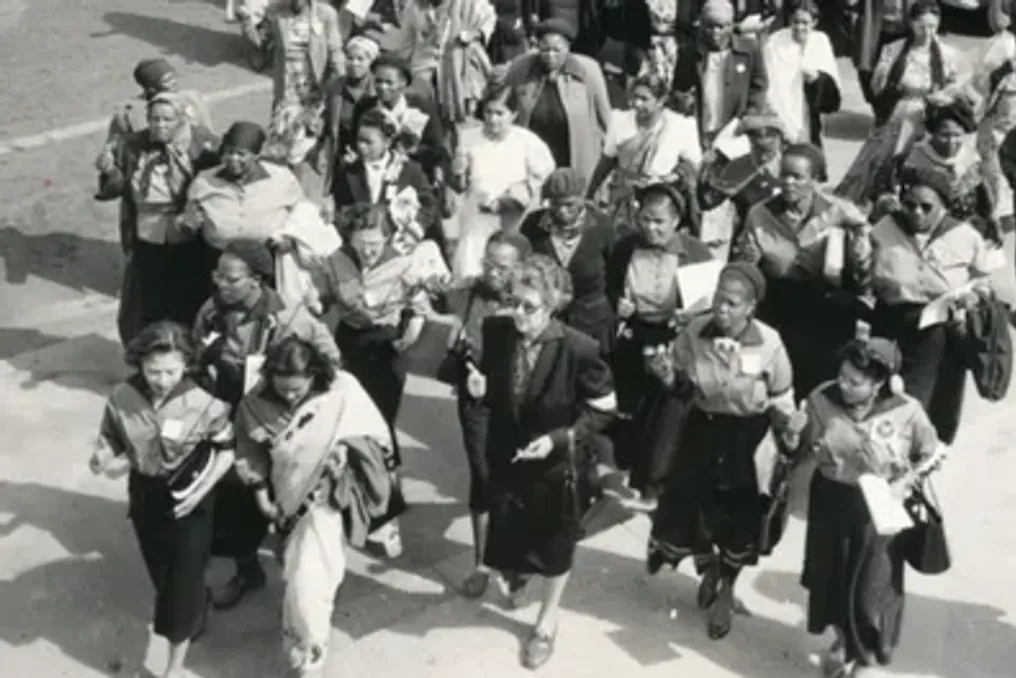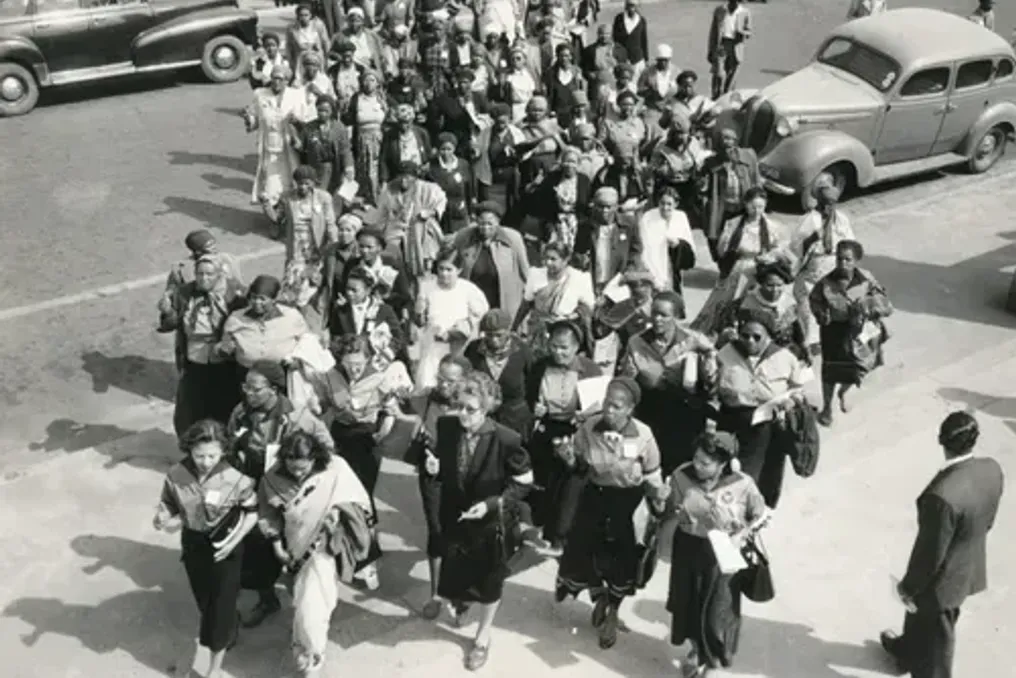
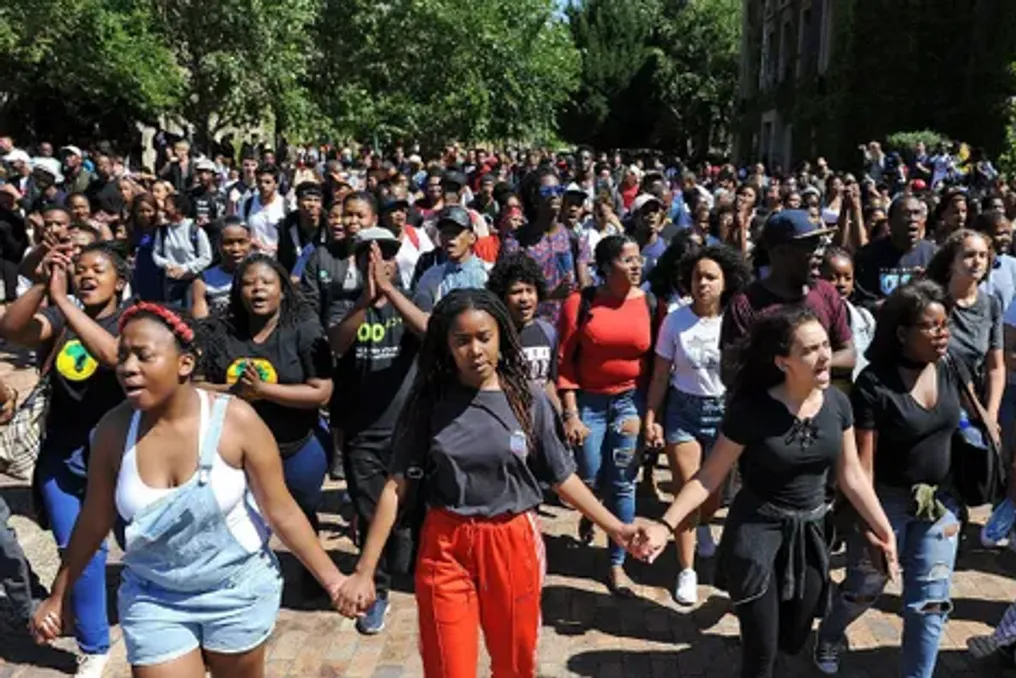
Students at the University of Cape Town organized a protest march following a mass gathering in the Jameson Hall, where they presented a list of demands to the institution's leadership. This march, largely led by female students, echoes the spirit of the 1956 women's protest against pass laws during apartheid, which played a significant role in shaping South Africa's political course and in celebrating Women's Day.
There are times when a nation awakens differently, when history does not whisper, but gathers, rises, and emerges with a specific purpose. The morning of August 9, 1956, was exactly such a morning. Twenty thousand women crossed the Pretoria winter light and approached the Union Buildings with a calm that felt like a warning. They came not to beg, but to declare. They insisted that South Africa recognize the obvious: women are not footnotes in the struggle, but its foundation.
To understand the power of this march, one must grasp the world these women lived in. A world where Black women bore the burden of the country while being denied the right to stand upright. It was a world where they raised families under an economy designed to destroy them. It was a world where they worked in other people's homes, strengthening communities that the state tried to tear apart, and coping with the dual violence of apartheid and patriarchy.
A world where the pass system was not just a document, but a chain. A world where the state believed it could dictate their movement, labor, belonging, and future. Nevertheless, in this world, they organized. They created networks, uniting people of different races, classes, and geographical regions. They developed strategies with a discipline that is still astonishing. They refused to be divided by the obsession of apartheid classification. They did not let themselves be intimidated by the police, bureaucracy, or the threat of arrest. They refused to be silent.
The march was led by women whose names deserve to be spoken with the same reverence as the giants of the liberation struggle. Among them were Lillian Ngoyi, whose voice could cut through fear and make the crowd feel elevated; Helen Joseph, who carried courage like a lantern through the darkest corridors of repression; Rahima Musa, whose organizational skill held the movement together with threads stronger than steel; and Sophie de Bruyn, the youngest of the leaders, who entered history with a quiet defiance whose echo resonates to this day.
They were not secondary characters. They were architects, strategists, thinkers, and equals. When they left petitions at the Prime Minister's door and stood in silence, it was not the silence of submission, but the silence of judgment. It was the silence of women who carried the country on their shoulders and now demanded that the country acknowledge the weight of that labor. It was the silence of women who understood that dignity does not need noise to be heard.
This silence spread across the lawns of the Union Buildings and settled in the conscience of the nation. It lingered, took root, and became a benchmark for courage. The march did not end apartheid, but it changed the trajectory of resistance. It demonstrated that women are capable of mobilizing on a large scale, building coalitions between political organizations, and directly confronting the state. It showed that they could lead.
And this leadership did not disappear. It hardened, evolved, and sharpened in the fires of the 1970s and 1980s, when the apartheid state became more brutal and paranoid. Women stepped forward again not because they were invited, but because the country needed it. Victoria Msenge is a prime example: a lawyer and freedom fighter who used the law as a weapon against injustice and paid for it with her life. Her murder in 1985 was meant to silence her, but instead, it amplified her influence, and her funeral became a rallying point for resistance.
Winnie Madikizela-Mandela demonstrated a different form of leadership—one forged in the brutality of police raids, solitary confinement, exile, and surveillance. It was a leadership that refused to break, even when the state tried to crush its spirit. She became a symbol of defiance not because she sought attention, but because she refused to surrender. Her leadership was complex, contested, and human, but it was leadership, and it mattered.
There were also other women: those who organized underground structures; those who hid activists in their homes; those who smuggled messages across borders; those who created community organizations, supporting families when the state tried to starve them out. Women who led trade unions, student movements, civil protests—those who led from the front and those who acted in the shadows.
The 1956 march sowed the seed, and the women of the 1980s watered it with courage. Then came democracy: a new constitution, a new parliament, a new promise. However, promises do not fulfill themselves. Women had to fight again: insisting on representation, striving for gender equality, and demanding to be seen not as beneficiaries of freedom, but as its creators.
The first democratic parliament included women who participated in marches, organized, and resisted. They brought with them the discipline forged in the struggle. They pushed for the adoption of women's rights protection laws, promoted policies recognizing women's labor, and established institutions capable of holding the state accountable. They advocated for a society that understands: liberation without gender equality is not liberation at all.
Today, seventy years after the march, South Africa is in a different quiet state—a quiet marked by disappointment, inequality, violence, and unfinished democratic work. But in this silence, women continue to drive things. They lead in parliament, in civil society, in business, in communities, in movements against gender-based violence, in art, media, academia, and activism. They lead not because they are allowed to, but because they have always led.
The legacy of the march is not a statue, a celebration, or a slogan. It is a lineage. The lineage of women who refused to be defined by the limitations imposed upon them by society. It is the lineage of women who understood that leadership is not a title, but a practice, discipline, and responsibility. As a man writing about this history, the responsibility is clear: to honor women without patronizing them; to recognize their leadership without appropriating it for oneself; to speak of their contribution without placing men at the center. It is necessary to understand that equality is not a performance, but a principle, a way of seeing the world, a way of perceiving women as full participants in the nation's history, not as footnotes.
The women who marched in 1956 did not ask for permission, wait for approval, or bargain for their dignity—they declared it. They entered the heart of the apartheid state and proclaimed themselves citizens of a future that did not yet exist. That future is still being built, and women continue to construct it. The rest of us must catch up.