In Hinduism, there is a doctrine of sixteen rituals, starting from birth and ending with death, with the last ritual, i.e., cremation (Antyeshti), considered the most important. When a person leaves this mortal world, various religious and spiritual rites are performed to dissolve their physical body into the five elements. Among all these observances, the Mukhaagni process is recognized as primary and mandatory.
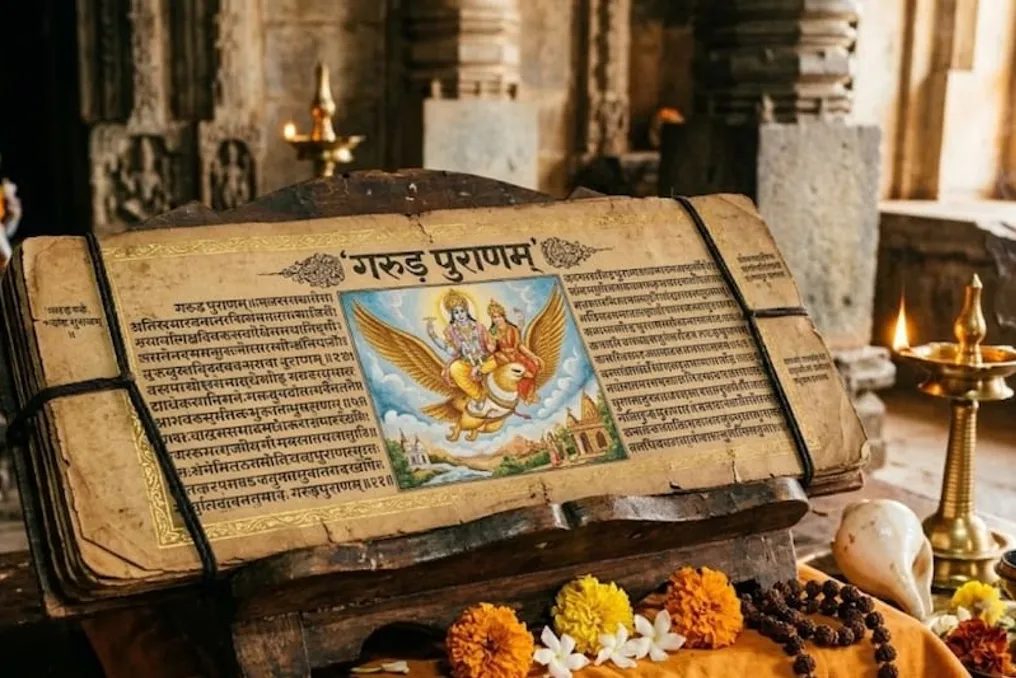
The Garuda Purana details that the funeral rite is incomplete without performing Mukhaagni. Furthermore, it examines the spiritual and scientific aspects behind conducting this ritual according to scriptures and the Garuda Purana.
What does Mukhaagni mean and how is the procedure carried out?
According to Hindu beliefs, the human body consists of five elements: earth, water, fire, air, and ether. After death, when the soul leaves the body, its attachment to this physical form disappears. Before burial, the deceased's body is washed, dressed in new clothes, and sandalwood paste is applied to the face. Then, a relative or elder son breaks a vessel filled with water and circumambulates the body, directing the fire from the mouth, which is called Mukhaagni.
The Significance of Mukhaagni According to the Garuda Purana: Liberation from Material Bonds
The Garuda Purana asserts that Mukhaagni is not merely a process of burning the body, but a spiritual path that allows the soul to completely free itself from worldly illusions, familial ties, and the physical body. In the Sanatana tradition, the mouth is considered the entrance for speech and life force. Directing fire through the mouth signifies that the energy of the life force from these entrances dissolves into cosmic energy, i.e., the element of fire.
It is believed that Mukhaagni, performed according to the correct ritual, brings peace to the departed soul, allowing it to move on to the next world or rebirth without any obstacles.
Other Important Rules Related to Final Rites
According to sacred scriptures, conducting a burial after sunset is forbidden. It is believed that negative energies dominate at night, which can cause suffering to the soul in the afterlife. The presence of the sun (during the day) is considered auspicious for the liberation and consciousness of the soul.
If death occurs at night, the body is not left alone; religious texts are read or the name of God is chanted near it to ensure peace for the deceased.