A criminal case has been initiated against the head of the State Cadastre Chamber branch. The head of this branch, located in one of the districts of the Fergana region, received 600 US dollars at the beginning of July of this year.
A criminal case has been initiated against the head of the State Cadastre Chamber branch. The head of this branch, located in one of the districts of the Fergana region, received 600 US dollars at the beginning of July of this year.
He committed illegal actions by annulling a certificate issued by the district department of the Cadastral Agency regarding an illegally constructed retail store belonging to a citizen born in 1990, thereby ensuring the absence of legal measures.
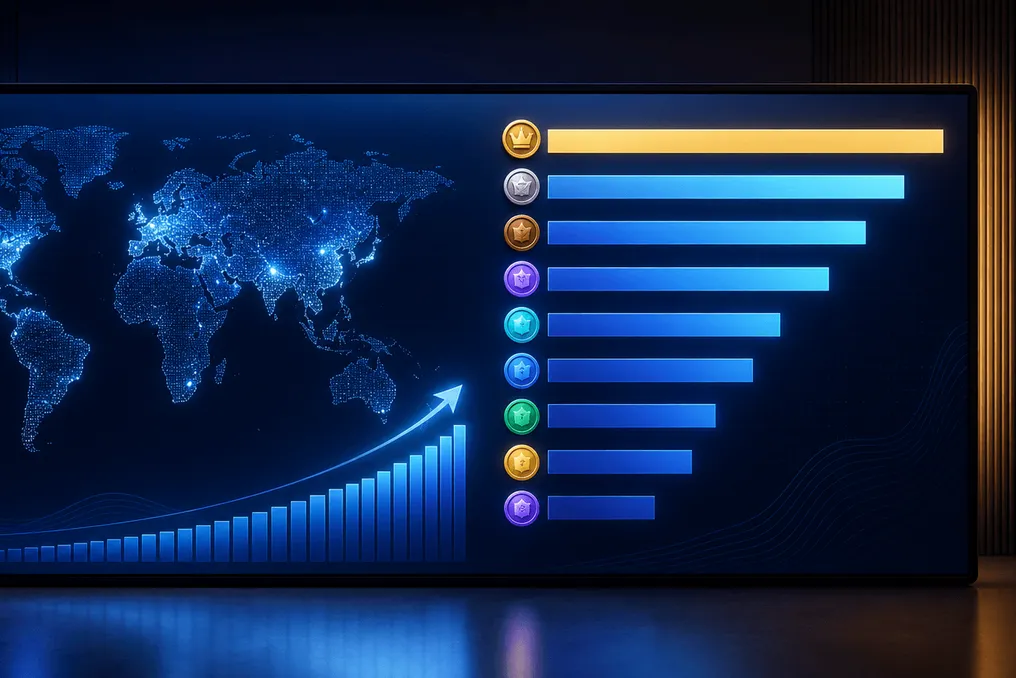
Chinese artificial intelligence laboratories now occupy the top four positions in the global model token usage ranking. According to the latest data from OpenRouter, the total global model usage reached 69 trillion tokens between August 3 and 9, which is 21.48 percent higher compared to the previous week. Chinese models accounted for 34.25 trillion of this total, while American models contributed 9.17 trillion. This marks the fifteenth consecutive week that Chinese models have led the global ranking.
A more detailed analysis of the chart reveals a more complex picture. The official version of DeepSeek-V4-Flash-0731 took first place with 8.83 trillion tokens, representing a 570 percent increase from the previous week. Tencent Hy3 was second with 8.05 trillion tokens, showing a 67 percent growth. The preview version of DeepSeek-V4-Flash-0423 dropped to third place with 5.88 trillion tokens, and Xiaomi MiMo-V2.5 secured fourth place with 5.39 trillion tokens. Thus, all four leading global spots are now held by Chinese labs.
The official release of DeepSeek was made on July 31. The model structure and parameter count remained unchanged compared to the preliminary version, but the fine-tuning recipe was started from scratch. This resulted in significant improvements in mathematical and coding test scores, explaining the rapid shift in developer traffic. According to Artificial Analysis, the official V4-Flash now passes single-task tests at an average cost of $0.03, which is about one hundred times cheaper than Anthropic's flagship Claude Fable 5, making it the most affordable large model globally.
There is also a shift in rankings. The MiniMax M3 model, which was in seventh place last week, and Stepfun Step 3.7 Flash, which was in ninth, have left the top ten in the current ranking. OpenAI's GPT-5.6 Luna entered the top five with 4.43 trillion tokens, showing a 128 percent increase after the company reduced the price for enterprise workloads by 80 percent. Google's Gemini 3.6 Flash entered the top ten for the first time with 2.33 trillion tokens, increasing by 446 percent compared to the previous week.
The structural conclusion is that Chinese open-source models have transitioned from a price advantage to a usage advantage. Fifteen weeks of sustained global leadership, holding four out of the top four spots, and a flagship model priced at one-hundredth—all point to the same conclusion: the Chinese open-source stack no longer competes solely on price. It competes in a combination of price, throughput, and benchmark quality, and wins on all three parameters.
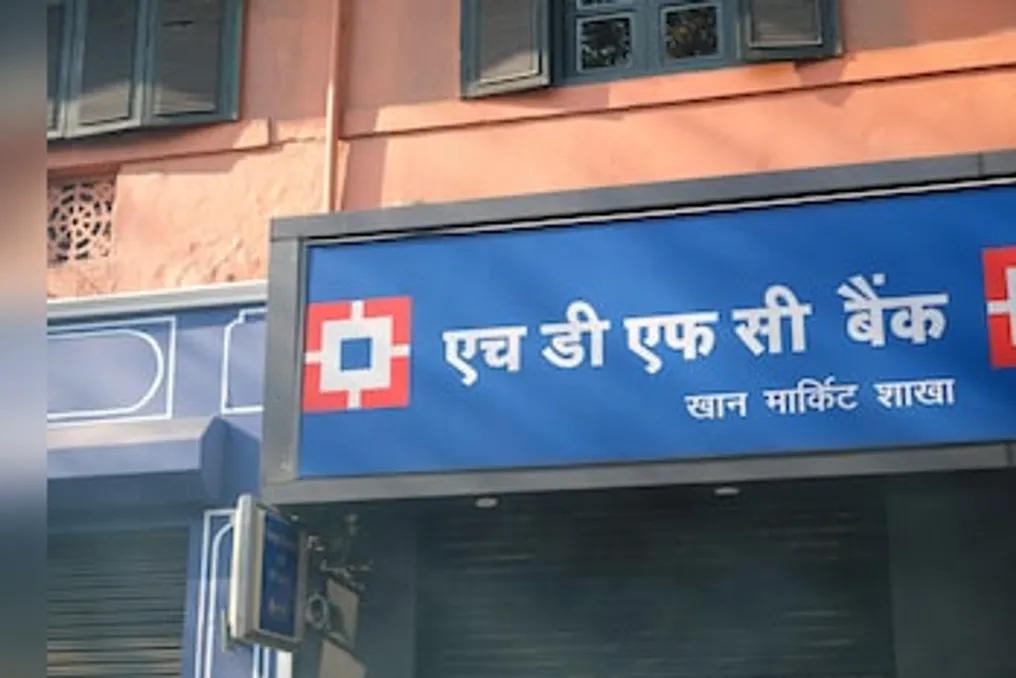
HDFC Bank has reduced its Marginal Cost of Funds based Lending Rate (MCLR) by 5 basis points (bps) across most loan tenures; however, this decision's benefits do not extend to all borrowers and will not result in an immediate reduction of monthly payments.
The main question is whether the borrower's loan is linked to MCLR, as most new floating-rate retail loans are now tied to an external benchmark.
The revised MCLR rates came into effect on August 7, 2026. HDFC Bank decreased rates for six out of its seven stated tenures, leaving the two-year MCLR unchanged. The reduction itself is moderate—only 0.05 percentage points, or five basis points, in the affected tenures. The bank's MCLR now ranges from 8% to 8.65% depending on the reset tenure.
This is the most important point for borrowers. A lower MCLR does not automatically mean that any HDFC Bank home or personal loan will become cheaper. The impact depends on which benchmark the loan is tied to. The Reserve Bank of India (RBI) transitioned new floating-rate retail and personal loans to an external benchmark system back in October 2019. Banks can use benchmarks such as the RBI repo rate or specific treasury bond rates for these loans.
Therefore, borrowers with older loans tied to MCLR may potentially benefit from the latest reduction, provided the reset date and their contract terms are met. For instance, if a borrower's loan is linked to the annual MCLR, the benchmark has dropped from 8.45% to 8.40%. However, the borrower's actual lending rate will still depend on the spread set by the bank.
In other words, a 5 basis point reduction in MCLR does not guarantee an immediate 5 basis point reduction in the final interest rate.
Loans tied to MCLR are not necessarily reviewed when the bank changes its MCLR. The applicable reset frequency is part of the loan agreement. RBI regulations require that floating-rate loans linked to MCLR have a reset period of no more than one year. This means that two HDFC Bank borrowers with otherwise similar loans may see benefits at different times, depending on their individual reset dates.
Therefore, borrowers should check three aspects: the applicable benchmark for their loan; the spread set above this benchmark; and the next reset date.
For most new floating-rate retail loans, the MCLR reduction is not the primary trigger for an interest rate change, as such loans are typically linked to an external benchmark. This is why borrowers should not assume that HDFC Bank's latest MCLR announcement will automatically lower their mortgage payment. For a loan tied to an external benchmark, the interest rate movement is primarily determined by changes in the base benchmark and the spread specified in the loan agreement. The RBI has also mandated banks to review loans tied to external benchmarks at least every three months.
The latest MCLR reduction alone is unlikely to justify an immediate loan switch. Borrowers should first compare their actual effective interest rate with the current rates available on new loans. They must also consider processing fees, conversion or switching charges, and any other associated costs.
For an existing MCLR borrower, a small decrease in the base level may provide some relief, but greater savings can be achieved by moving to a more favorable benchmark or loan structure if the difference in rates is significant. RBI regulations also offer borrowers options in some floating-rate consumer loans, including the possibility of switching to a fixed rate if the lender offers it, or early loan repayment, subject to applicable terms and fees.
The Employees' Provident Fund Organisation (EPFO) is continuously making significant improvements, and processes such as claim settlements can now be easily completed digitally. While the organization simplifies PF rules and digitizes all procedures, EPFO also regularly warns its members.
A warning was issued in a post on the social media platform Twitter (now X), urging members to be cautious of fake links. EPFO asked members to think before clicking any link and strongly recommended staying vigilant online, avoiding fraudulent links, verifying URLs, and always protecting personal information.
In its message, the Employees' Provident Fund shared important information, providing photographs and advising caution. Official EPFO website links (https://www.epfindia.gov.in or https://www.epfo.gov.in) were published, and it was stated that one should not click on any unverified links received via SMS, email, or social media.
EPFO also emphasized that one should never share their UAN, PPO, Aadhaar or PAN passport data, or OTP through any social media notifications or unverified websites. Extra caution should be exercised when receiving such links: it is essential to check the URL address, paying attention to even minor spelling changes. If any change in the URL is noticed, it should be reported to EPFO support.
The Employees' Provident Fund clearly stated in its post that EPFO never requests personal data, OTP, or login information via phone calls, WhatsApp, SMS, social media, or email. The post on X also included a link to the official EPFO website, noting that adherence to these rules is necessary for security.