Updated banking supervision rules came into force on August 9, concerning minors' accounts, large money transfers, and certain international operations.
Updated banking supervision rules came into force on August 9, concerning minors' accounts, large money transfers, and certain international operations.
According to the new regulation, one of the signs of a suspicious transaction is the deposit or withdrawal of funds, as well as cash withdrawal from an account belonging to a person under 16 years old, in an amount exceeding 40 BHD (16.48 million UZS) within two business days.
Upon detection of such suspicious signs, the bank's internal supervisory body examines information about the client and the transaction; the determination of suspicion is made based on a comprehensive analysis of each case.
Another new criterion is conducting large transactions with countries under enhanced FATF monitoring. A transaction is considered suspicious if an amount of 1000 BHD (412 million UZS) or more is received or transferred to the account from such countries within 30 days.
At the same time, some requirements have been eased. Previously, a customer check was required if they purchased currency exceeding $100, but this threshold has been increased to $500.
A new limit of 175 million UZS has been set for one-time operations conducted without opening a bank account, instead of the previous 500 BHD. Furthermore, banks are obliged to ensure the ability to monitor payments made by card, from the sending financial institution to the recipient.
In the case of suspicious transactions that do not have a set quantitative limit, banks must conduct a comprehensive analysis of the source of funds, participants, their business reputation, relationships, and the actual purpose of the transaction within 10 business days.
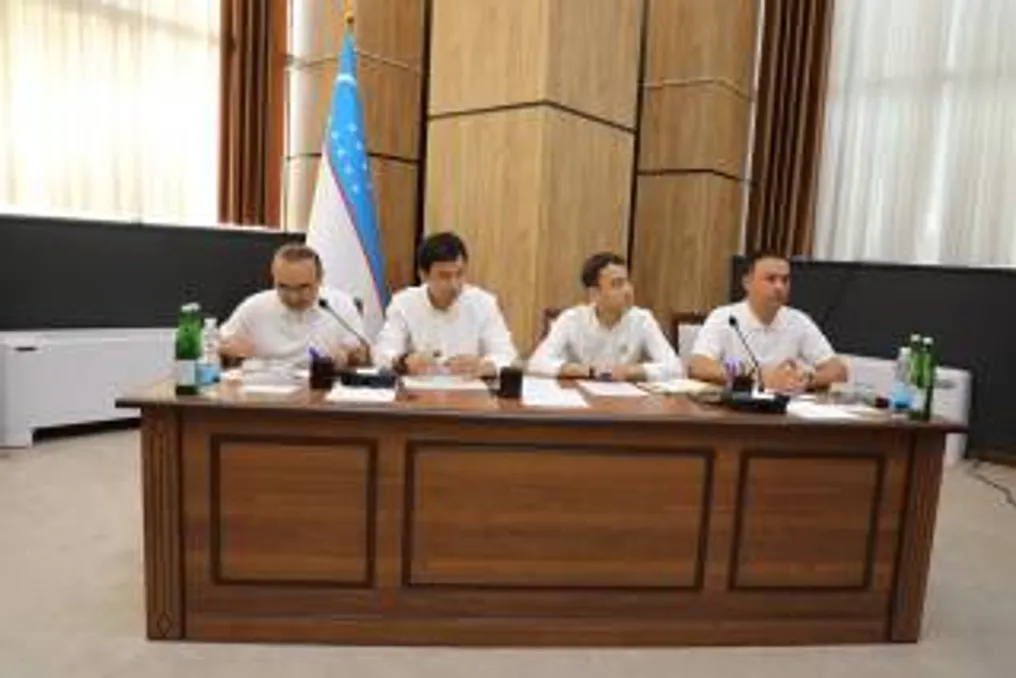
A training seminar was organized in Namangan by the Department of Currency Regulation and Control of the Central Bank of the Republic of Uzbekistan. Relevant structural units and specialists from commercial banks involved in foreign economic activity and currency operations took part in the event.
Employees of the Department of Currency Regulation and Control of the Central Bank discussed current problems faced by entrepreneurs conducting export operations to foreign countries and generating income for the country's economy. Opinions on practical difficulties and possible solutions were presented.
At the conference held at the Namangan Branch of the Central Bank, detailed explanations were provided regarding recent changes in legislation regulating currency operations. The procedure for applying regulatory legal acts, as well as issues concerning the acceptance and official documentation of damaged or unusable foreign currency banknotes, were also reviewed.
As part of the seminar, an open dialogue was held with representatives of exporters and manufacturing enterprises in the Namangan region. During this meeting, information was provided about the favorable conditions created by the state, support measures for the industry, and changes being made to regulatory legal documents.
Proposals and problems raised by entrepreneurs during the discussion were carefully discussed, and corresponding recommendations for practical solutions were given. At the end of the seminar, participants received detailed answers to their questions, and the high significance of such practical events was noted.
From January to June 2026, the average nominal wage in Uzbekistan was 7.09 million soms, with the highest figure recorded in Tashkent.
The wage for January-June 2026 reached an average of 7,911 thousand soms nationwide. This figure exceeds the same period last year by 18.4%. For comparison, in January-June 2022, the average wage was 3,551.6 thousand soms, which represents an almost twofold increase in the average salary over four years.
When comparing by region, the highest average wage level was noted in the city of Tashkent, where it reached 12.014 million soms. Following in terms of income level is the Navoi region, where the average salary amounted to 8.723 million soms.
The lowest values for the average wage were registered in the Kashkadarya region, where it was 4.865 million soms, as well as in the Surkhandarya region, where the indicator reached 4.937 million soms.
The US administration issued a warning to Ukraine that strikes should not be made against ships that have no connection to Russia, especially following incidents involving attacks on tankers in the Black Sea near the KTK terminal.
According to The Wall Street Journal, citing official US sources, the administration of President Donald Trump notified Ukraine about the ban on attacking vessels not associated with Russia in the Black Sea. These incidents occurred near the KTK maritime terminal in the Black Sea.
Previously, Chevron director Mike Virt discussed with representatives of the US administration the issue of protecting the company's assets in Kazakhstan amid the Ukrainian crisis. This was prompted by attacks on four tankers near the port of Novorossiysk in the Black Sea. One of these tankers was chartered by Chevron.
The Caspian Kuvar Consortium (KTK) maritime terminal is located in Novorossiysk and transports Kazakh oil to the global market. Chevron owns a 15% stake in KTK and also holds a 50% share in the Tengiz field in Kazakhstan. Nearly 2% of the world's daily oil volume is transported through KTK.
Kazakhstan TIV previously strongly condemned the drone attacks on civilian vessels involved in transporting oil through KTK in the Black Sea on July 17 and 19. The Ministry assesses these actions as an infringement on Kazakhstan's economic interests and an attempt to destabilize international trade and global energy markets. Kazakhstan demanded an immediate cessation of these attacks and stated that it reserves the right to claim compensation for the damage incurred, which is currently being assessed.
Following the drone attack on the tanker NELSA on July 20, oil loading operations at the KTK terminal were suspended again. A fire broke out on the vessel, but it was extinguished, and no oil spilled into the sea. American companies Chevron and ExxonMobil are also among the shareholders of KTK. Russia has attributed responsibility for the attacks on Ukraine, while Kyiv has not made official comments regarding the attacks on tankers at the KTK terminal.