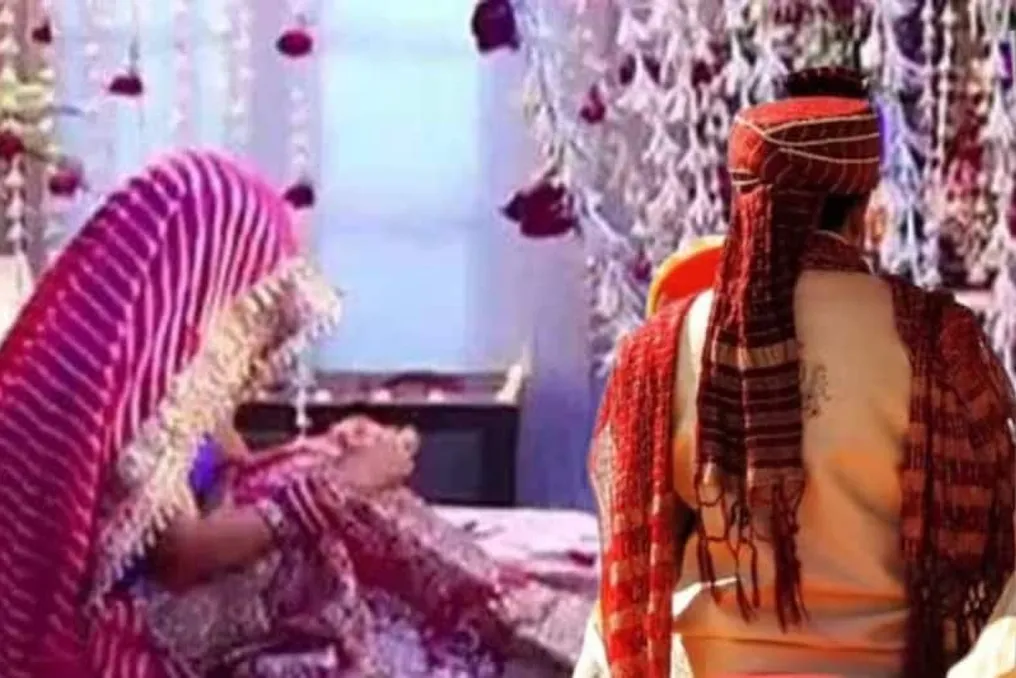
A striking case related to attempts to remarry for benefits from a government program was discovered in Agra. A total of 1201 girls participated in the collective marriage program by submitting applications in the district. After conducting an online verification of these applications, the administration found that about a thousand of them were invalid.
The investigation revealed that a significant number of women were already married. Some had only been married four months ago, while others were married eight months ago. Despite this, they submitted applications to participate in the collective marriage program, aiming to take advantage of its benefits. During the online verification, their marital status was identified, and the administration deemed such applications invalid.
Furthermore, the check uncovered applicants who were minors. It also emerged that some applicants had an annual income exceeding three hundred thousand rupees, leading to the rejection of their applications according to the program's eligibility rules.
This year, the Agra district has set a target to conduct marriages for 1522 couples under the collective marriage program. Applications were accepted starting in April. Out of the total of 1201 girls who applied, about a thousand applications were scrutinized after the verification process began.
The highest number of applications were rejected in the developed areas of Bah, Achnara, and Jaithpur. Of the planned 1522 couples, only 201 applicants have been deemed eligible so far. Thus, the majority of the submitted applications were excluded during the verification process.
It was found that some women applied for benefits while already being married. Their marriages had taken place four or eight months prior. Once their marital status became apparent during the online process, the administration annulled these applications. Nevertheless, some applicants explained their actions over the phone, claiming their intention was not fraudulent acquisition of government funds.
One applicant from Achnara stated that when she was planning the wedding date, the application procedure for the collective marriage program had not yet started. Therefore, she married through the standard process. When the program started later, she also applied, but her application was rejected due to her prior marriage.
These women are demanding that the government establish timeframes for the program so that poor and deserving families who recently married can benefit from this aid in the future. They argue that there should be a system in place for such families if the program launched after the wedding date was decided.
The District Social Affairs Director, Nagendra Pal Singh, reported that the entire collective marriage program procedure is conducted online. He specified that 1201 applications were received from April to July 30, of which about a thousand were found invalid during verification. He added that re-applications from eligible applicants are currently underway, and collective marriage events will be organized after their review.
The administration is currently seeking new eligible applicants to meet the district's target. District Director Manish Bansal instructed Panchayat secretaries, village development workers, and BDOs to actively attract as many applications as possible from suitable girls.
According to the collective marriage program, eligible couples receive a total financial assistance of one hundred thousand rupees from the government. Of this amount, 64 thousand rupees are allocated to the bride, 21 thousand rupees for wedding accessories, and 15 thousand rupees for organizational expenses.
It is this financial support that stimulates a large number of applications. In Agra this year, 1201 applications were received, but about a thousand did not meet the eligibility standards after checking. Among them were women who were already married, some of whom had only married four to eight months ago. Additionally, underage applicants and those whose annual income exceeded three hundred thousand rupees were discovered.
After verification, the invalid applications were separated. Now, the search is on for new eligible applicants to reach the set goal of 1522 couples. Panchayat secretaries, village development workers, and BDOs have been tasked with collecting as many applications as possible from suitable girls. The administration stated that collective marriage ceremonies will be held after receiving and verifying the applications of eligible applicants.
This incident in Agra has sparked discussions regarding the eligibility criteria and application procedures for government programs. On one hand, the program's goal is to provide financial assistance to poor and deserving families, but on the other hand, the large number of invalid applications forces the administration to pay special attention to the verification process.