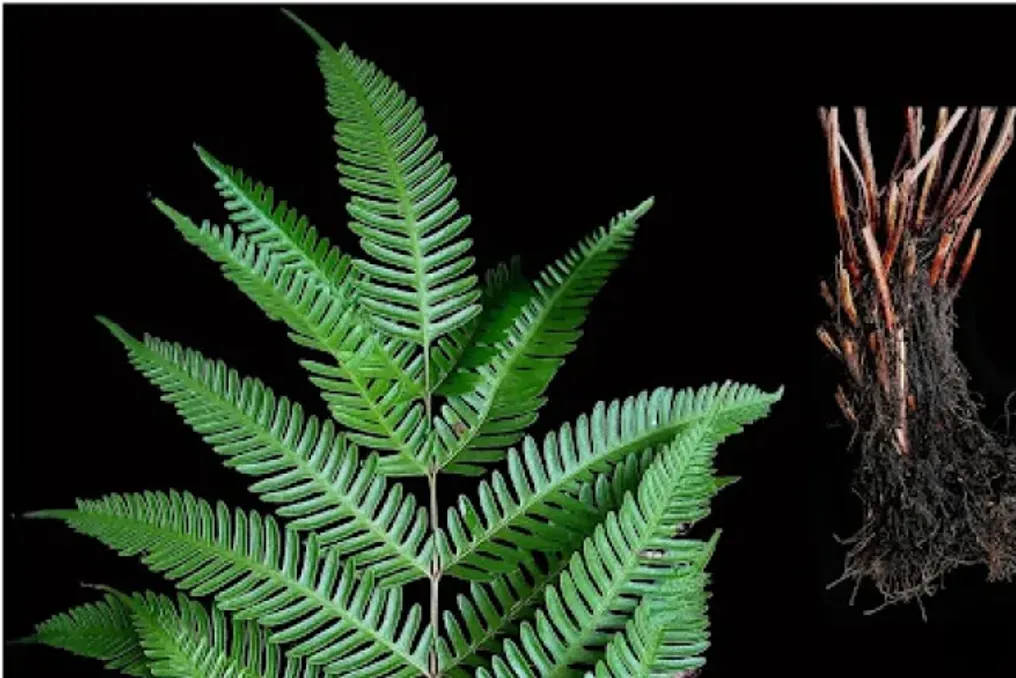
A team of Indian botanists has discovered a new, rare fern species in the misty hills of Koli in the Eastern Ghats. The plant has been named Pteris madhusoodananii. Researchers from Government Victoria College and Sri Vyasa NSS College in Kerala identified this species during a series of scientific expeditions in Tamil Nadu.
The discovery is of particular urgency as this species was immediately classified as 'critically endangered' due to its extremely limited habitat and the threat of human encroachment.
The finding occurred during a taxonomic review of ferns in South India. While surveying the outskirts of the Puliyansolai forest, researchers noticed a fern population that did not match any known record. To confirm their suspicions, the team collected samples in the laboratory, where they used a combination of traditional physical measurements, scanning electron microscopy to study the plant's spores, and DNA sequencing to build its genetic tree.
Despite its external resemblance to other ferns in the Pteris family, Pteris madhusoodananii is distinguished by its stiff, leathery leaves with a glossy dark green color. Unlike its closest relatives, it possesses a very noticeable lobe at the base of the lower segments and a unique pinnate-pinnule architecture, where smaller leaflets are arranged along the stem. At the microscopic level, its spores feature a narrow, wavy band called a cingulum, which differentiates them from the smooth, wider bands found in similar species.
The plant's name is a tribute to a titan of Indian botany. The specific epithet madhusoodananii was chosen in honor of Professor Dr. P. V. Madhusoodanan, former head of the Botany Department at Calicut University. The authors noted that this name recognizes his outstanding contribution to fern studies and his role in inspiring new generations of scientists.
Despite the excitement of the find, the future of Pteris madhusoodananii remains uncertain. It is currently known to exist only in two small patches covering eight square kilometers. Since these areas lack official protection and are threatened by road construction, deforestation, and conversion to agricultural land, scientists are calling for immediate conservation measures to save this newly discovered piece of India's natural heritage.