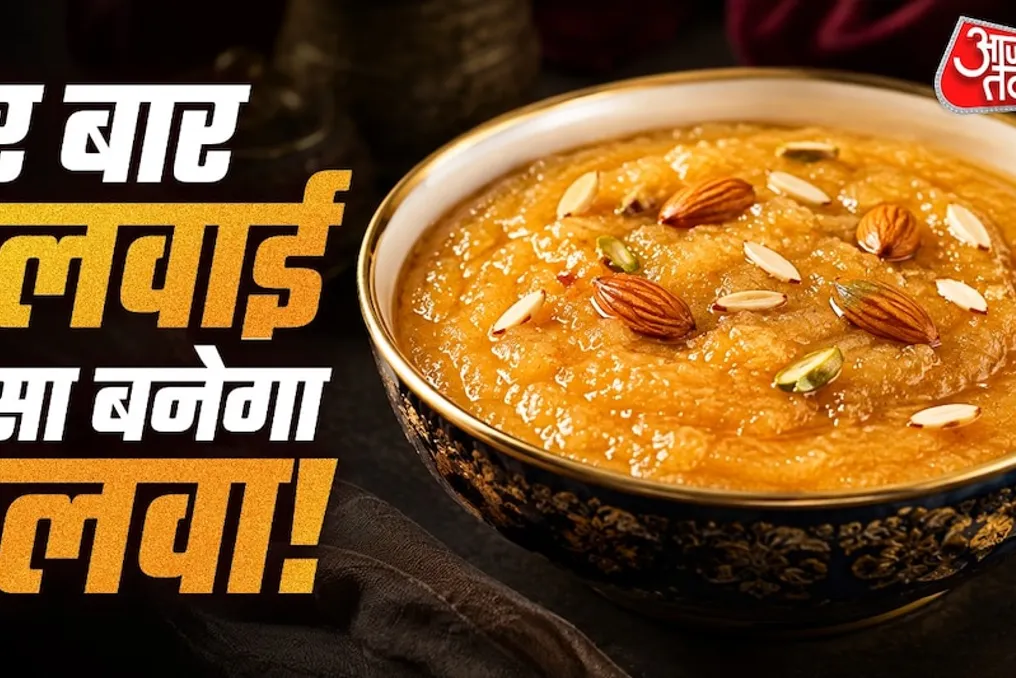
When the desire arises to cook something sweet at home, Sudji Ka Halwa is often the first thing that comes to mind. This dessert is considered one of the simplest and quickest homemade sweets to prepare. The aroma of hot halwa sprinkled with roasted nuts in ghee and cardamom has an inimitable taste. However, despite adding a large amount of ghee, the problem of the halwa turning out dry often occurs. Although it may look normal externally, upon eating, a lack of juiciness and the grainy texture characteristic of professionally made halwa is felt.
If you encounter such a problem, do not worry. To achieve a taste and texture comparable to restaurant quality, it is necessary to pay attention to several important points. The ingredient added during the roasting of sudji is particularly important as it improves both the taste and texture of the halwa. Below are secrets that will help your homemade halwa always resemble a pastry shop dish.
Tips for Making Sudji Ka Halwa
It is crucial to observe the correct proportions. To make a delicious and melt-in-your-mouth Sudji Ka Halwa, you must accurately maintain the ratio between sudji, ghee, and sugar. If the balance of these components is disrupted, the halwa may turn out either too dry or excessively oily and sweet.
It is recommended to use approximately three-quarters of a cup of desi ghee per one cup of sudji, and also add one cup of sugar. If you prefer a sweeter version, the amount of sugar can be increased to one and a half cups.
Do Not Rush the Roasting of Sudji
A significant part of the halwa's flavor depends on how thoroughly the sudji was roasted. If the roasting process is done hastily, the halwa will not reach the desired quality. The sudji must be roasted in desi ghee over low heat, stirring constantly. The sudji should be fried until it acquires a light golden color and begins to emit a pleasant, warm aroma. When the sudji is well roasted, it starts to release oil. Haste at this stage will negatively affect the taste of the finished dish.
Add 2 Tablespoons of Besan for Authentic Flavor
This is the most important secret to achieving a professional taste. After the sudji has been well roasted, about two tablespoons of besan should be added to it. After adding the besan, the sudji should continue to roast for another two minutes. This will eliminate the raw taste of the besan and give the halwa an improved texture along with a pleasant aroma. This small trick helps the homemade Sudji Ka Halwa acquire the taste of a pastry shop halwa.
The Syrup Must Be Right for Juicy Halwa
If you want to get a juicy and melt-in-your-mouth halwa instead of a dry one, you need to pay attention to the amount of syrup. For this, take one cup of sugar and mix it with approximately four cups of water, then place it on the heat. A little cardamom powder can be added to improve the taste and aroma. After the sugar has completely dissolved, turn off the gas. The syrup does not need to be boiled long until thickened.
Do Not Add the Syrup All at Once
When the sudji and besan are well roasted, instead of pouring all the prepared syrup into the pot at once, it should be added in small portions. After each addition of syrup, it must be stirred thoroughly and allowed to simmer. Continue cooking the halwa until it starts to separate from the sides of the pot. This will ensure the halwa has the necessary juiciness and grainy texture.
Finally, when the halwa is almost ready, add the pre-roasted nuts in ghee. It is also necessary to mix in the remaining desi ghee. Cook for another two minutes. After that, your Sudji Ka Halwa is ready. The halwa prepared this way will be juicy, grainy, and aromatic, and much tastier.