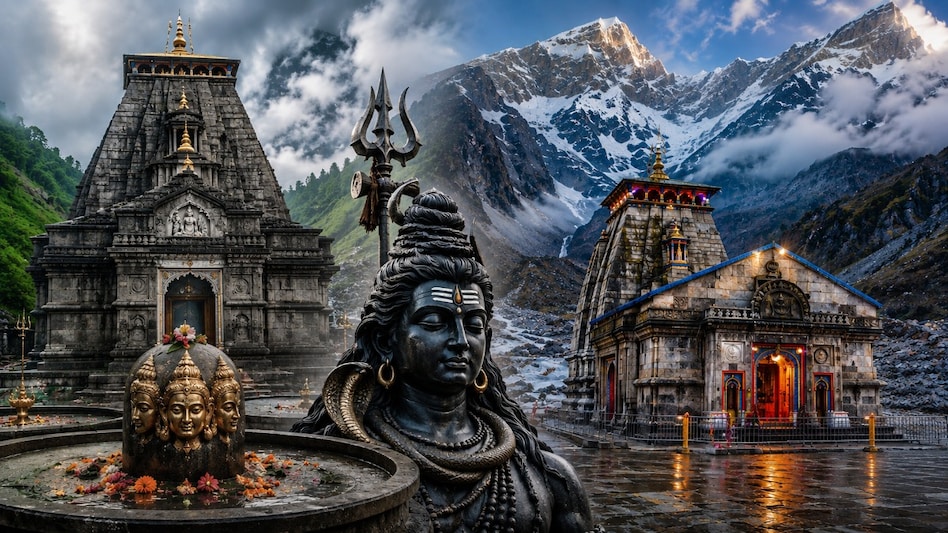
Today is the second Monday of the month of Savan, and people perform Jalabisheka (water bathing) in honor of Lord Shiva to receive his blessings. There are countless temples dedicated to the God Shiva across India, many of which are known. However, this article presents five mysterious Shiva temples that you may not have heard of before. The myths and beliefs associated with these shrines might surprise you.
Stambheshwara Mahadeva Temple
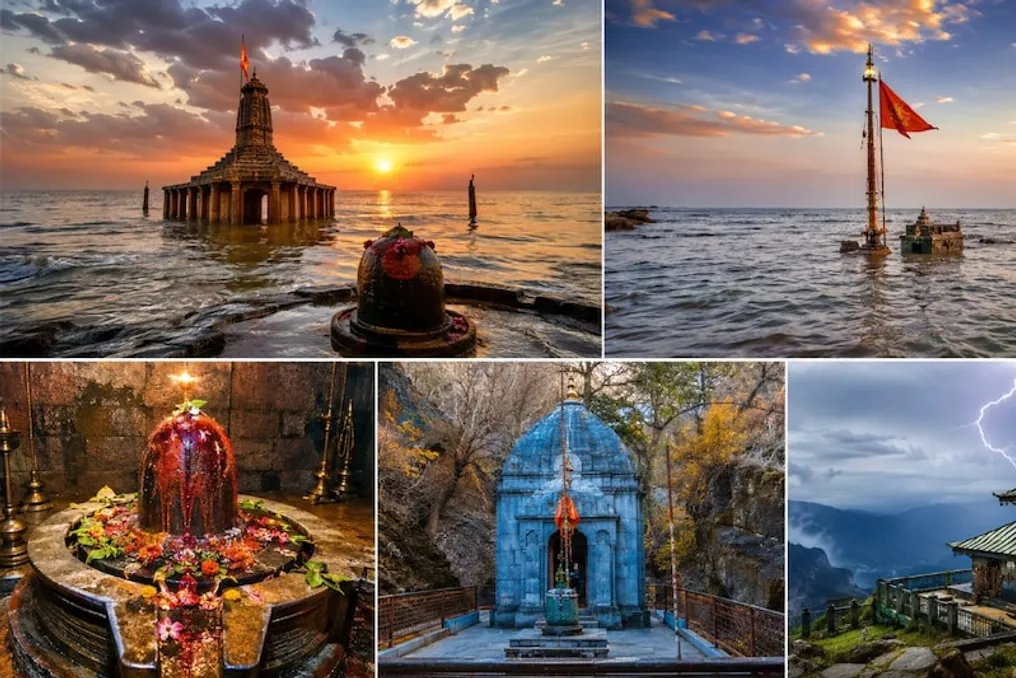
This temple is located on the banks of the Camba in the state of Gujarat, amidst the Arabian Sea. The temple, discovered about 150 years ago, is also mentioned in the Rudra Samhita Shiva Purana. Its most striking feature is that it disappears for a short time during the day and then reappears. This occurs due to tides, when the seawater completely covers the Shivling, submerging the temple underwater. After the tide recedes, the temple becomes visible again. Pilgrims pay special attention to the times of high and low tide when visiting this place. According to legend, after the killing of the demon Tarkasura, Lord Kartikeya installed the Shivling here.
Nishkalank Mahadeva Temple
Located approximately 3 kilometers from the coast of Koliak in the Bhavnagar district, Gujarat, this temple is situated in the sea. Here, the sea waves wash over the Shivling daily. During high tide, the temple sinks completely, remaining visible only by one flag. Pilgrims reach it on foot when the tide goes out. There is a belief that the Pandavas came here to cleanse themselves of sins after the battle in the Mahabharata. Following the advice of Lord Krishna, they performed penance here and installed the Shivling, hence it is called 'Nishkalank' Mahadeva.
Achleshwara Mahadeva Temple
This temple, located among the Chambal canyons in Dhaulpur, Rajasthan, is known for its unique miracle. Here, the Shivling changes color three times a day: red in the morning, saffron in the afternoon, and black in the evening. To this day, no one has been able to explain this mystery. Another feature is that the depth of this Shivling is still unknown. It is said that excavations were conducted to determine this, but no bottom was found.
Lakshmeshwara Mahadeva Temple
There is a legend that this temple was founded by Lord Rama at the request of Lakshmana after defeating Har-Dushana. The sacred object located here is called the 'Lakshalinga' and has thousands of small holes. One of these holes is considered a Patalagam (leading to the underworld), where water is completely absorbed, while in another hole, water always remains, forming an Akshaya Kund (eternal spring). It is said that the water offered to this Shivling reaches a kund located behind the temple that never dries up.
Bijli Mahadeva Temple
This temple, located in Kullu, Himachal Pradesh, is known for its amazing phenomenon. It is situated on a high mountain near the confluence of the Beas and Parvati rivers. Every 12 years, lightning strikes the Shivling, causing it to shatter into pieces. Then, priests glue the fragments of the Shivling with oil, and after some time, it takes a solid form again.
The unique characteristics and associated beliefs make all these temples extremely mysterious. This is why millions of pilgrims arrive here every year to perform the pilgrimage.