Although Musk's statement that electricity is becoming the determining limitation for artificial intelligence is correct, SpaceX is betting on using orbit to solve this problem. However, in China, a completely different approach is already being implemented—moving AI where there is access to abundant renewable energy sources.
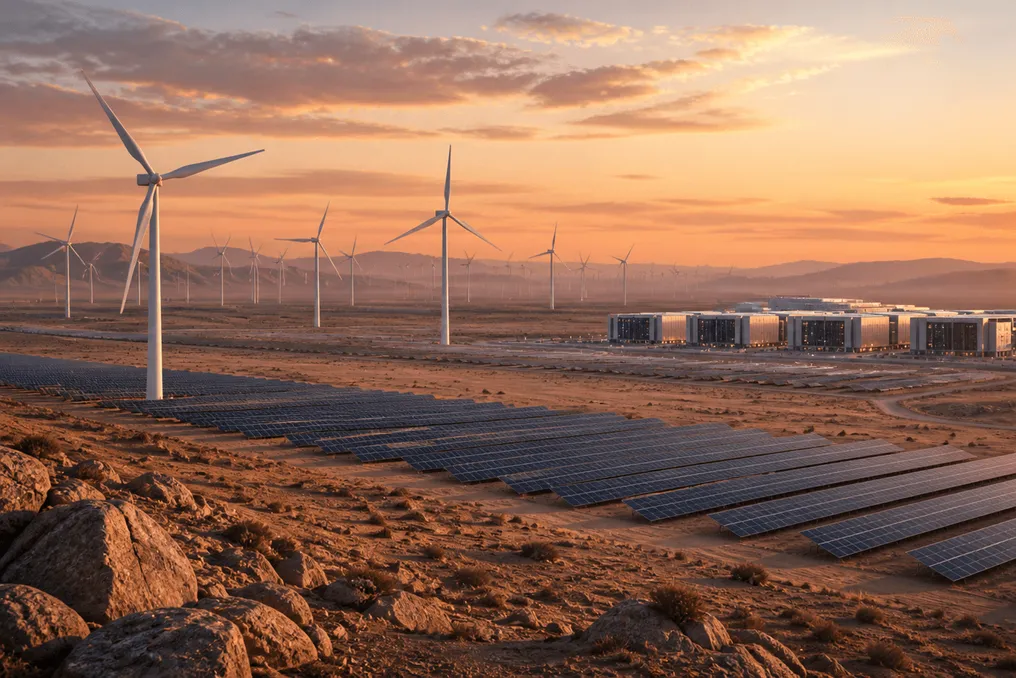
This month, the Shanghai-based group Envision began work on the first phase of a new AI campus in Inner Mongolia. Initially, it was allocated 120 megawatts for major Chinese tech companies, and the entire campus is planned to expand to over two gigawatts, receiving about 80% of its electricity directly from nearby wind farms.
In January, SpaceX applied to the FCC to operate up to a million satellites as orbital data centers. In June, the company presented its first-generation satellite for an orbital data center, AI1—a spacecraft with a deployed wingspan of 70 meters, capable of providing about 120 kilowatts of computing power. The solar panel in orbit receives sunlight almost continuously, without cloud cover, night, or connection queues.
While Musk's timelines are ambitious, his thesis depends on lowering launch costs to a level where mass adoption is no longer an issue.
Meanwhile, Ulanqab has become one of China's fastest-growing computing centers, where a contract for more than two million standard racks has been signed and it operates at over 100,000 PFLOPS. This is not an initiative of a single company but part of a national industrial program. In 2022, China's 'East Data, West Computing' plan identified eight national computing nodes, and in 2026, 'computing power coordination' was included in the government report for the first time.
The main difficulty of the ground project in the desert is the lack of a power grid, and the output of renewable energy depends on weather conditions. Envision is implementing the most technically radical option: its facility in Qifeng has a capacity of 2 GW, operates autonomously, and uses 100% renewable sources—wind, solar, storage, hydrogen, and computing loads are managed as a single system, while the data center, built with Tencent's participation, is entirely powered by directly supplied renewable energy. Two models, Tianji and Tianshu, forecast weather and coordinate demand for generation, storage, and computing. The company reports that the system provides over 60% reliable green energy for computing loads and reduces overall energy costs by more than 40%.
In June, at the VivaTech conference in Paris, Chairman Jiang announced the Gobi mission: creating five gigawatts of AI capacity in the desert by 2030. Preliminary life cycle comparisons show that the first wave of orbital infrastructure could cost about twenty times more per kilowatt of reliable IT power, excluding GPUs, although both estimates carry significant uncertainties.
Two arguments are against the desert approach: Epoch AI estimates servers at within 60% of the total cost of ownership, and Jim Chanos believes that the annual electricity consumption of an AI data center is approximately 5–7% of revenue. However, one difference is already visible: one solution still depends on what Starship becomes, while the other is starting to serve customers this month.