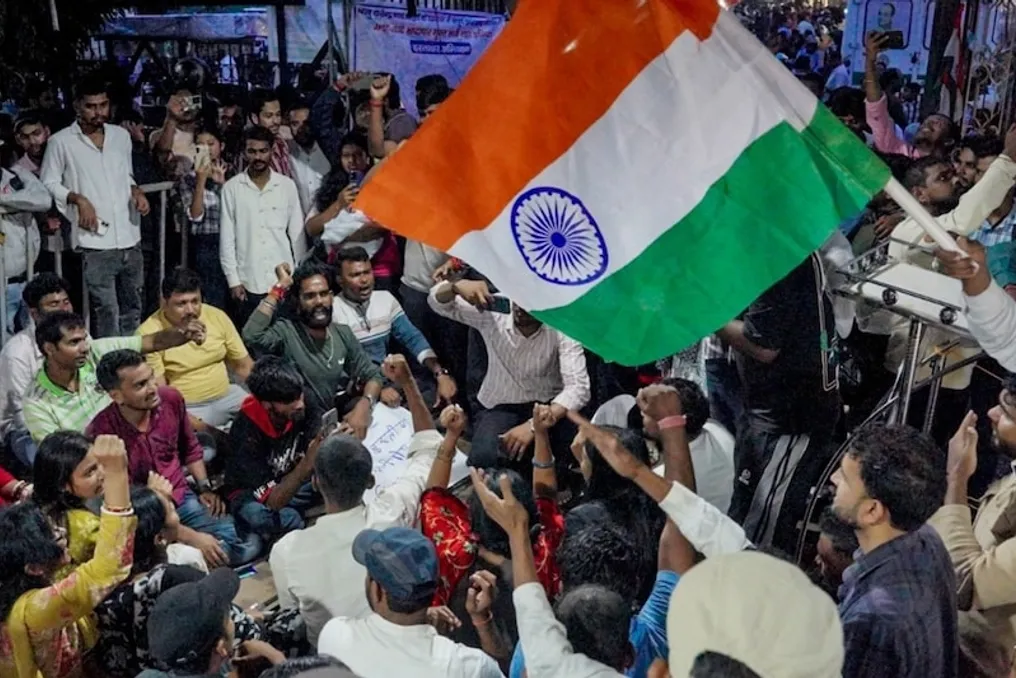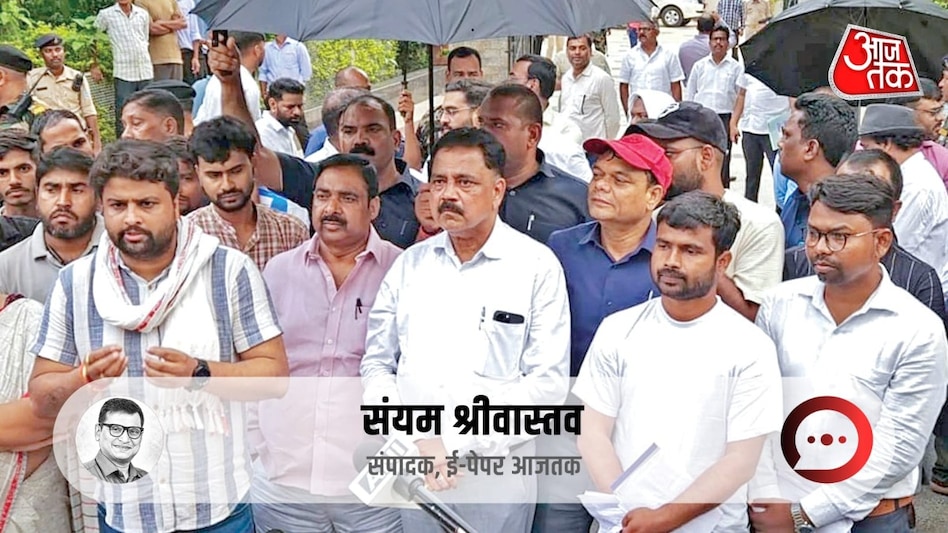
In Haryana, the deadlock between the government and students regarding alleged examination irregularities continues. The third round of negotiations also yielded no results. The government claims to have addressed about 98% of the students' demands, but the demand for an CBI investigation into the JSSC-CGL exam cannot be accepted. On the other hand, students insist that protests will not cease until this demand is met, and they are preparing to take to the streets.
The question arises as to why the entire dispute needs to be prolonged over one demand when most issues can be resolved through dialogue between the government and the students? Students believe that the intervention of a central agency is necessary to ensure an impartial and reliable investigation into the issues raised regarding the examination process. They argue, 'Is it bad to remove doubts from the minds of the students?'
The government should realize that the recommendation for an investigation does not imply an admission of guilt. Accepting the demand for a CBI investigation does not mean the government is found guilty. If the government states complete transparency in the examination process, this statement will become even more weighty after an impartial investigation. Then everything will become clear.
Hemant Soren's government in Ranchi appears to be repeating the same mistake recently made by the central government concerning students protesting at Jantar Mantar. When a protest is dragged out, the issue between the government and the demonstrators gradually transforms from a matter of demands into a matter of prestige. After this, the government starts to believe that if it meets one demand, it will be perceived as weakness. It is this mindset that makes any protest unnecessarily protracted.
In the case of students, such a stance is even more detrimental. Issues of employment and competitive exams are linked to the future of the youth. If there is suspicion of irregularity in any exam, it affects not only that exam. The time, money, and careers of thousands of young people are at stake. In such a situation, the government's primary task must be to assure students that their complaints are being treated with utmost seriousness.
The government has taken several positive steps. These include the recommendation for an investigation by the Enforcement Directorate (ED) into alleged financial irregularities in JPSC, the announcement of the creation of an accelerated court for examination matters, and the promise to file a charge sheet within 90 days, as well as the decision to involve experts from IIT-ISM Dhanbad, IIM Ranchi, and XLRI Jamshedpur to improve the examination system in the JSSC-CGL case under the chairmanship of a former Supreme Court judge. However, despite all these steps, if the students' biggest doubt is not eliminated, the government must reconsider its position.
Chief Minister Hemant Soren's statement that problems will be solved through dialogue, not force, is in the right direction. But dialogue is not just holding meetings. Dialogue also means that the government understands the main concern of the opponent and seeks a way to resolve it.
Imagine the Chief Minister personally visiting the protesting students, talking to them, and giving them assurances that the government is ready to recommend a CBI investigation. This will not diminish the government's prestige; on the contrary, it will enhance it. If the investigation shows that the government and the examination system are clean, this will be the greatest proof for the government. And if any wrongdoing is discovered, the path to action against the guilty will become clear.
In politics, small issues often turn into crises, making them a matter of prestige. The same threat exists with Hemant Soren. Prolonging the student movement is not beneficial for either the government or the students. The government should abandon hiding behind technical and legal arguments and take a political initiative. If the Chief Minister himself comes to the protest site, talks to the students, stops their hunger strike or sit-in, and guarantees an investigation, he will gain political advantage. Today's youth need not orders, but trust. They must feel that the government cares about their future.
This crisis is an opportunity for Hemant Soren. It can allow him to turn it into a 'government versus students' struggle or to set an example of dialogue and problem-solving. If the doubts of thousands of students are dispelled by the recommendation for a CBI investigation, it will be a victory for democracy, not a defeat for the government. By doing what the Modi government failed to do at the central level, Hemant Soren can forge his own image among the students.