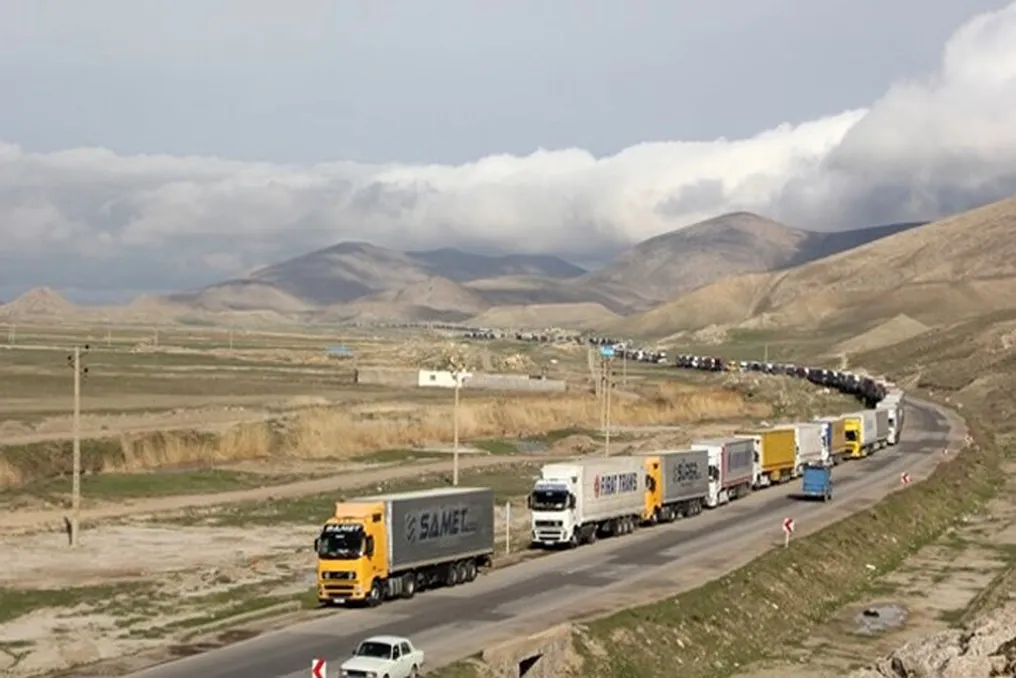
The head of the Iranian Trade Promotion Organization (TPO), during a meeting with representatives and the board of directors of the Iranian Guild Chamber, announced the development of a new roadmap for significant growth in non-raw material exports. He emphasized the strategic necessity of shifting export focus from raw materials and semi-finished goods to high value-added finished products.
According to the TPO's Public Relations Department, this meeting was organized to clarify the new structures for guild participation in the international supply chain and to study operational solutions aimed at eliminating administrative, currency, and regulatory obstacles faced by guild exporters.
The head of TPO, focusing on the structural problem of the country's trade balance from a qualitative perspective, noted that one of the fundamental and complex problems of foreign trade is the low average value of exported goods compared to imported ones. Currently, the average value of a ton of Iranian exports is about $300 USD, while imported goods reach approximately $2000 USD per ton. This significant gap indicates the persistence of a traditional approach and the economy's dependence on raw material sales.
Highlighting the importance of strengthening Iran's position in the global value chain, he added that most non-raw material exports are concentrated in primary industries such as steelmaking, iron ore, pellets, and ingots. The marketing and sale of these raw materials do not possess scientific trading complexity. In contrast, guilds involved in manufacturing and distribution work with chains of finished and consumer products (such as furniture, clothing, footwear, leather, and handicrafts), whose export value starts from $1000 USD per ton and reaches several thousand dollars in the clothing and footwear segments. The transition to such goods is the main task for improving the country's currency indicators.
The Deputy Minister of Industry, Mining, and Trade, referencing the successful experience of leading East Asian countries such as China and Vietnam in regional markets, stated that successful global producers do not just ship goods to destination ports; they capture the main profit by directly participating in retail and distribution chains. The modern model of success includes renting stores, placing goods on the shelves of major chains, and direct delivery to end consumers in target markets.
He identified the Eurasian region and neighboring countries as a strategic priority for the country's guilds. Thanks to the conclusion of a free trade agreement between Iran and the Eurasian Economic Union and the abolition of tariffs on 87% of goods, an unprecedented platform has been created for guilds to enter the market. For example, Iran's leather industry, despite its high quality, has a small share in the markets of neighboring countries, while these products are sold in Armenia, Azerbaijan, and Iraq at a price many times higher than the domestic one.
The Guild Chamber must act as the national driving force, guiding guild members toward physical and direct presence in target markets, especially the large Russian market.
The head of TPO announced the creation of new executive structures to support the guild sector and stated that the TPO will activate an 'Export Guild Desk' in a specialized and systematic manner to review export cases for each guild and eliminate obstacles for each association individually.
According to Dehghan Dehnavi, TPO is ready to sign bilateral memorandums of understanding with any guild association that has developed an export plan and is capable of fulfilling export obligations. These memorandums will outline the organization's commitments in five areas of assistance, and in return, the association commits to achieving a certain export volume (from several million to hundreds of millions of dollars), allowing state support to transition from general to results-oriented.
The head of TPO also presented tools such as Export Management Companies (EMC), Iranian commercial centers abroad, and a network of commercial attachés as logistical and marketing units supporting the development of guild potential.
The Deputy Minister of Industry, Mining, and Trade, acknowledging the concerns of economic activists regarding the complexity of regulating export proceeds repatriation, noted that although returning currency to the country's economic cycle is a national necessity, formal regulation should not hinder the activities of registered exporters. To avoid regulatory misunderstandings and allow for discrepancies in order registration, it was decided to create a 'Dedicated Service Desk' involving specialized offices for export-import regulation and the organization's currency departments. This will allow each association to submit 3-4 complex cases to this desk for individual resolution and rule amendments.
In conclusion, the head of TPO touched upon the situation of handicraft exports, stating: 'Handmade Iranian carpets are not just a commodity; they are a cultural and artistic flag of the country in international markets. The main problem in this area is related to currency obligations and the timing of revenue repatriation. TPO continues to promote the proposal for complete exemption of handmade carpets from currency obligations or, at least, extending the repatriation period through the Central Bank and the Cabinet of Ministers to restore dynamism in this authentic industry.'