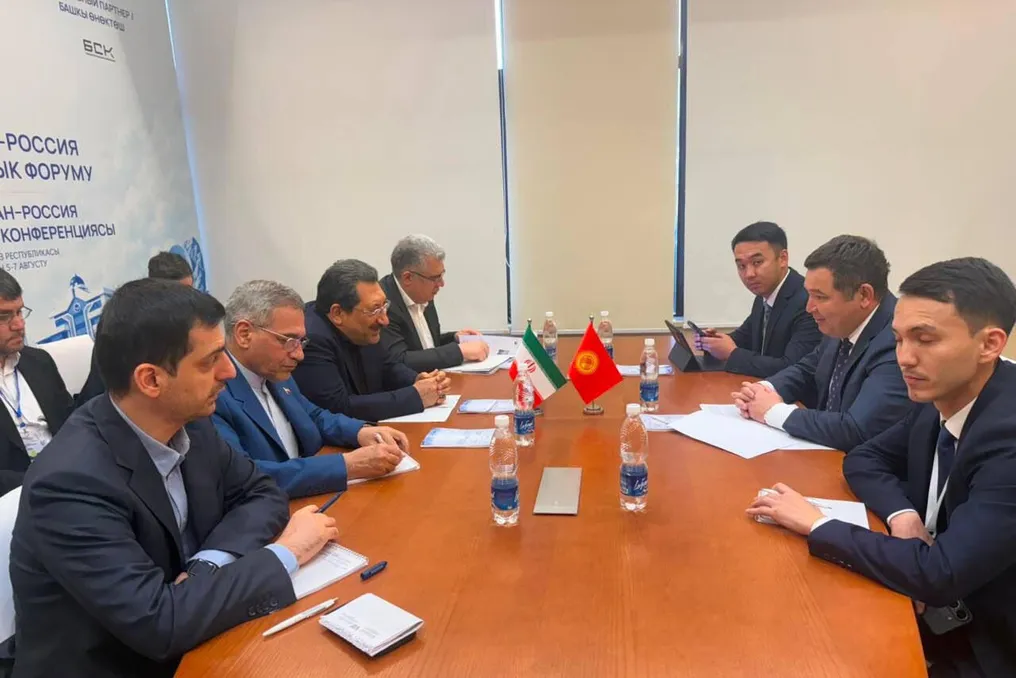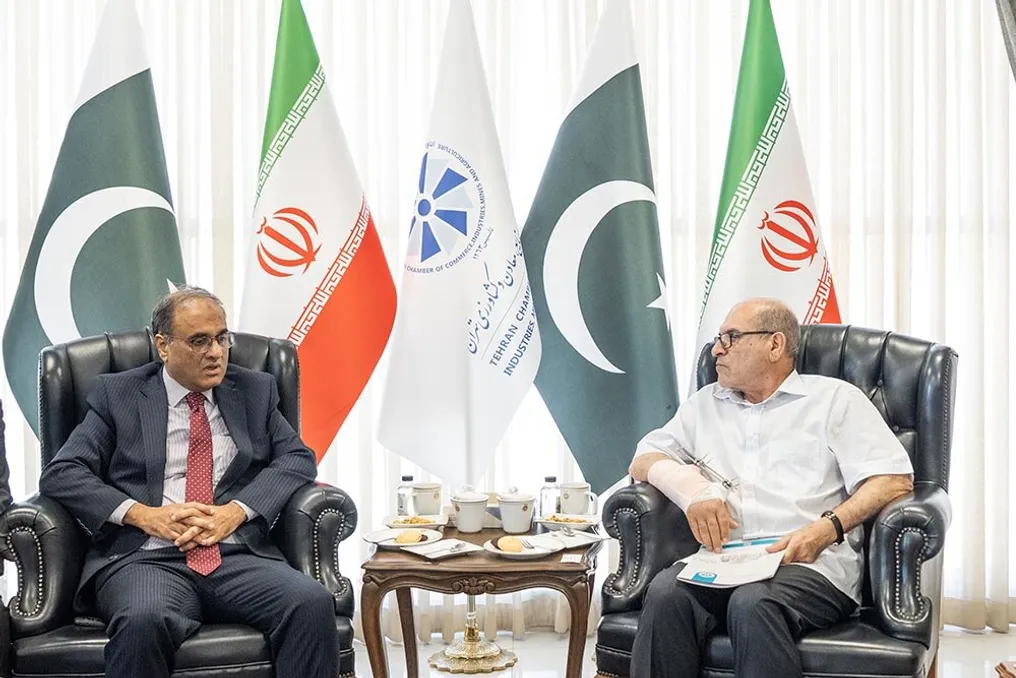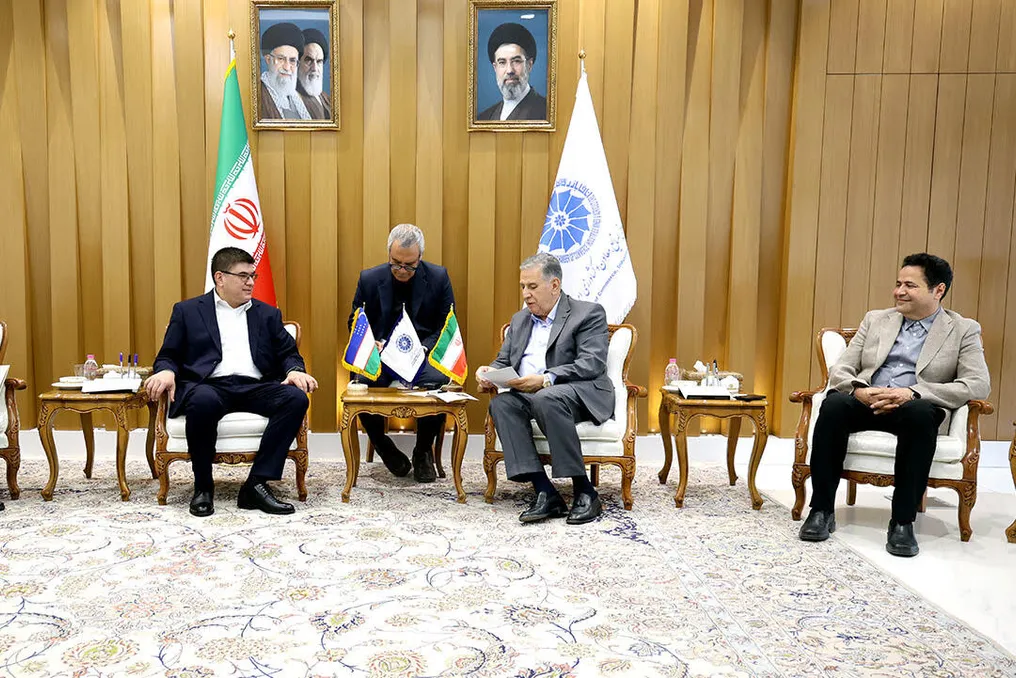
A meeting was held in Tehran where Samad Hassanzadeh, head of the Iranian Chamber of Commerce and Industry, discussed with the Uzbek ambassador the importance of accelerating and facilitating the transit of Iranian goods through Uzbekistan. He noted that one of the serious requests from Uzbekistan is the abolition of the visa regime and the simplification of movement between the two states, especially for Iranian traders.
The Uzbek ambassador in Tehran visited the Chamber to plan an Iranian-Uzbek business conference and explore ways to expand bilateral relations to the level of two billion dollars. He met with the head and deputy head of the Iranian Chamber of Commerce and Industry.
At the beginning of the meeting, Samad Hassanzadeh expressed gratitude to Uzbekistan for its support and for sending medical and pharmaceutical supplies to Iran during the Ramadan War period. He emphasized that the people and government of Iran will not forget this act.
Hassanzadeh continued, stating that the current volume of relations between Iran and Uzbekistan is insufficient, and it is necessary to work together to increase exchanges between the two countries.
The Chamber's head referred to the memorandum of understanding aimed at strengthening comprehensive cooperation between Iran and Uzbekistan until 2027 and increasing trade volume to two billion dollars. He added that difficulties arose due to the 12-day and 40-day wars, as well as the maritime blockade of Iran. In this regard, he asked Uzbekistan to take measures to facilitate road transport and speed up the transit route for Iranian goods through Uzbekistan.
The Chamber's head specifically highlighted that the 17th Joint Iranian-Uzbek Commission and Business Conference focused on simplifying visa issuance for Iranian economic figures. It was noted that Iran unilaterally abolished the issuance of visas for residents of Uzbekistan, and the hope is that the government of Uzbekistan will make a similar decision so that Iranian economic figures can travel to Uzbekistan more easily.
He pointed to Iran's potential in technical and engineering services and reported that both sides had previously agreed to establish a joint investment fund. Furthermore, economic figures from the two countries are currently negotiating 29 joint projects in the fields of technical and engineering services, water supply, and sewerage. Given Iran's capabilities in these areas, he requested the necessary support for establishing this fund, stating Iran's full readiness.
Hassanzadeh stressed readiness for closer cooperation in mining, technical and engineering services, agricultural machinery, construction materials, and other fields. He also noted that Iran has good opportunities in the field of power plant equipment, renewable energy infrastructure supply, petrochemical products, and so on, which only requires management and planning.
The Chamber's head also proposed joint investments with the Uzbek side in the construction of textile factories, steel mills, and greenhouses.
Subsequently, Hossein Pirmoazzen, deputy head of the Iranian Chamber of Commerce and Industry, addressed the topic of potential joint cooperation in the agricultural sector between Iran and Uzbekistan. Discussing greenhouse construction and aquafarming, as well as reached agreements, he stated that both countries have made progress in seed production and hydroponic greenhouse equipment, and specific seeds are produced in both countries. In line with this production, cooperation is possible in the exchange of seeds, fertilizers, and necessary equipment.
Afterward, Fariddin Nasриев, the Uzbek ambassador in Tehran, spoke about the importance of resolving disputes based on international principles while preserving the interests of the states. He then discussed the economic situation of Uzbekistan and strengthening trade ties with target countries.
According to him, the two-billion-dollar trade goal is set between Iran and Uzbekistan, and it is necessary to plan its achievement. In this context, holding a business conference in Iran is one of the effective ways for the economic figures of the two countries to get acquainted.
Nasриев emphasized the significance of personal meetings between the economic figures of the two countries and added that issues of cooperation and transport infrastructure between the parties were discussed. He expressed interest in having facilities in Bandar Abbas. He acknowledged existing misunderstandings in this area that need to be resolved. Last year, the number of Uzbek transit trucks passing through Iran was less than the number of Iranian trucks passing through Uzbekistan due to high Iranian tariffs. Therefore, he asked for these tariffs to be lowered.
The Uzbek ambassador in Tehran stated his readiness to purchase oil and its derivatives from Iran. He also talked about agricultural issues and the possibility of exporting fiber, cotton yarn, and fabric to Iran.
Speaking about the export of textile products from Uzbekistan to other countries, he noted that many world-renowned brands in the textile industry have opened factories in Uzbekistan and conduct extensive activities.
Regarding the production of agricultural products such as vegetables, fruits, and fresh produce, Nasриев stated that, given the harvest season, Iran and Uzbekistan are not competitors but rather complement each other.
The Uzbek ambassador in Tehran informed that the government of Uzbekistan is ready to provide land in free trade zones to Iranian economic figures.