The State Welfare Organization and the United Nations Population Fund (UNFPA) stated their shared interest in strengthening local communities through participation-based and community-driven models.
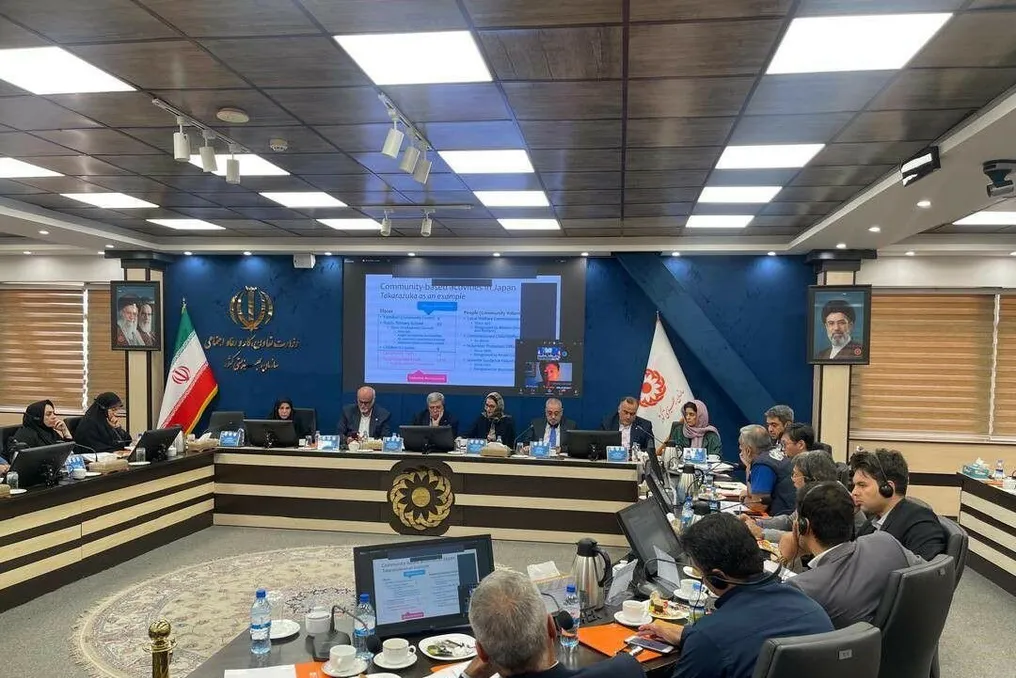
In July, both organizations jointly organized and conducted an international hybrid webinar on the topic of 'Strengthening Local Communities and Social Participation Through Community-Based Models.' This event was held on the occasion of the 46th anniversary of the establishment of the State Welfare Organization.
National leaders, UN representatives, international experts from Asia, and civil society representatives from the country gathered at the meeting to exchange technical experience, study innovative social solutions, and demonstrate successful intervention models at the community level. The discussions aligned with the State Welfare Organization's flagship initiative, 'Salam Mahaleh,' which has been successfully piloted in over 2,760 communities and districts across Iran, as announced on the UNFPA website on July 20.
The event was officially opened by a speech from the head of the State Welfare Organization, Seyed Javad Hosseini, who emphasized the transformative strategic changes undertaken by the organization to promote welfare and improve the quality of life.
Ms. Mayssa Al-Garibavi, UN Coordinator in Iran and Head of the World Food Programme (WFP) in the country, stressed the vital role of district-oriented initiatives such as Iran's 'SALAM' (SALAM Mahaleh) in enhancing social resilience and supporting communities, ensuring that no one is left behind.
The 'Salam Mahaleh' program is a national, participation- and empowerment-oriented program designed to improve citizens' quality of life, support vulnerable groups, and strengthen social participation and social capital throughout Iran.
Through a combination of state capabilities, volunteers, non-governmental organizations, and active resident participation, this plan reduces bureaucracy, revives neighborhood identity, and creates opportunities for local progress. It is consistent with the fourteenth government's policy on social justice, public participation, and district-level governance. Initially piloted in District 4 of Tehran (with 20 schools plus one school in each province), it has since expanded nationwide.
The goals of this initiative include improving citizens' quality of life and social resilience, empowering vulnerable groups and increasing self-sufficiency, promoting social activity and strengthening social capital, expanding social participation and civic engagement, and developing socio-health and charitable services both quantitatively and qualitatively.
Other objectives include creating a local network connecting facilitators, volunteers, and government agencies; supporting the elderly through cultural, sports, artistic, and dialogue programs; identifying and mentoring talented youth (aged 13–18) in academic fields, careers, and entrepreneurship; providing rehabilitation, screening, and psychological counseling to all target groups; encouraging active participation from the public/volunteers and local self-government; and strengthening participatory and district-level governance decision-making.
Addressing Iran's changing demographic landscape, Mr. Keith Okhashi, UNFPA representative in the Islamic Republic of Iran, highly praised the efforts of the Iranian Government and the State Welfare Organization, noting the following:
Demographic Shift: Iran's population reaches approximately 93 million people, with about 70 percent in the working age group, alongside a rapidly growing elderly population.
Intergenerational Solidarity: Building a sustainable society requires platforms where different generations can share experiences and support each other.
UNFPA Support: UNFPA recently provided a comprehensive training package on standard formal elder care and continues to promote new frameworks for social sustainability, including 'Time Bank' initiatives.
Mr. Okhashi emphasized: 'At UNFPA, we believe that every person deserves a dignified life throughout their entire life cycle.' He added: 'Local communities in Iran play a key role in promoting active, empowered aging and reducing vulnerabilities.'
Complementing this view, Dr. John Jabbar, representative of the World Health Organization (WHO) in Iran, confirmed that social participation is a primary determinant of health.
The webinar featured substantive sessions from high-level international technical experts from Southeast Asia. Within UNFPA's regional vision for active aging:
Dr. Abhijit Visaria, Technical Advisor on Population Dynamics at the UNFPA Regional Office for Asia and the Pacific (APRO), outlined UNFPA's strategic framework for healthy aging and social integration.
Dr. Rintaro Mori, Mayor of Takarazuki, Japan, shared insights on the work of community centers (Kōminkan) and Japanese neighborhood councils.
Professor Chen Gong, Director of the Institute of Gerontology and the Institute of Population Studies at Peking University, presented on the topic of 'Time Bank: A Powerful Tool for Sustainable Engagement and Community Empowerment.'
Dr. Paul Ong, Deputy General Director and Director of Strategy at the Chao Foundation in Singapore, highlighted strategies for addressing non-medical factors of aging.
Mr. Kuen Tran, Senior Advisor of the Vietnam Association for Healthy Aging, detailed the national network of intergenerational mutual aid clubs in Vietnam.